
 en


- Boutique
- 23-day trip
- From €11,595 p.p.
Namibia and Botswana trip | Self-drive Namibia and Botswana
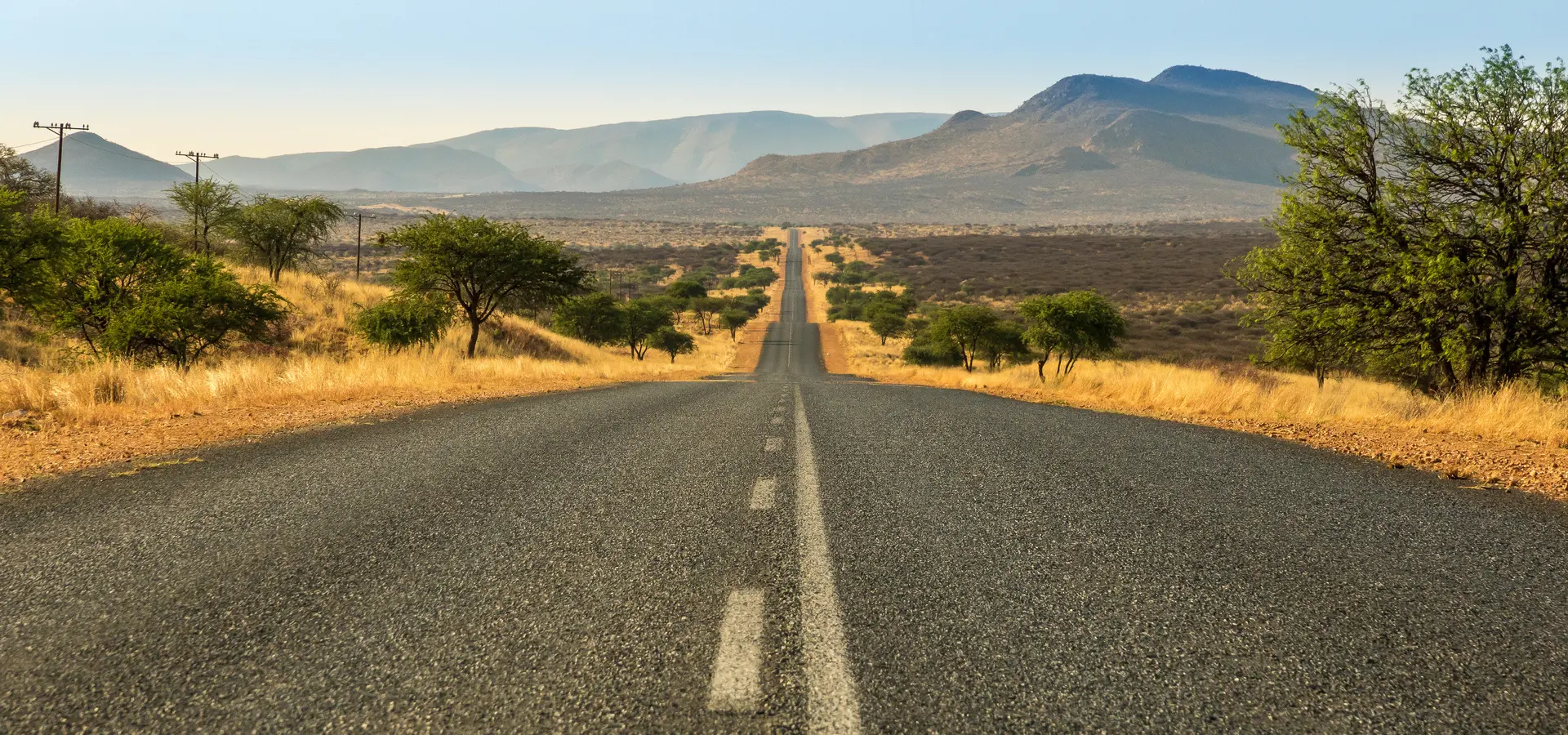
On this trip, you will visit the highlights of the northern half of Namibia, while ending the last days of the trip in Botswana and Zimbabwe. You will climb the world's highest sand dunes in Sossusvlei, get inspired by the locals in Twyfelfontein and go in search of wildlife in Etosha National Park, then cross the border into Botswana and drive along the Okavango River towards Maun. You will leave the car behind and fly by small charter plane to the world-famous Okavango Delta for insane safari days. You will conclude your wonderful trip at Victoria Falls in neighbouring Zimbabwe! You will experience all this while driving around in your own rugged 4x4 vehicle. There is no freer feeling than driving yourself through a country that perfectly combines adventure with nature. All this makes Namibia and Botswana the ultimate self-drive destinations in Africa.
Travel programme
Travel overview
- Day 1 Flight to Johannesburg
- Day 2 Flight to Namibia
- Day 3 – 4 The high sand dunes of Sossusvlei
- Day 5 – 6 Swakopmund
- Day 7 – 8 The rock engravings at Twyfelfontein
- Day 9 – 10 On safari in Etosha National Park
- Day 11 – 12 Explore Etosha in your hire car
- Day 13 Relaxing by the river
- Day 14 – 15 The green Caprivi Strip
- Day 16 Stay on the Okavango Panhandle
- Day 17 Relax in Maun
- Days 18–20 Safari highlights in the extraordinary Okavango Delta
- Day 21 On the way to Zimbabwe
- Day 22 Visit Victoria Falls
- Day 23 Departure from Victoria Falls
Air travel to Johannesburg
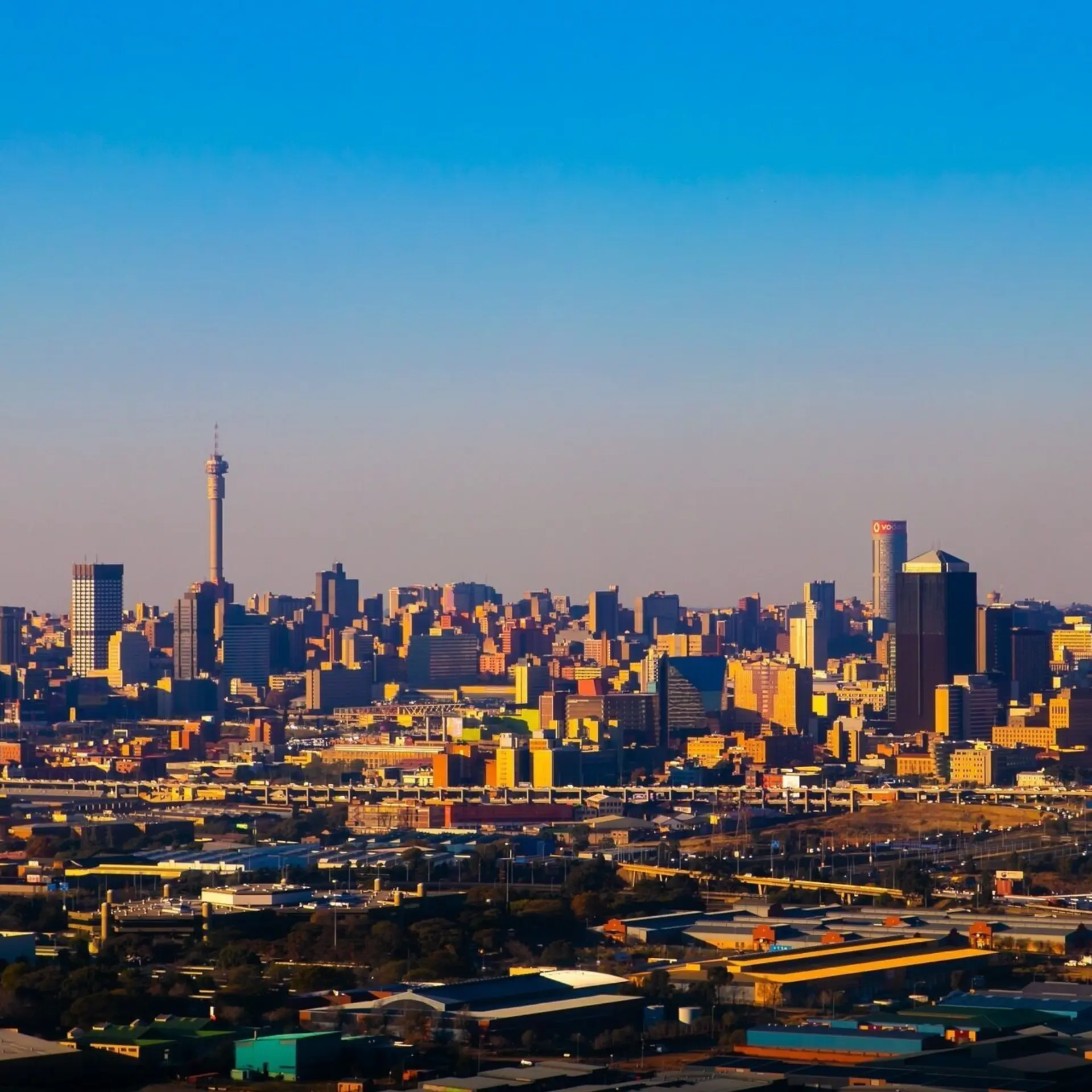
Today, you will board the plane that takes you to Johannesburg. You will arrive in the South African city by mid-evening (depending on your booked flights). Upon arrival, you will easily walk to your hotel as it is located opposite the arrival hall. Then you can start enjoying your well-deserved night's sleep.
Tips from the Travel Specialist
Please note: your luggage may be through-checked to your final destination. When checking in at your departure airport, ask whether you can collect your luggage in Johannesburg so that you can use it at the hotel that evening.
Included:
• Accommodation including breakfast
Exclusive:
• Intercontinental flight to Johannesburg
Air travel to Namibia
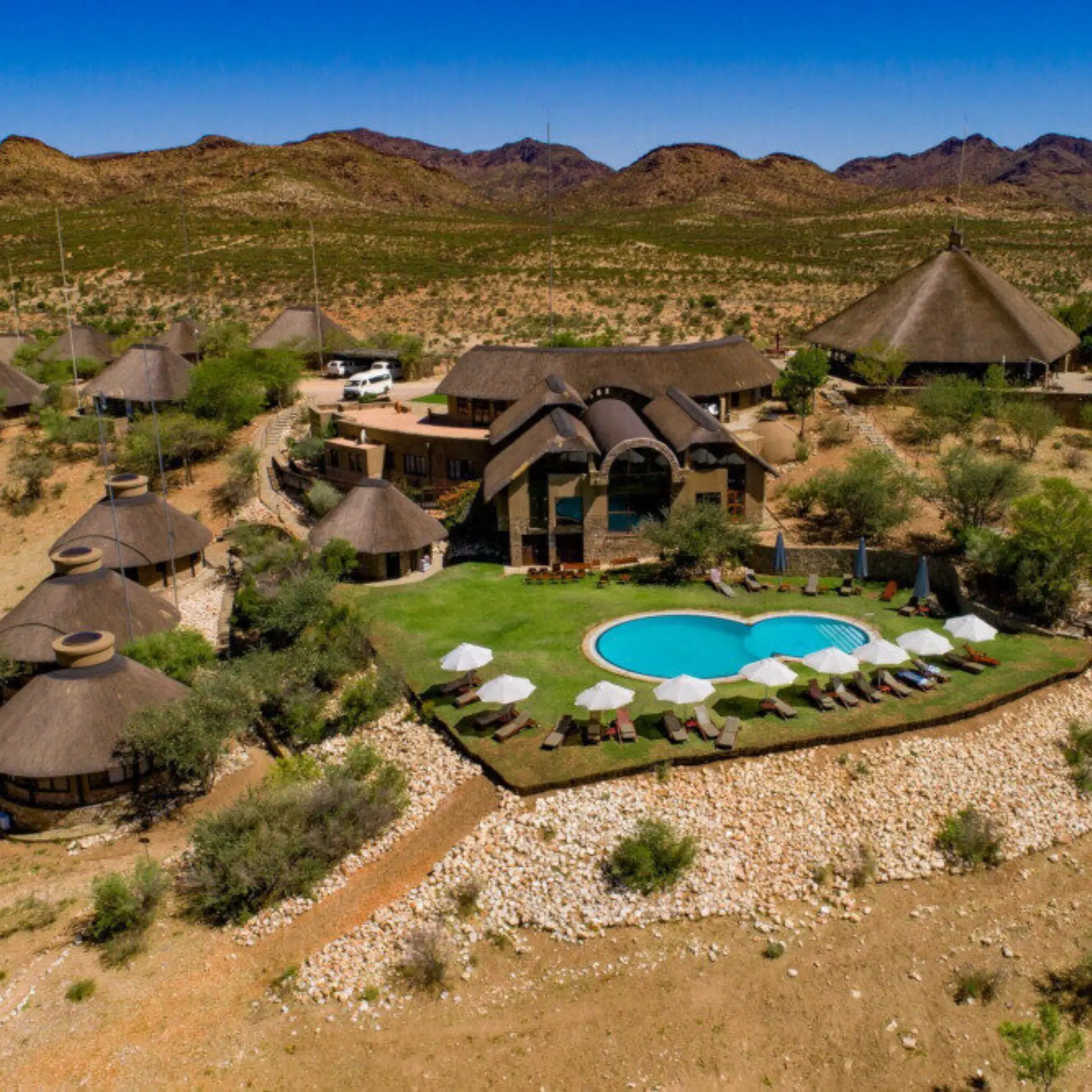
You will arrive in Namibia's capital Windhoek around noon after a relatively short flight from Johannesburg. At the airport, you will receive a warm welcome from our local representative. You will then collect your rental car. You will then drive to your accommodation, which is about an hour's drive from the airport. You will stay at a beautiful lodge outside the city. The lodge is located a private reserve, where some animals live. During an optional game drive, you might spot these. Furthermore, you can fully enjoy all the facilities provided. In the evening, you will enjoy a tasty dinner at the lodge's restaurant.
Included:
• International flight Johannesburg – Windhoek (Economy Class)
• Meet & Greet on arrival
• Hire car
• Accommodation on a half-board basis
The high sand dunes of Sossusvlei
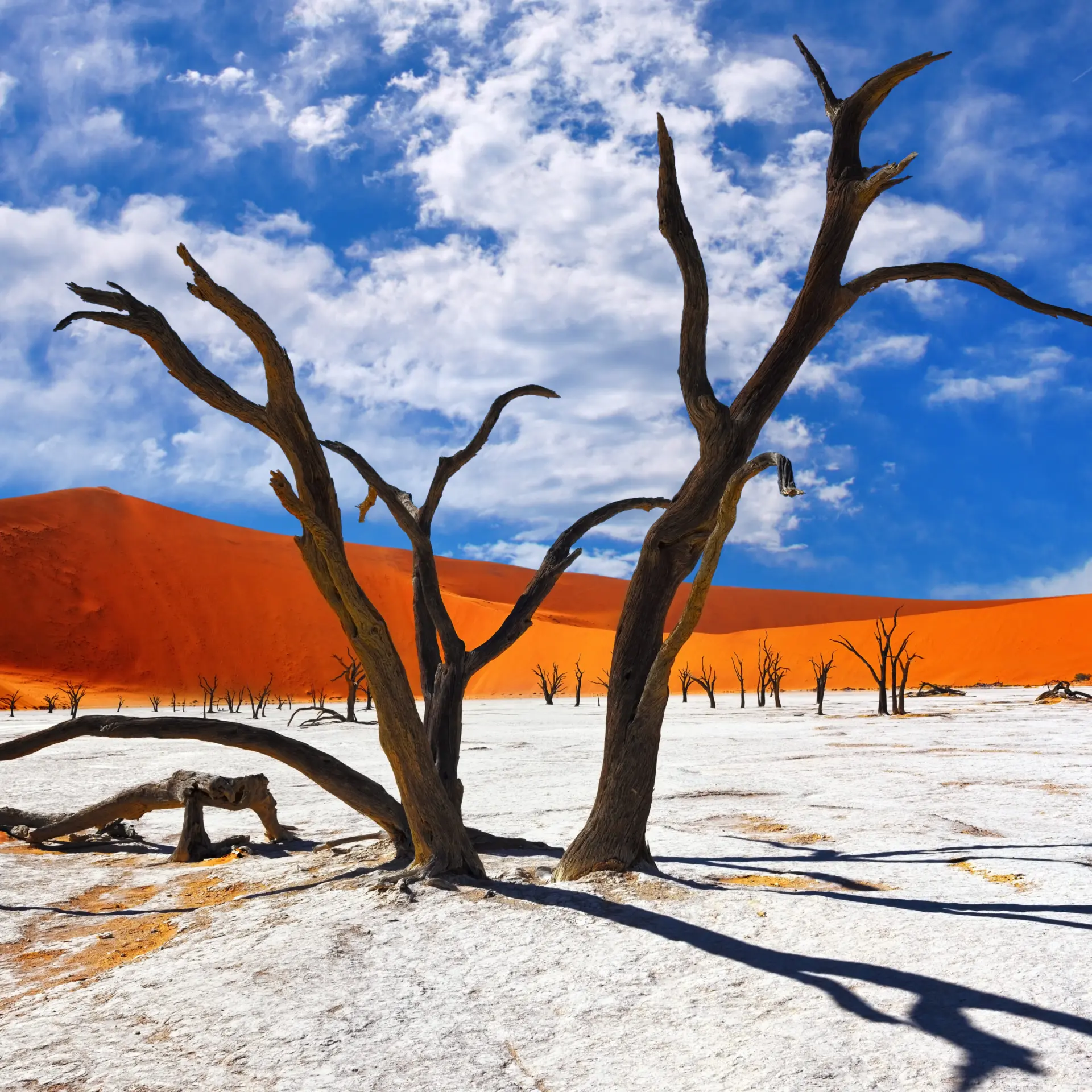
Today, you’ll set off for one of Namibia’s most beautiful spots: Sossusvlei. This area is home to the highest sand dunes in the world. You’ll stay in comfortable accommodation situated just outside the park. Enjoy a delicious dinner in the evening.
The next day, you’ll get up early to explore the dunes. You’ll explore the dune landscape accompanied by a knowledgeable guide, who’ll tell you all about the area. After an early breakfast, you’ll set off. It’s truly magnificent to see the dunes at sunrise, as you can actually watch the colours of the sand change. As well as the highlights at Sossusvlei, such as Dune 45, Hiddenvlei, Big Daddy and Deadvlei, other attractions in the area include the Sesriem Canyon and the Namib-Naukluft National Park.
Optionally, you could also go on a hot-air balloon ride. Seeing this area from the air is a breathtaking experience. Highly recommended!
Includes:
• Hire car
• Guided Sossusvlei excursion
• Accommodation on a half-board basis
Swakopmund
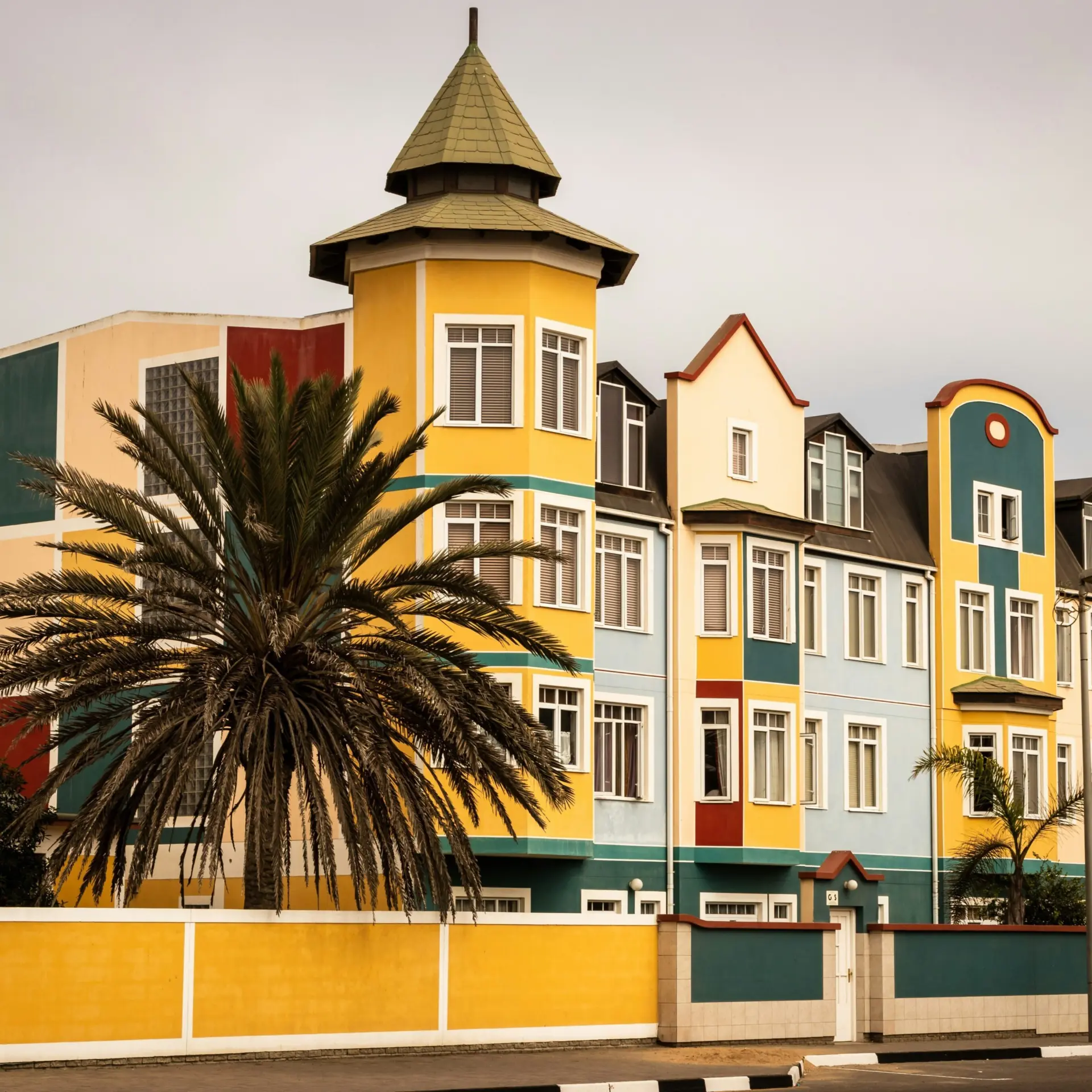
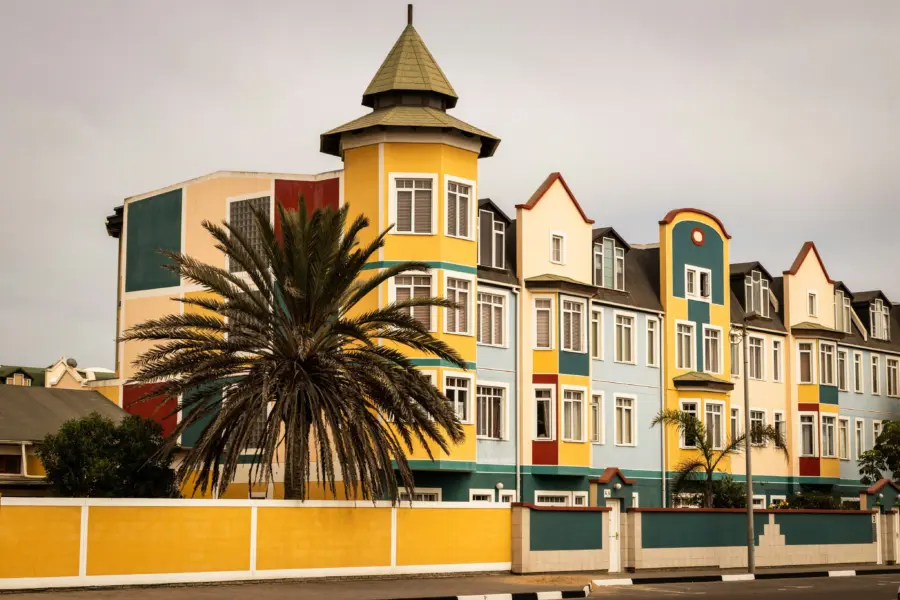
Today, you’ll drive along a bumpy sandy track to the coastal town of Swakopmund. As you drive into this town, it might seem as though you’re in Germany, but nothing could be further from the truth! It’s clear to see that this was once a German colonial town. Even today, you can still order typical German dishes here, and the architecture has a distinctly German character.
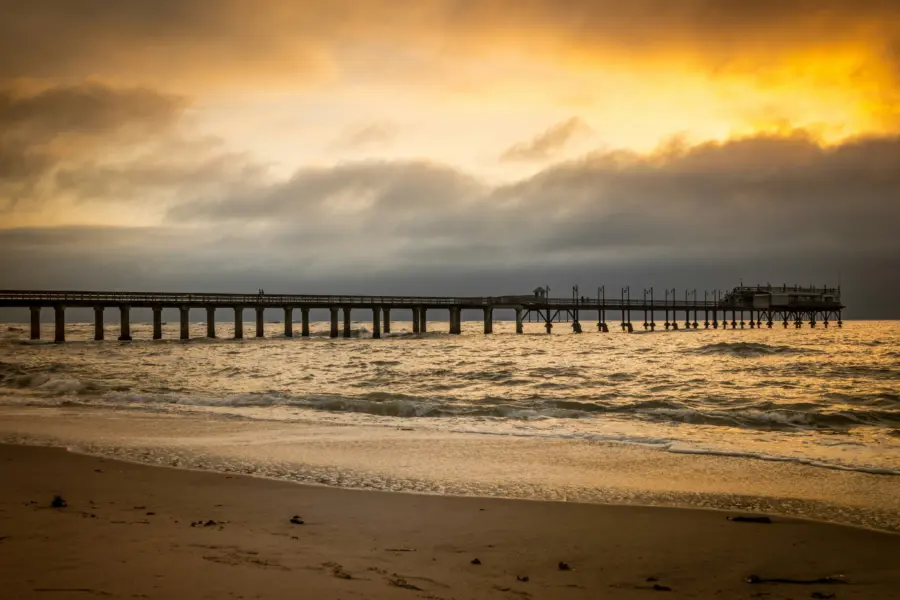
There are various activities to enjoy in and around Swakopmund. For example, you can visit the sea lion colony at Cape Cross, which is situated just north of Swakopmund. You can also go sandboarding in the surrounding dunes, go horse riding, skydiving or quad biking. You can also go on a lovely boat trip to spot dolphins, seals and pelicans!
Included:
• Hire car
• Accommodation including breakfast
The petroglyphs of Twyfelfontein
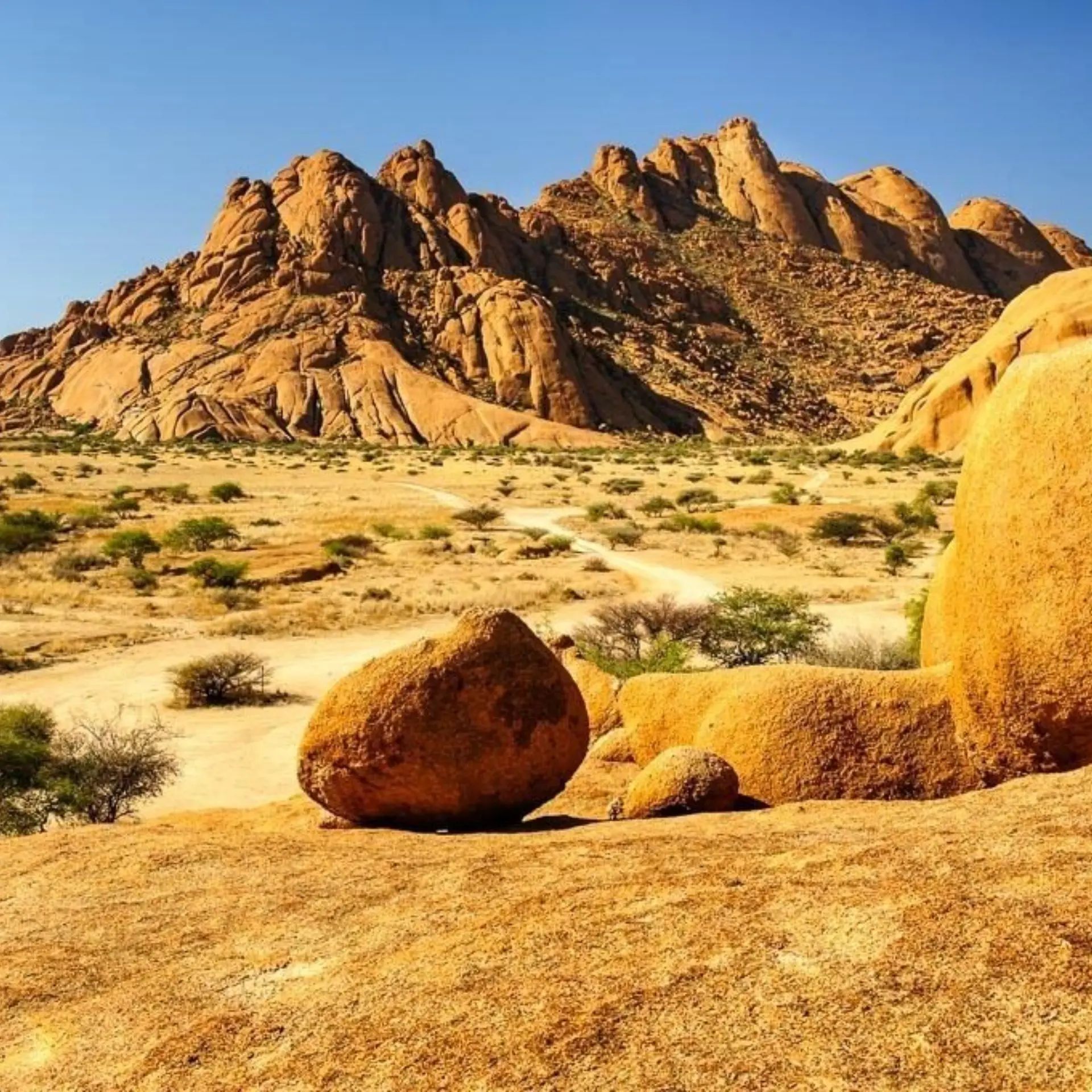
By car, you drive on to the extraordinary Twyfelfontein. This is the area where the Herero tribe lives. Optionally, you can take an excursion where you can learn more about the ancient customs and traditions of this tribe. This area is also famous for its many rock paintings, made thousands of years ago by the different tribes that lived in this area. In the area around Twyfelfontein, you might also encounter wildlife. These include the rare desert elephants, gemsbok and jackals.
Includes:
• Hire car
• Accommodation on a half-board basis
On safari in Etosha National Park
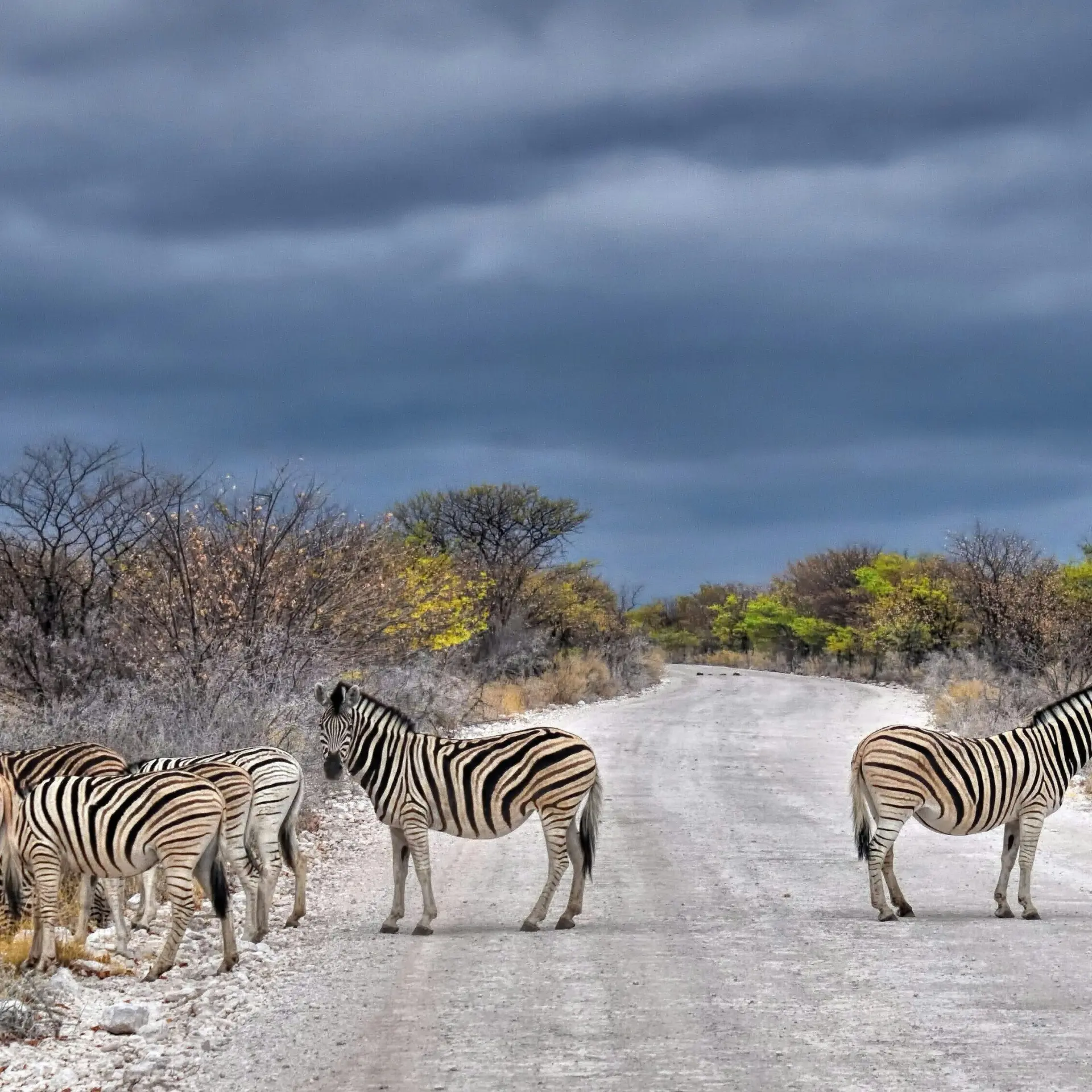
After a special experience in Damaraland, it is now time for safari! You will visit Etosha National Park over the next few days. Etosha "Great White Spot" National Park is one of the largest nature parks in Southern Africa and is said to cover about three-fourths of the Netherlands. The park consists largely of a gigantic salt pan surrounded by bush bushes. Game such as elephants, zebras, lions and various species of antelope can be spotted in large numbers in the park. You will stay at the Etosha Heights Private Game Reserve. Located west of the national park, this private reserve offers you an exclusive experience! The accommodations are luxurious and in addition, activities such as guided game drives are included. This area is particularly special as it is home to a healthy population of black and white rhinos - a unique experience!
Included:
• Hire car
• Accommodation on a full-board basis, including (shared) safari activities
Traverse Etosha with your rental car
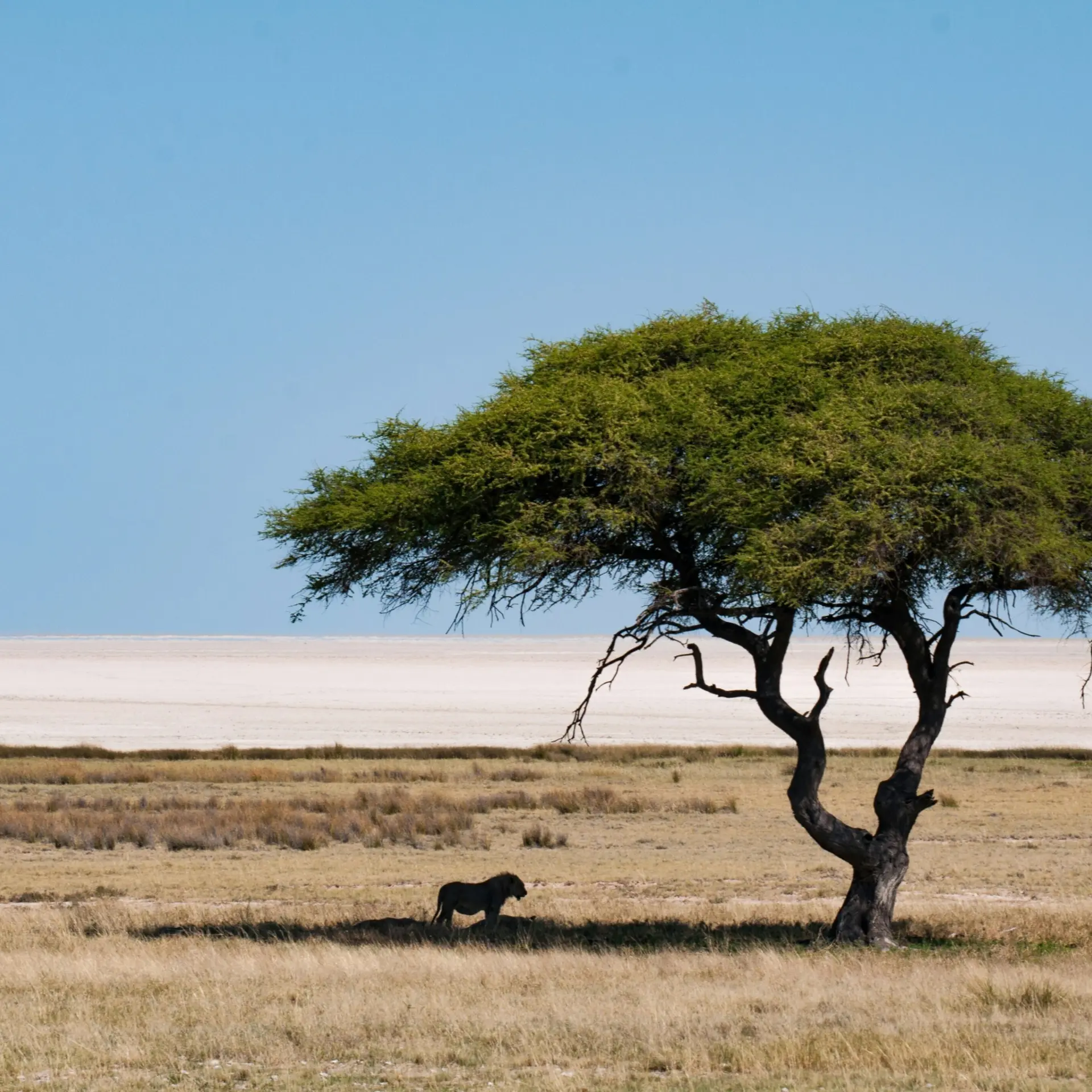
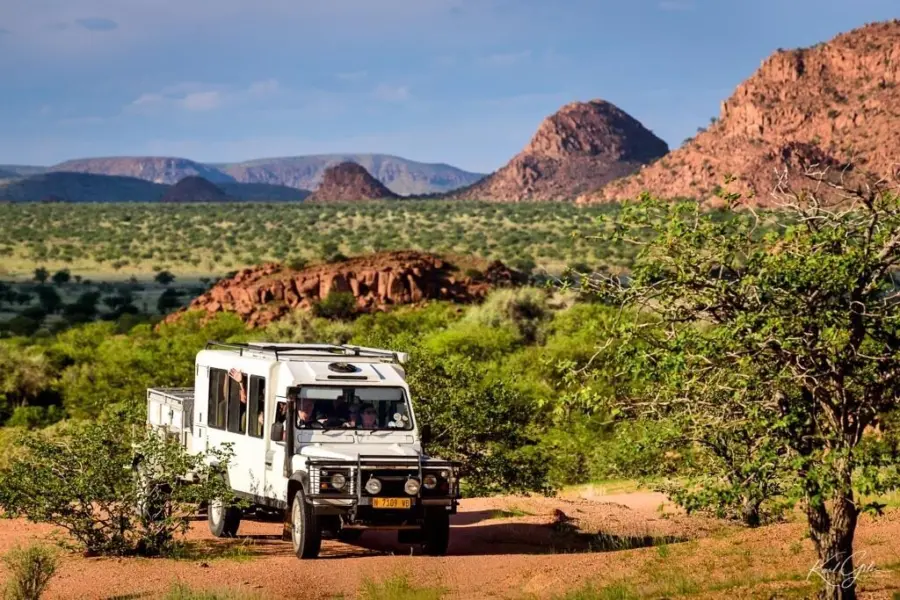
Today, you’ll explore the famous Etosha National Park in your own hire car. Set off on your own journey of discovery and feel the excitement as you track down a herd of animals yourself. Truly a unique experience! At the end of the day, you can relax at your lodge, which is situated just outside the park gate. Here, you can unwind after a day full of safari highlights. A delicious dinner will be served in the evening.
The following day, you can spend the whole day in the eastern part of Etosha. You can choose to go on safari in your own hire car, or alternatively, you can join the guided game drives with a local guide.
Included:
• Hire car
• Accommodation on a half-board basis
Exclusive:
• Entry fees for Etosha National Park
Relaxation by the river
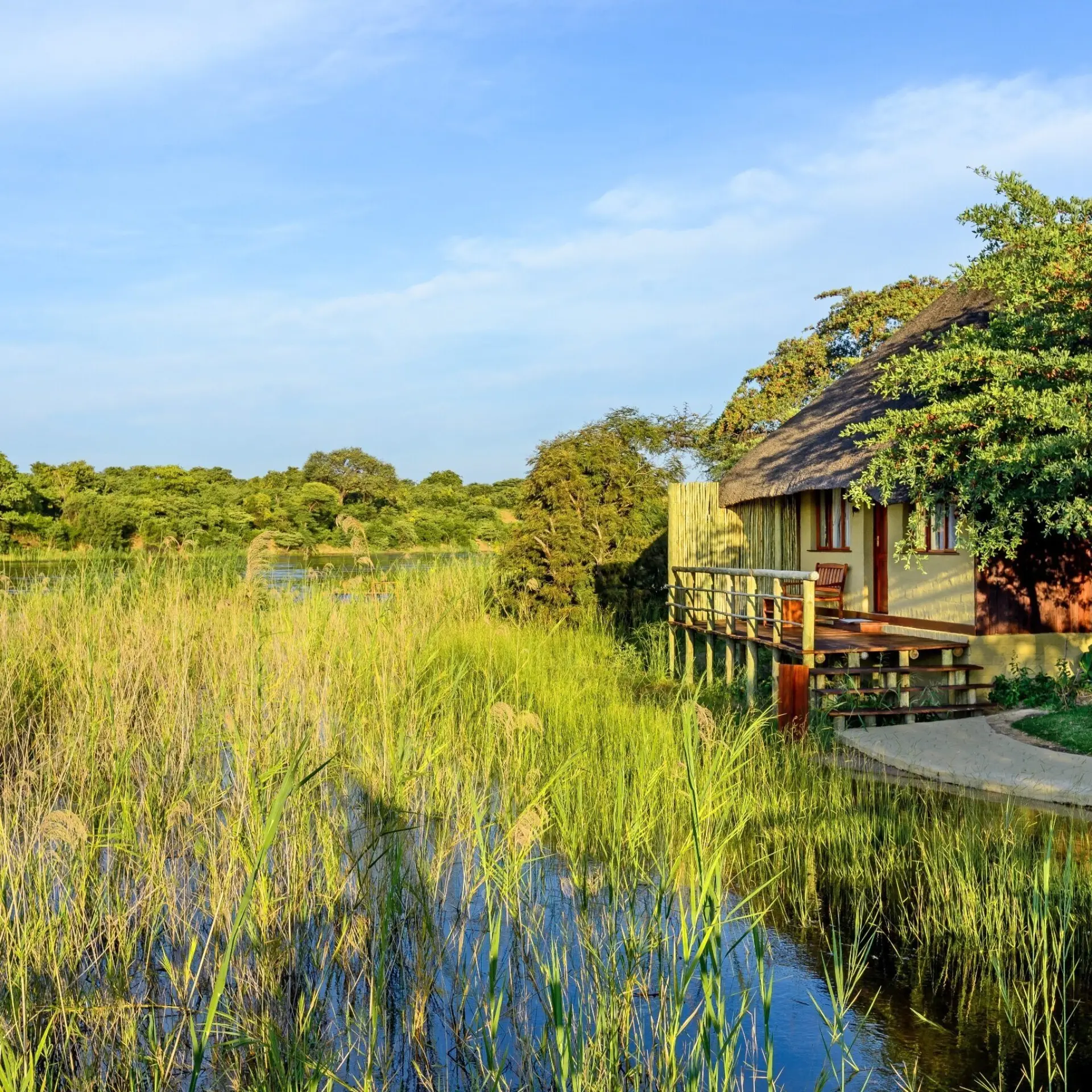
After the beautiful safari experiences, you will continue driving towards northern Namibia. You will spend the night near the town of Rundu. Your accommodation is located on the Okavango River. This river originates from Angola and feeds the famous Okavango Delta in Botswana. Rundu is characterised by its rich bird life. In fact, hundreds of bird species live in this area, making it unique for birdwatchers. In addition, you could take an optional boat trip down the river to spot crocodiles, for instance.
Included:
• Hire car
• Accommodation including breakfast
The green Caprivi Strip
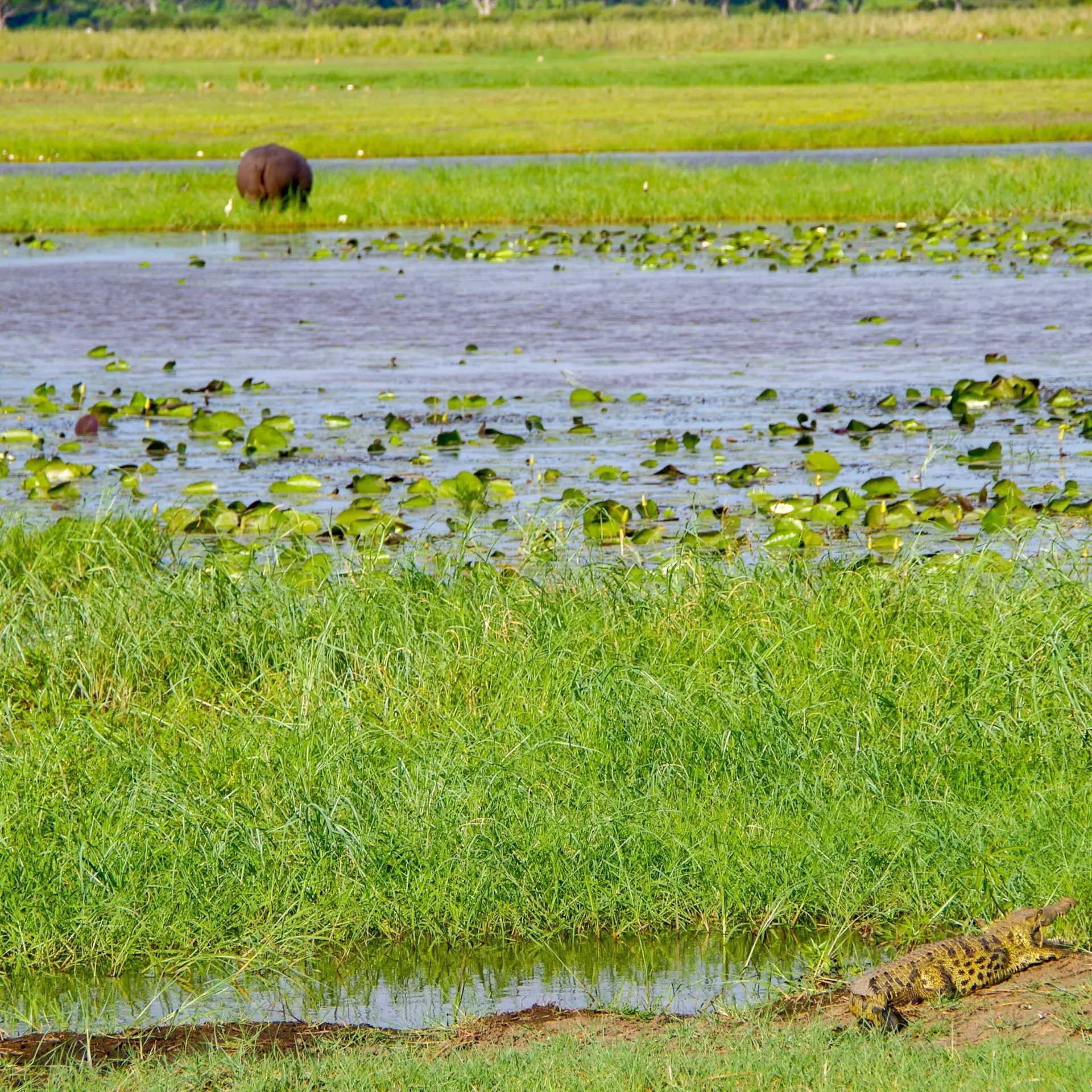
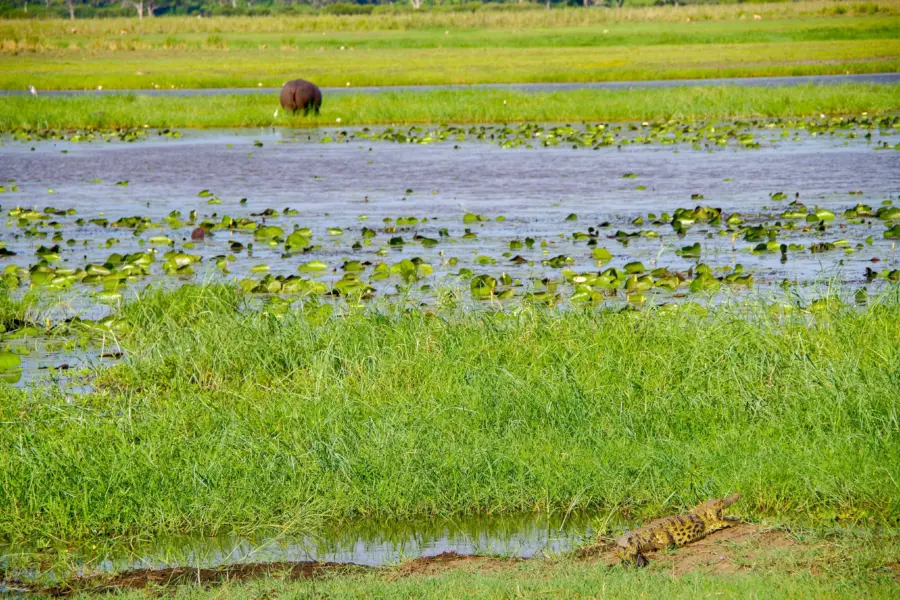
You will drive to the starting point of the Green Caprivi Strip. This strip is located between Botswana and Angola and is only 30 kilometres wide. Along the way, you may encounter some wildlife and enjoy the stunning views. Bordering Botswana, the small Mahango Game Park is part of the beautiful Bwabwata National Park. The park's landscape is characterised by forests and vast floodplains of the Okavango River basin. It is home to 99 animal species, including a large number of elephants, lions, leopards and a variety of antelopes. This park is an excellent destination for avid birdwatchers with over 400 species and also provides the perfect place for visitors to catch a glimpse of crocodiles and hippos in the Okavango River.
Included:
• Hire car
• Accommodation on a half-board basis
Accommodation at the Okavango Panhandle
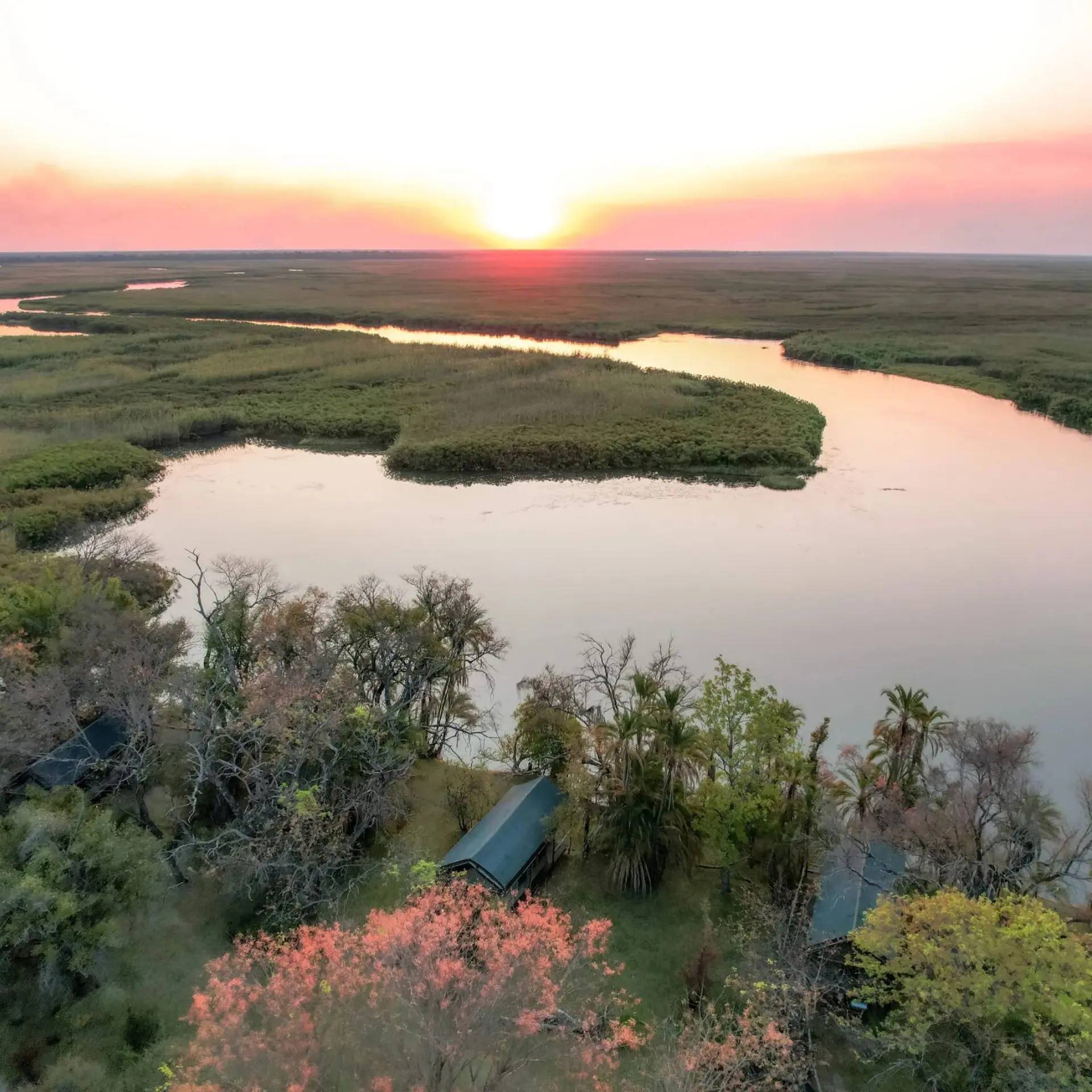
Today, you will leave Namibia behind and cross the Botswana border. After crossing the border, you will drive south along the Okavango River. Your next accommodation is next to this famous river, which flows into the world's largest inland delta. You thus get a taste of it before you actually enter the Delta. You will stay at a beautiful tented camp, where you can enjoy the facilities available. Among other things, there is a swimming pool. You can also participate in various activities, such as birding safaris, walks and boat trips.
Included:
• Hire car
• Accommodation on a full-board basis, including (shared) safari activities
Unwind in Maun
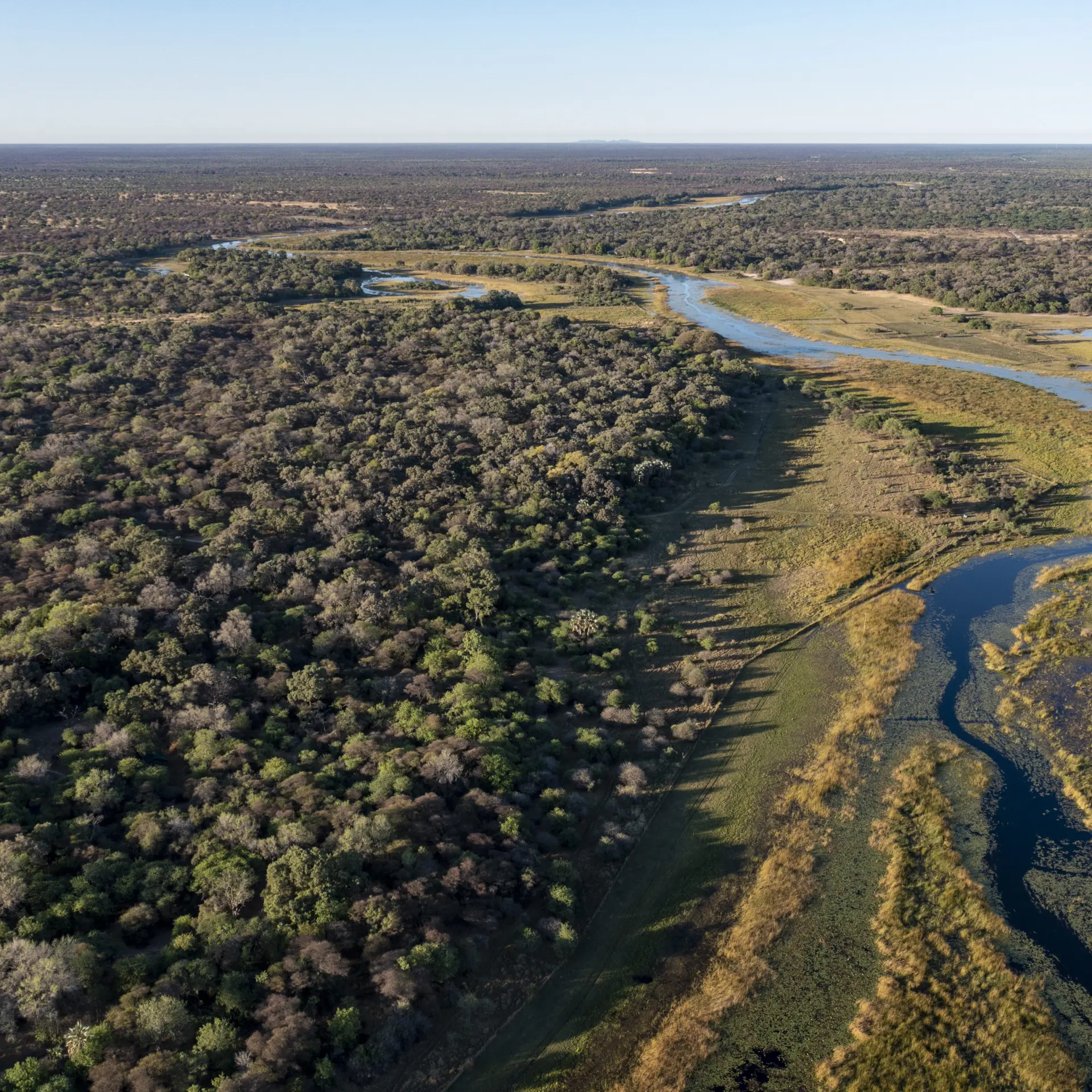
You check out of your accommodation and set sail for Maun. This town is known as the gateway to the Okavango Delta, which you will visit the next day. You will spend the next night at a comfortable lodge, which is located just outside the town of Maun.
Included:
• Hire car
• Accommodation on a half-board basis
Safari highlights in the extraordinary Okavango Delta
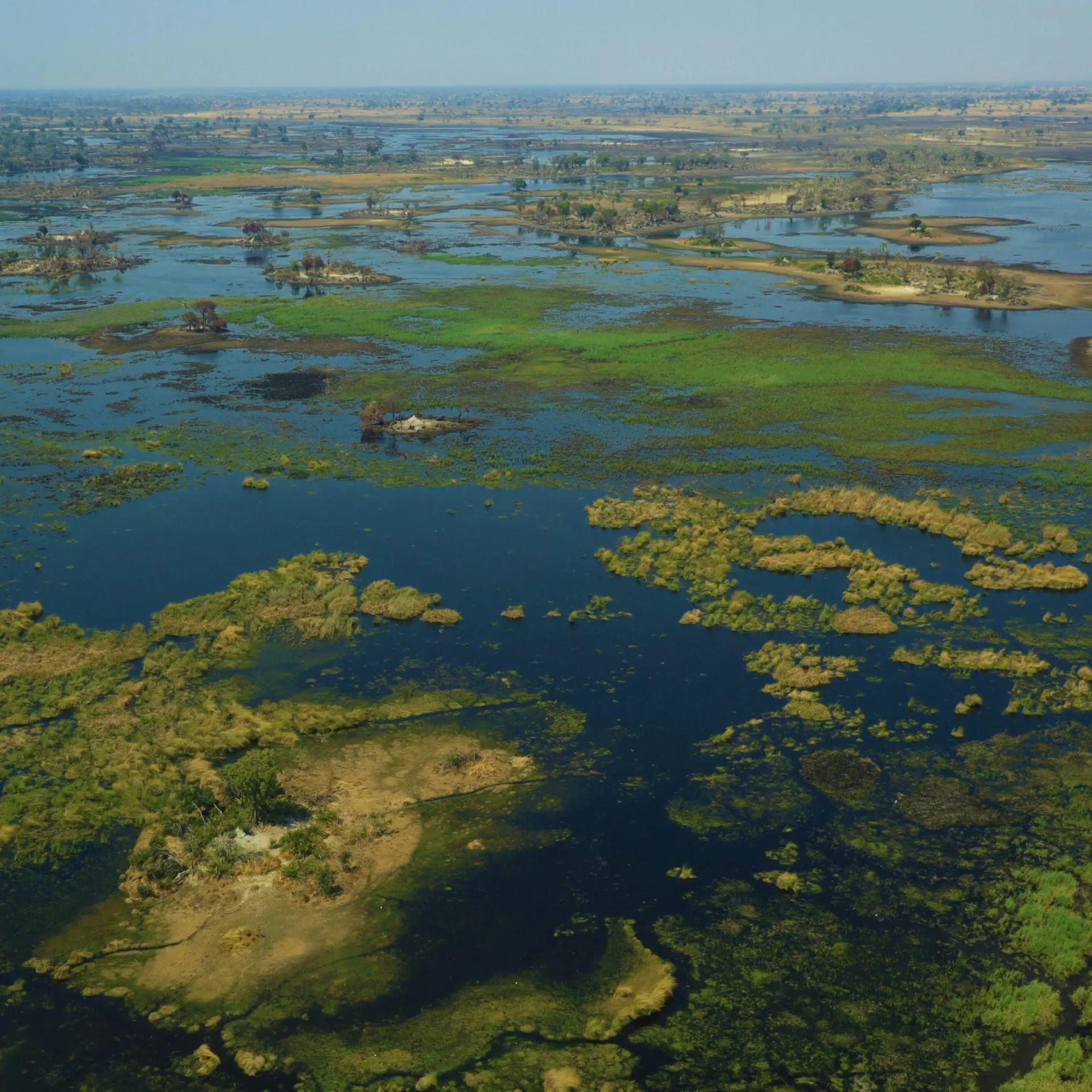
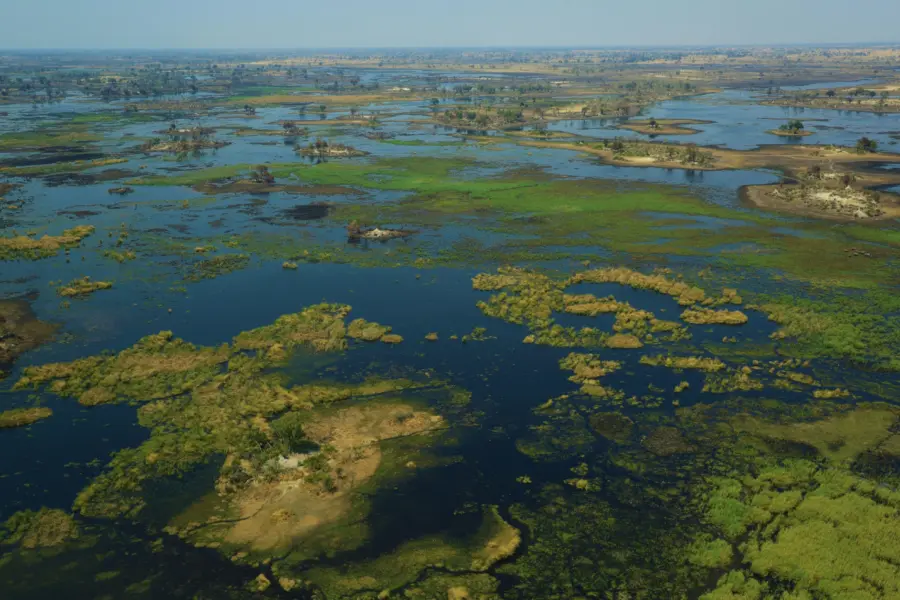
Today, one of the highlights of your trip is on the itinerary: the Okavango Delta. You’ll drive to Maun Airport, where you’ll return your hire car. A small charter flight will then take you from Maun to your accommodation in the Okavango Delta. En route, you’ll enjoy stunning views of the Okavango Delta. A trip to the Okavango Delta – deep within Africa’s unspoilt wilderness – is like no other. From wetlands to drylands, past palm-tree islands and teeming with wildlife. Over the coming days, you’ll discover the many facets of this unique ecosystem, the largest intact inland delta in the world. The Okavango Delta lies deep within the Kalahari Basin and is often referred to as the ‘pearl’ of the Kalahari.
The very existence of the Okavango Delta is remarkable. The Delta is fed by the Okavango River and was formed over thousands of years as millions of tonnes of sand were carried away by the river from Angola. The Okavango Delta can vary in size from 15,000 square kilometres during drier periods to as much as 22,000 square kilometres during wetter periods.
Your stay here is on a full-board basis, including activities. On arrival, you will discuss with your guide which activities you will be doing over the coming days, taking into account your interests and the weather conditions. You will enjoy the beautiful Okavango Delta and experience it in a variety of ways.
Included:
• Hire car
• Shared charter flight to the Okavango Delta (including 15kg hold luggage and 5kg hand luggage in soft travel bags)
• Accommodation on a full-board basis, including scheduled safari activities
En route to Zimbabwe
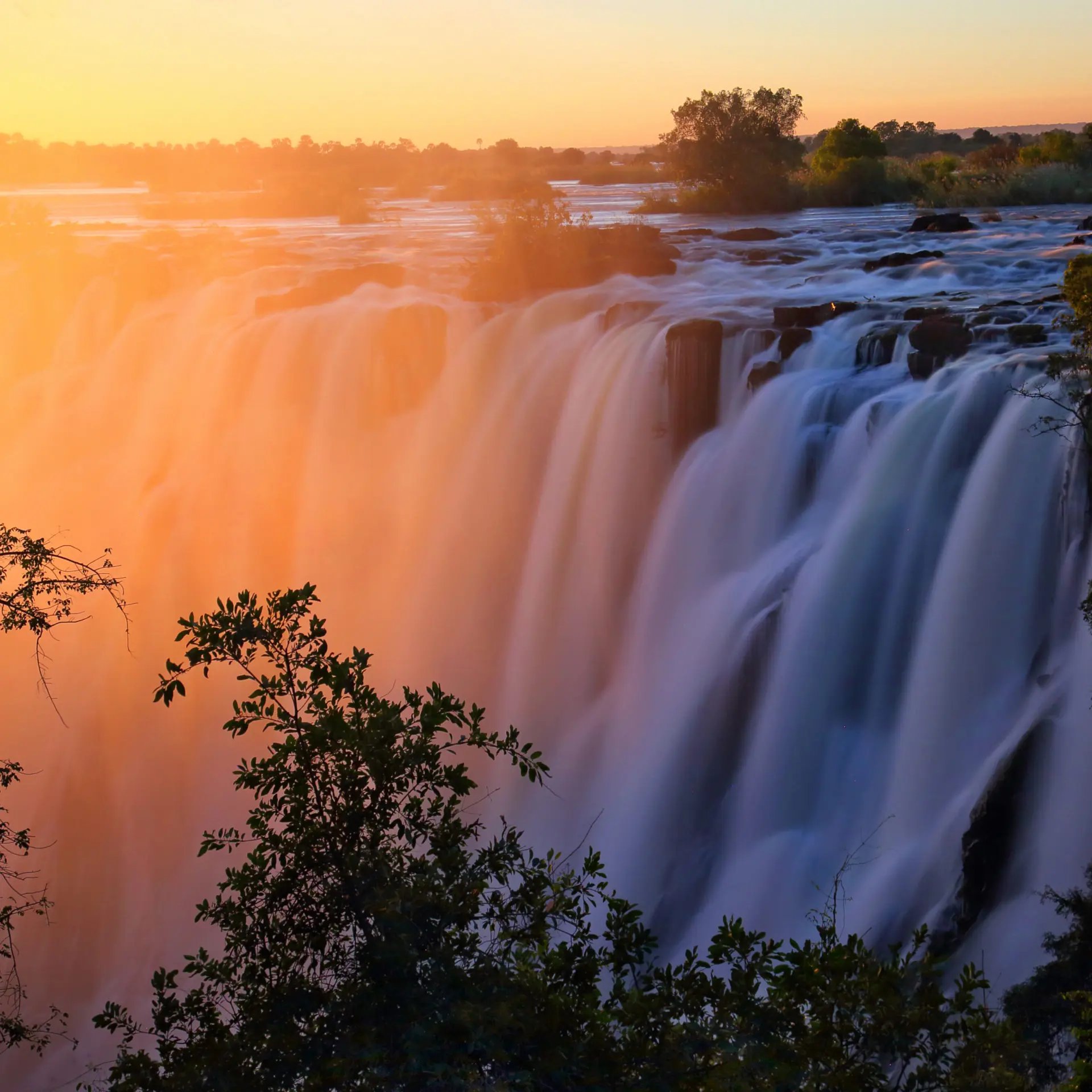
End your trip in style at the world-famous Victoria Falls. From the Okavango Delta, you fly to Kasane, where your transfer is already waiting. You will cross the border into Zimbabwe and be transferred to your accommodation in the tourist town. Here you will spend the last few days of your trip. Upon arrival, you can recover from the travel day and enjoy all the facilities available at the hotel. In the evening, you can have optional dinner at your hotel's restaurant, but we can of course make restaurant reservations for you.
Included:
• Shared charter flight to the Okavango Delta (including 15kg hold luggage and 5kg hand luggage in soft travel bags)
• Transfer to Victoria Falls, Zimbabwe
• Overnight stay including breakfast
Exclusive:
• Visa fees for Zimbabwe
Visit the Victoria Falls
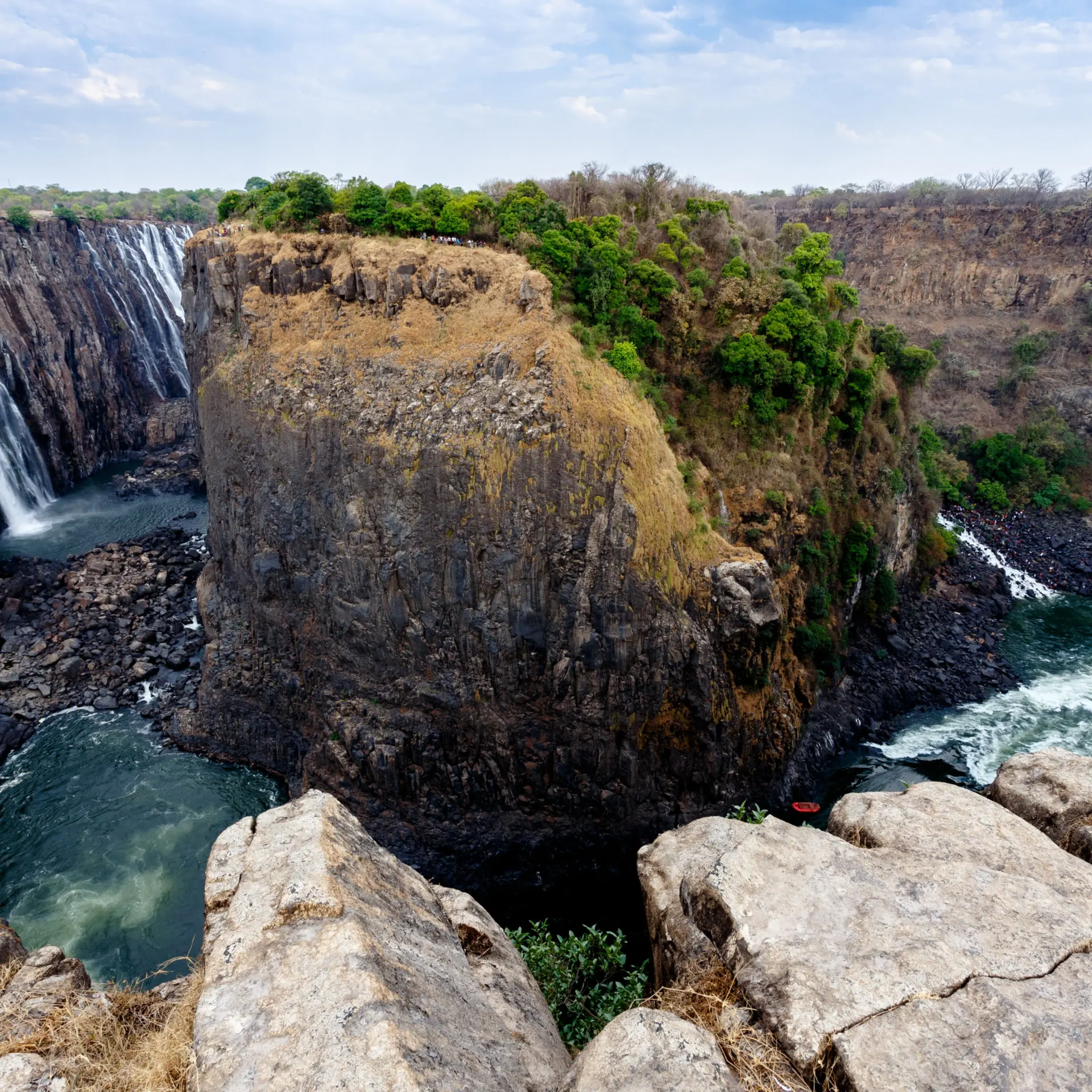
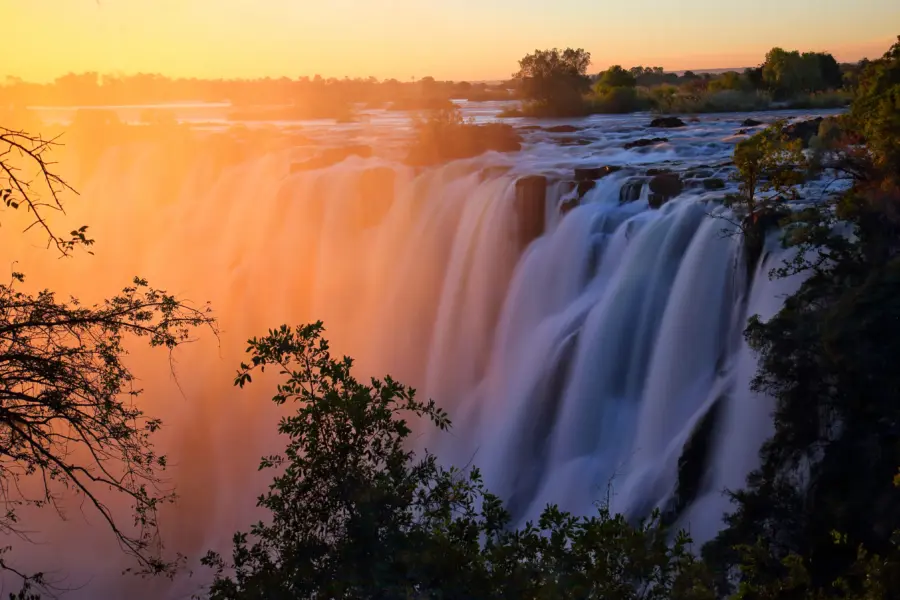
Victoria Falls is, of course, famous for the waterfalls of the same name, which are one of the seven natural wonders of the world. This 1.7 km-wide waterfall is certainly well worth a visit. You’ll visit the falls accompanied by a local guide. Don’t forget to bring a poncho!
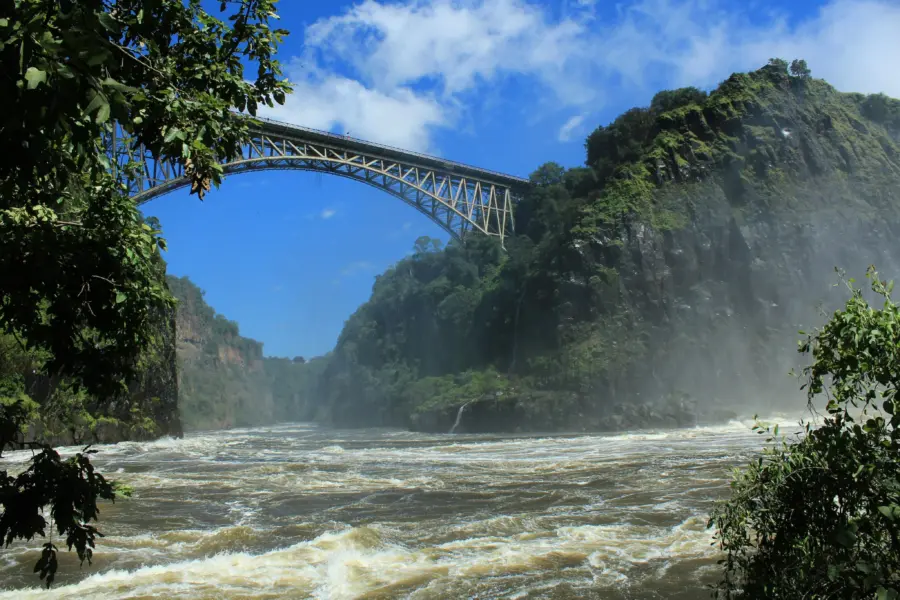
There are also several optional activities to enjoy around Victoria Falls. These include kayaking, taking a helicopter tour and ziplining across the Zambezi. You can also walk across the famous Victoria Falls Bridge on a guided tour. This is where many people take the plunge with a bungee jump or bridge swing. We recommend booking these activities with us in advance to avoid disappointment. A helicopter tour over the Falls is also highly recommended!
During your stay, you can visit a new and unique restaurant in the Victoria Falls township. Chef Sarah opened this restaurant to introduce visitors to Zimbabwe to the country’s cuisine in an authentic way. The restaurant is colourful, lively and the perfect place to experience Zimbabwean culture in a unique way whilst enjoying a delicious lunch or dinner!
Included:
• Guided excursion to Victoria Falls, including transfers
• Overnight stay including breakfast
Accommodations
InterContinental Johannesburg O.R. Tambo Airport
InterContinental Johannesburg O.R. Tambo Airport is within walking distance of the international terminal. A perfect location if you are in transit and also only 15 minutes by train to the famous Sandton district. You can use Wi-Fi and a quick check-in service and enjoy the hotel's facilities.
Your stay: 1 night

GocheGanas Lodge
GocheGanas offers 16 luxury chalets, under thatched roofs, with uninterrupted views over the nature reserve. All rooms are equipped with a private bathroom, air conditioning, a minibar and a TV. There is also a rooftop restaurant at the lodge, where you will be treated to delicious dishes and stunning...
GocheGanas offers 16 luxury chalets, under thatched roofs, with uninterrupted views over the nature reserve. All rooms are equipped with a private bathroom, air conditioning, a minibar and a TV. There is also a rooftop restaurant at the lodge, where you will be treated to delicious food and stunning views!
Your stay: 1 night

Desert Hills Lodge
Desert Hills Lodge is an enchanting accommodation located amid Namibia's impressive Namib Desert, close to the world-famous Sossusvlei. This beautiful lodge offers a special experience in a breathtaking setting of sand dunes and natural beauty.
The lodge features beautiful...
Desert Hills Lodge is an enchanting accommodation located amid Namibia's impressive Namib Desert, close to the world-famous Sossusvlei. This beautiful lodge offers a special experience in a breathtaking setting of sand dunes and natural beauty.
The lodge features beautifully appointed rooms and luxury chalets, offering the perfect blend of comfort and a pristine wilderness experience. Each room is tastefully decorated with modern amenities and offers a private veranda or terrace to relax and enjoy the stunning views of the surrounding desert.
Located in a strategic location, Desert Hills Lodge offers easy access to the famous Namib-Naukluft National Park and the spectacular dunes of Sossusvlei. Guests have the opportunity to climb the world's tallest sand dune, Dune 45, and discover the surreal beauty of Deadvlei, where petrified acacia trees stand out against the bright white clay soil.
The lodge organises guided excursions to Sossusvlei and Deadvlei, where experienced guides guide you through the dunes and give you fascinating insights into the area's unique flora, fauna and geological formations. The early morning light at sunrise and the warm glow during sunset make these experiences extra magical and unforgettable.
After an adventure-filled day, relax by Desert Hills Lodge's beautiful pool, enjoy refreshing drinks at the cosy bar and sample delicious dishes at the atmospheric restaurant. In the evening, guests often gather around the campfire to share stories and enjoy the endless starry skies of the Namib Desert.
Desert Hills Lodge's hospitality is second to none. The friendly and attentive staff are always ready to help and ensure that your stay is absolutely memorable.
Your stay: 2 nights
Camp Kipwe
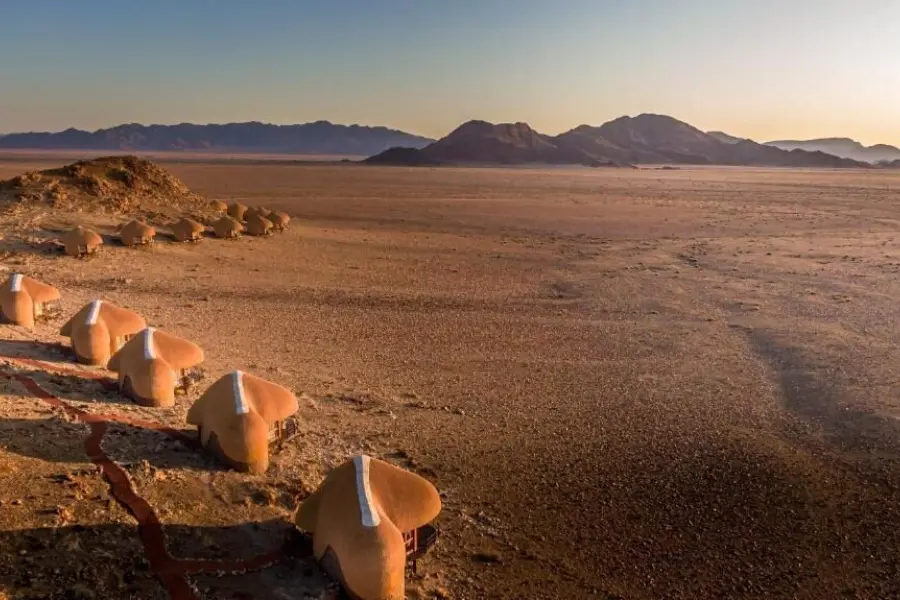
Camp Kipwe is an intimate and remote bush lodge located in arid but very beautiful Twyfelfontein region of Namibia, home to many ancient Bushman etchings. The 9 specially designed rooms are unique, with outdoor bathrooms, thatched roofs and spectacular views of the surrounding area.
Camp Kipwe offers guided...
Camp Kipwe is an intimate and remote bush lodge located in arid but very beautiful Twyfelfontein region of Namibia, home to many ancient Bushman etchings. The 9 specially designed rooms are unique, with outdoor bathrooms, thatched roofs and spectacular views of the surroundings.
Camp Kipwe offers guided nature walks around the Twyfelfontein Conservancy, as well as trips to the Bushman etchings, the mysterious Organ Pipes and Burnt Mountain. For a very special experience, an Elephant Nature Drive is a must-do. Explore the terrain in search of these desert-dwelling elephants that have adapted to the dry and sandy conditions of northern Namibia.
Your stay: 2 nights
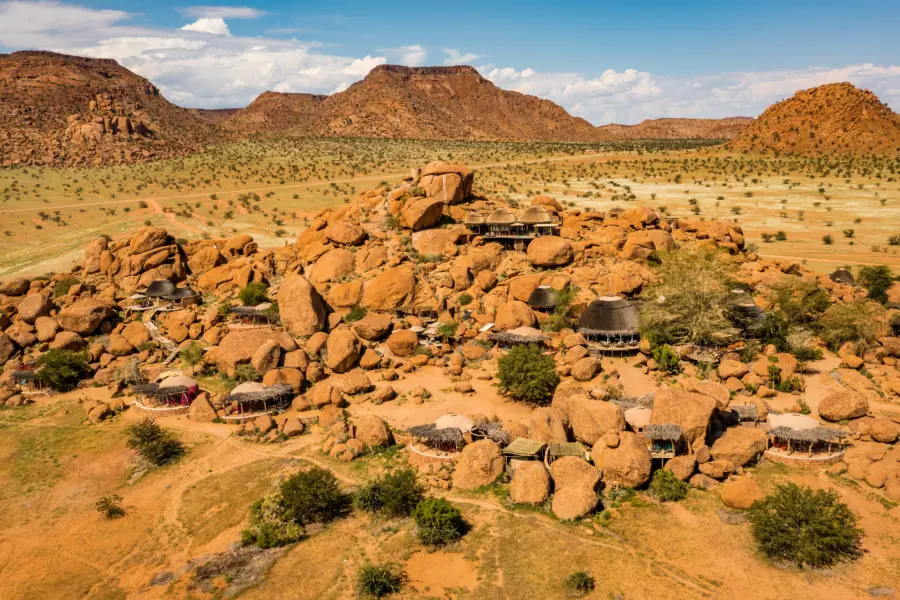
Safari Corner Lodge
Privacy overlooking a busy watering hole
The atmospheric Safarihoek is located amid the 600km2 Etosha Heights game reserve in Namibia. The game-rich private concession shares a 70km border with the better-known Etosha National Park and, unlike Etosha, commends itself...
Privacy overlooking a busy watering hole
The atmospheric Safarihoek is located amid the 600km2 Etosha Heights game reserve in Namibia. The game-rich private concession shares a 70km border with the better-known Etosha National Park and, unlike Etosha, commends itself with more lenient regulations around safaris and guided walks. With its hilltop location and nearby watering hole, you will enjoy stunning views from the comfortable chalets, pool and communal areas at Safarihoek.
Your stay: 2 nights
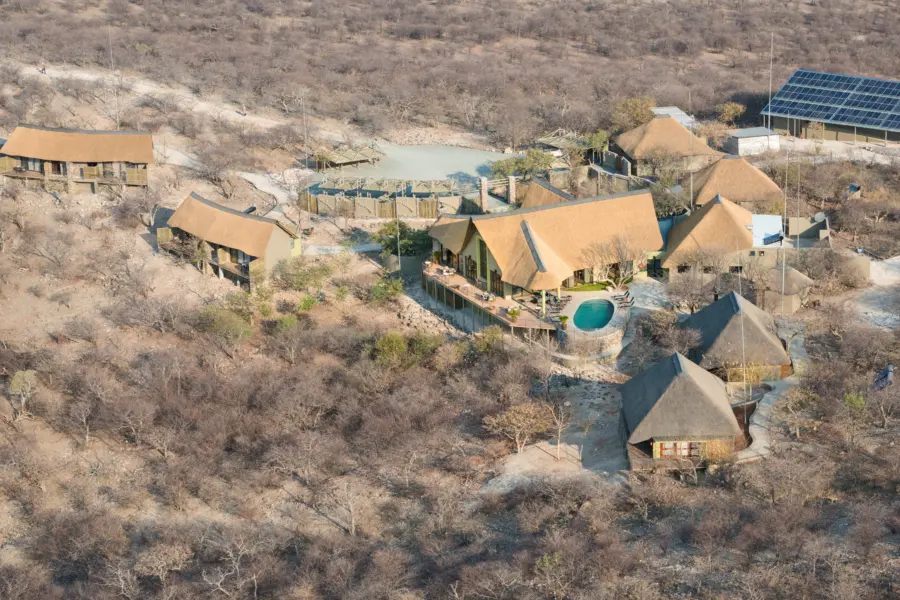
Mushara Outpost
The Mushara Outpost has 16 custom-made "tents", which are made of wood and canvas and are located on the banks of an ancient dry riverbed. This is known to locals as an "omaramba". The Mushara Outpost is also close to the magical Etosha Pan National Park. The "tents"...
The Mushara Outpost has 16 custom-made "tents", which are made of wood and canvas and are located on the banks of an ancient dry riverbed. This is known to locals as an "omaramba". The Mushara Outpost is also close to the magical Etosha Pan National Park. The "tents" feature a homely, friendly and very comfortable atmosphere.
Your stay: 2 nights
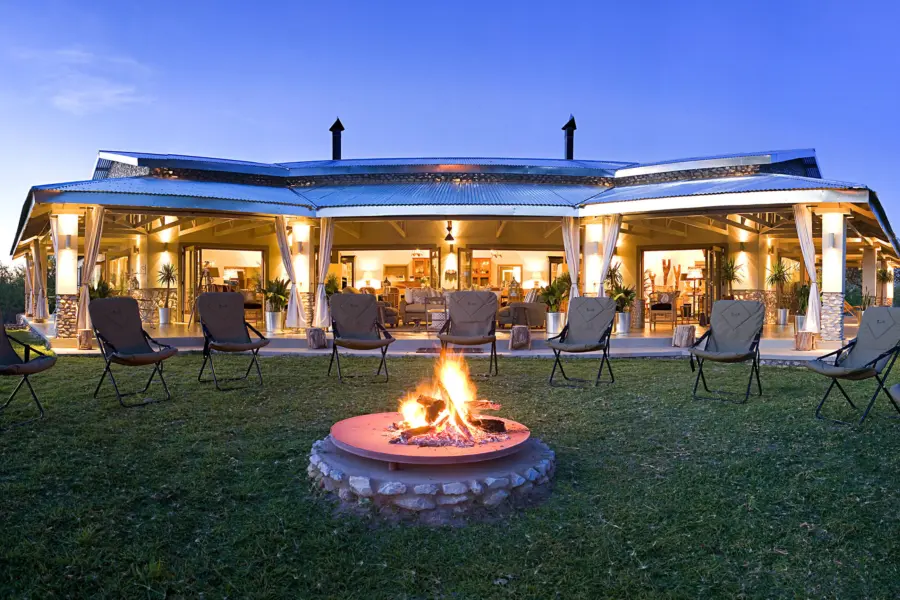
Hakusembe River Lodge Gondwana Collection Namibia
The Hakusembe River Lodge is located 16 km from Rundu in the Kavango region. Upon entering Hakusembe River Lodge at the end of the winding gravel path, you are welcomed with a refreshing image of a green lawn, large trees, a collection of thatched chalets and a sparkling river. Here you can...
The Hakusembe River Lodge is located 16 km from Rundu in the Kavango region. Upon entering the Hakusembe River Lodge at the end of the winding gravel path, you are welcomed with a refreshing image of a green lawn, large trees, a collection of thatched chalets and a sparkling river. You can enjoy the tranquillity and beautiful surroundings here. The lodge has a restaurant, a bar, a swimming pool, Wi-Fi, security, parking, air conditioning, a safe and a veranda.
Activities here include; cooling off in the pool, canoeing on the river, bird watching or you can take a walk to the cultural village of Mbunza.
Your stay: 1 night
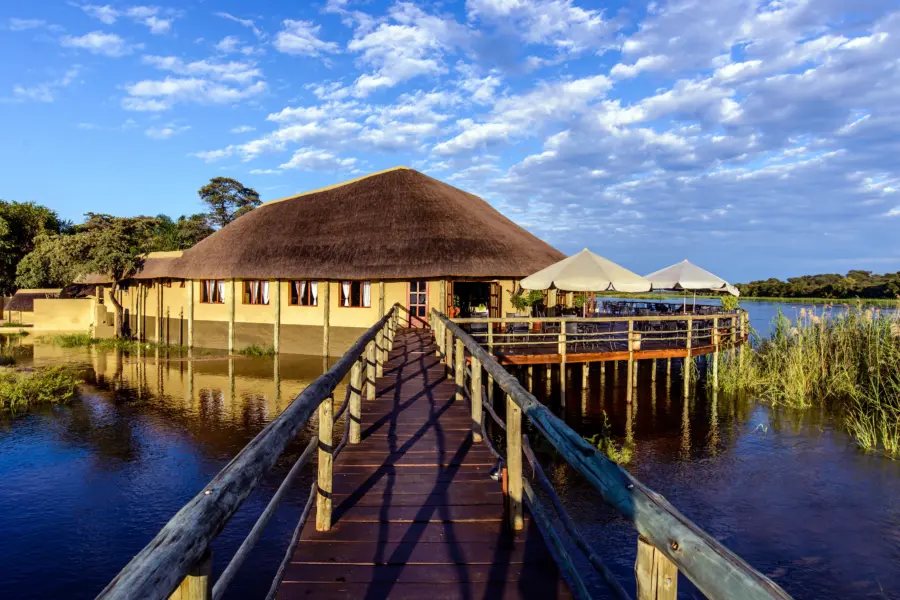
Divava Okavango Resort & Spa
Divava Okavango Resort & Spa is built on the banks of the Okavango River and is right next to Popa Falls. It is a 20-minute drive from the Mahango National and Buffalo Game Parks, the perfect gateway to unprecedented adventure and a destination that goes beyond game safaris. It is a hidden...
Divava Okavango Resort & Spa is built on the banks of the Okavango River and is right next to Popa Falls. It is a 20-minute drive from the Mahango National and Buffalo Game Parks, the perfect gateway to unprecedented adventure and a destination that goes beyond game safaris. It is Namibia's hidden natural paradise, where time stands still. Divava Okavango Resort & Spa is a unique accommodation in the region. Experience magical moments in the national wildlife parks and on the Okavango River. After a special day, visit the Divava Okavango Spa, a place that has the perfect harmony between natural beauty and pure relaxation. All 20 rooms are luxurious with thatched roofs in the vast and peaceful gardens. Enjoy fine dining at Divava Okavango Resort's restaurants. The resort offers stunning views of the Okavango River with excellent bird watching opportunities and offers many other activities for curious explorers.
Your stay: 2 nights
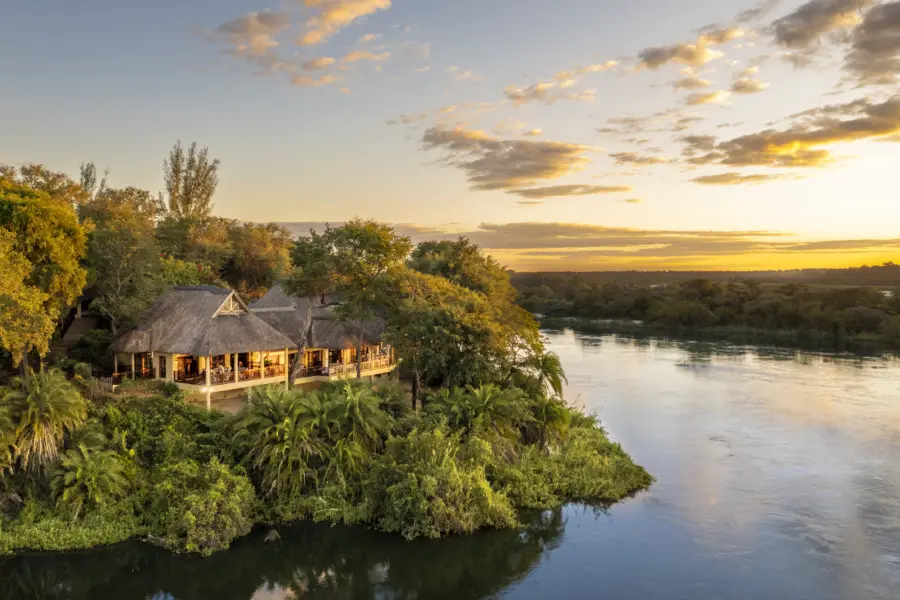
Xaro Lodge
A few miles outside Shakawe, in north-western Botswana, on the tranquil banks of the Okavango River, you will discover Xaro Lodge, a 24-bed Luxury Meru-Tented Lodge. Nestling amongst giant Mangosteen trees and accessible only by boat, the lodge is home to a myriad of birds. The distinctive cry of the African Fish Eagle,...
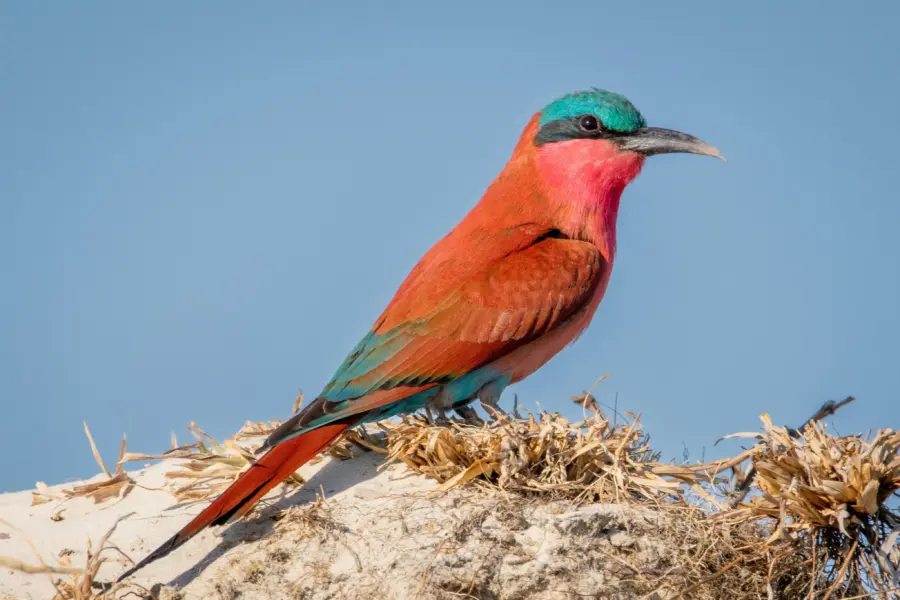
A few miles outside Shakawe, in north-western Botswana, on the tranquil banks of the Okavango River, you will discover Xaro Lodge, a 24-bed Luxury Meru-Tented Lodge. Nestling amongst giant Mangosteen trees and accessible only by boat, the lodge is home to a myriad of birds. The distinctive cry of the African Fish Eagle, White Backed Night Heron and the illusive Pel's Fishing Owl make this tropical paradise a must for bird lovers.
This area is an excellent way to discover the cultural side of Botswana, in particular the hills of Tsodilo, also known as the "Mountain of Gods". Rich of cultural experiences and offerings, Tsodilo takes you through the history of Botswana from thousands of years ago.
Your stay: 1 night
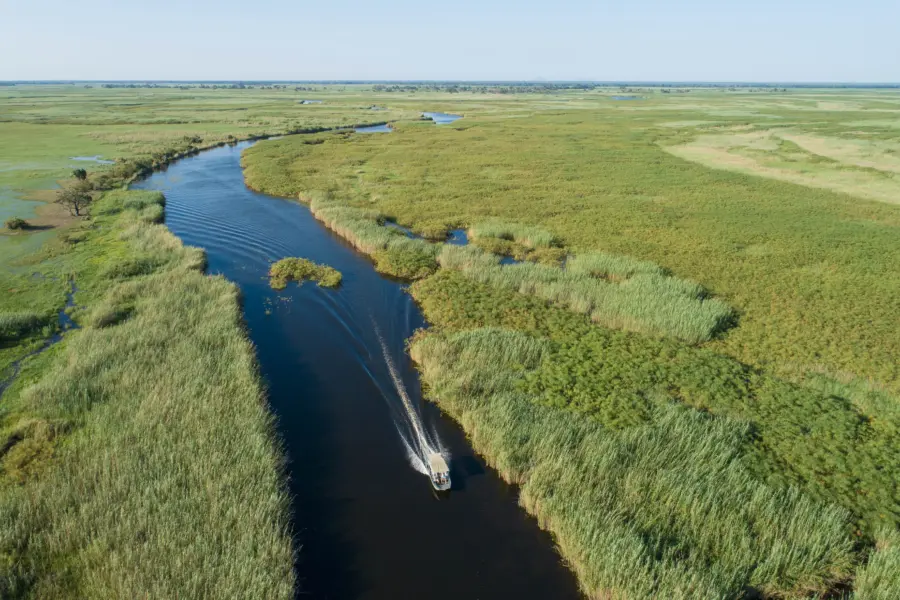
Thamo Telele
Thamo Telele is a private game reserve located 30 minutes from the iconic safari town of Maun, the gateway to the Okavango Delta. The lodge is situated on a private reserve on the banks of the Thamalakane River with an abundance of wildlife including giraffe, zebra, springbok, ostrich, eland, gemsbok and kudu as well as...
Thamo Telele is a private game reserve located 30 minutes from the iconic safari town of Maun, the gateway to the Okavango Delta. The lodge is situated on a private reserve on the banks of the Thamalakane River with an abundance of wildlife including giraffe, zebra, springbok, ostrich, eland, gemsbok and kudu as well as an extensive variety of bird life. Guests will indulge in comfort and relaxation in one of Thamo Telele's well appointed, private tented chalets or romantic thatched honeymoon suites. World class cuisine served by candlelight on the lodge's expansive teak deck, is the perfect way to conclude a day's safari. At Thamo Telele, it's not just about luxurious accommodation and old world hospitality. Marked walking trails invite guests to create their own adventure allowing safe, intimate interaction with wildlife. For the more adventurous, set off on a horse back safari, scenic flight over the delta, or mokoro canoe trip down the river. Finish off the day with a warm drink around the communal fire as personal safari hosts and Thamo Telele managers share life stories from over 80 years of combined safari experience.
Your stay: 1 night
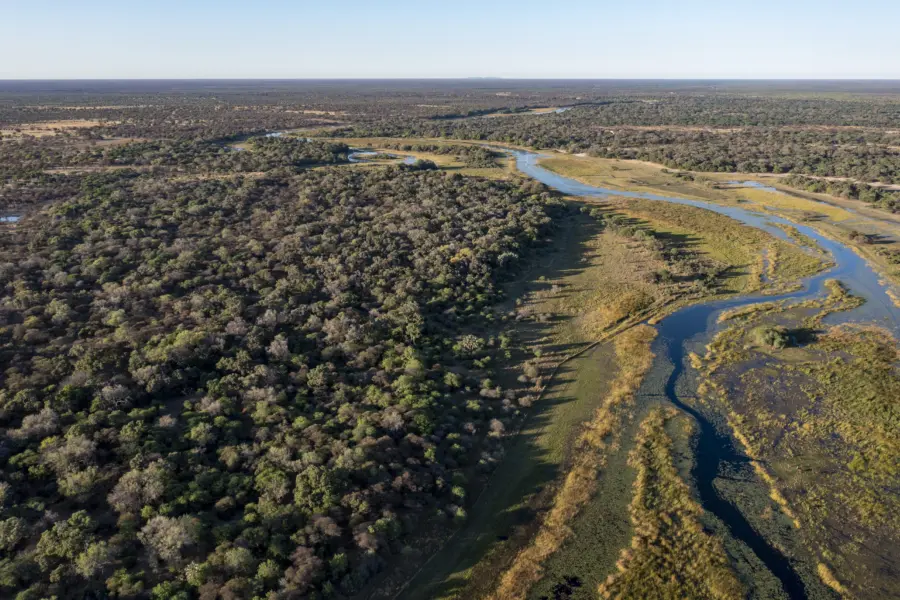
Shinde
Shinde is located on a lush palm island in the heart of the northern Okavango Delta. It is an intimate, classic camp on the edge of the Shinde Lagoon, teeming with animals and birds. The camp's unique main area consists of a multi-level dining room and a lounge that is under canvas...
Shinde is located on a lush palm island in the heart of the northern Okavango Delta. It is an intimate, classic camp on the edge of the Shinde Lagoon, teeming with animals and birds. The camp's unique main area consists of a multi-level dining room and lounge set under canvas in the shade of ebony and mangosteen trees.
Shinde is an iconic camp, one of the first in the Okavango Delta, and loved by many. In fact, the new Shinde, the camp was remodelled in 2020, pays homage to its former self-preservation, authentic classic safari style. The new tents and main area provide a luxurious experience with a touch of historical charm. The design of the new camp can be described as "the best of nature in an authentic safari design - still with the understated, friendly and intimate Ker & Downey Botswana feel". Elegant, Classic, Opulent 'Out of Africa'. A 'worldly' sophisticated safari experience. Every possible comfort has been provided - from full solar power and a private viewing platform to yoga mats! Accommodation generally consists of double rooms with two separate, comfortable three-quarter beds, but accommodation with one double bed is available on request.
Your stay: 3 nights
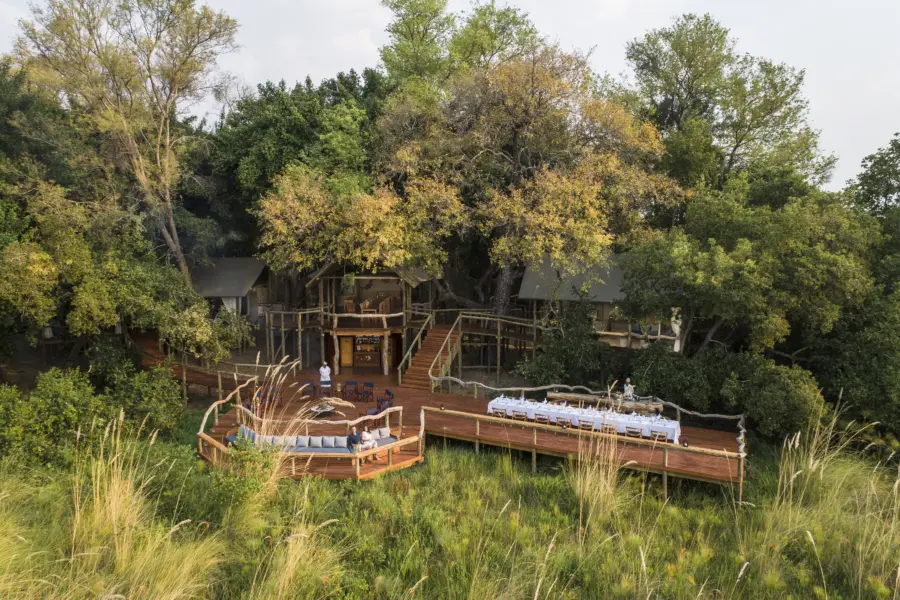
Palm River Hotel
The Palm River Hotel offers rooms of unmatched luxury, located along the banks of the iconic Zambezi River, among towering native trees and just 4 kilometres from Victoria's Natural World Wonder, Victoria Falls.
The hotel introduces a new dimension of unparalleled luxury without compromising...
The Palm River Hotel offers rooms of unmatched luxury, located along the banks of the iconic Zambezi River, among towering native trees and just 4 kilometres from Victoria's Natural World Wonder, Victoria Falls.
Introducing a new dimension of unparalleled luxury without compromising the feeling of home comfort, the hotel's innovative blend of traditional style and the unique landscape of the Zambezi River has resulted in a brand new and distinctive Victoria Falls landmark.
The hotel offers the discerning traveller luxury accommodation with easy access to explore Africa's natural wonder of Victoria Falls. You can enjoy a plethora of activities offered in the historic city of Victoria Falls or soak up the magic of the Zambezi River and the abundant flora and fauna that inhabits the popular destination.
Your stay: 2 nights

Destinations
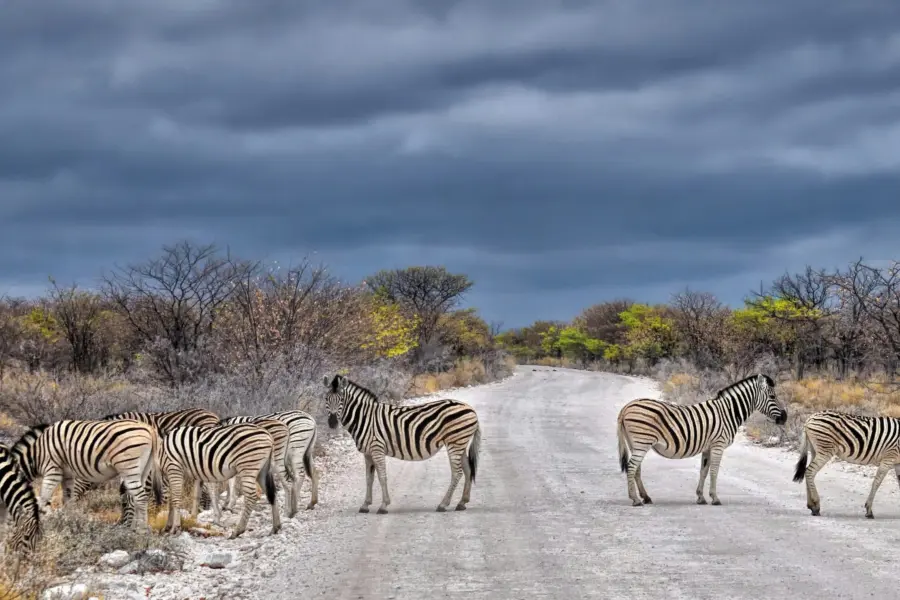
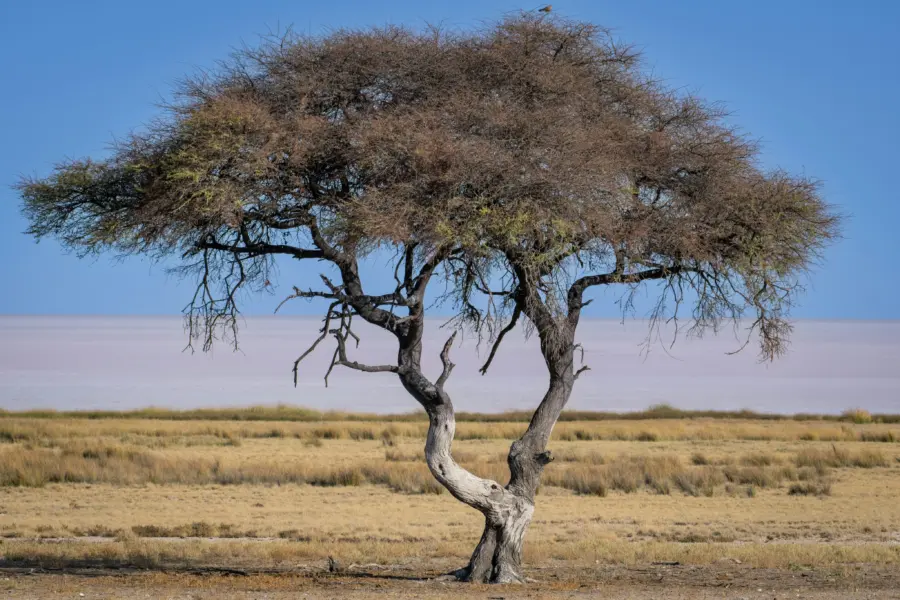
Etosha National Park
Etosha means ‘Big White Spot’ and is one of the larger nature reserves in Southern Africa. The park is roughly three-quarters the size of the Netherlands and consists largely of a vast salt pan surrounded by bush and scrub. At the natural and man-made waterholes, you can spot large numbers of wildlife.
Elephants, zebras, lions and various species of antelope can be found at these waterholes, which are vital for survival during times of drought. Some of the watering holes are situated closer to your accommodation, and in the evening, after dark, you can enjoy watching rhinos and large herds of elephants coming to drink. The watering holes are often illuminated, which gives this nocturnal experience a unique character.
Johannesburg
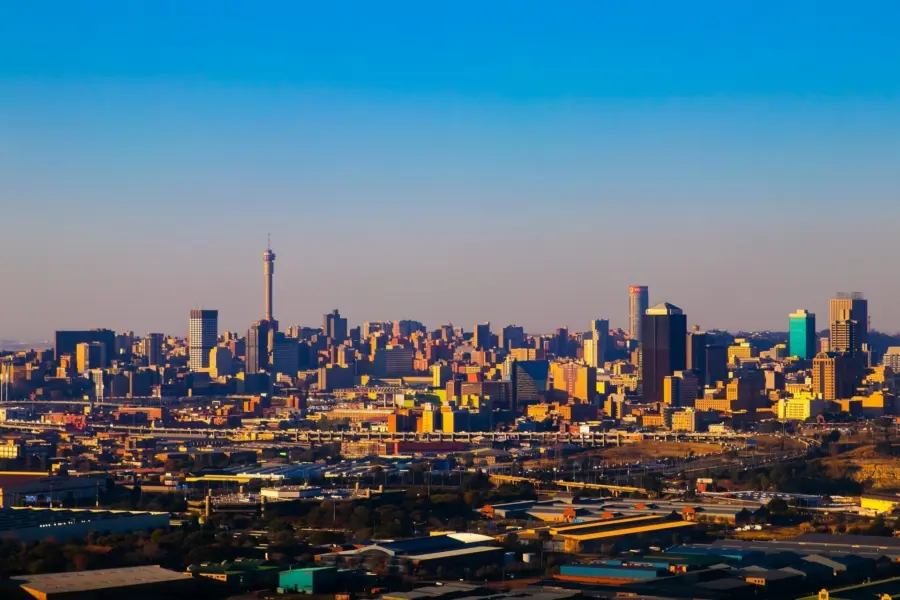
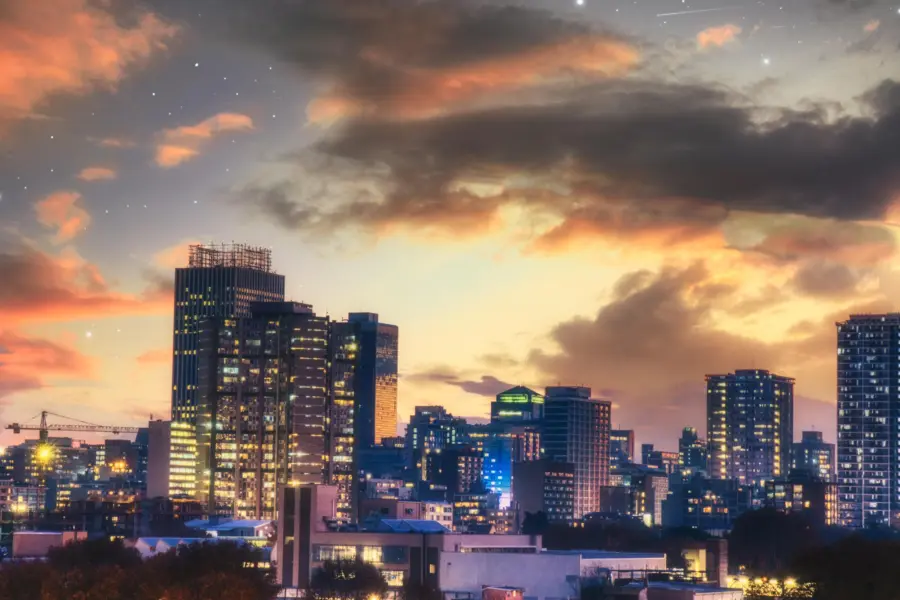
Johannesburg is South Africa’s largest city. It is also the economic heart of South Africa, home to all the major financial and industrial companies. Johannesburg was founded following the discovery of gold in the Witwatersrand in 1886. At that time, the Witwatersrand lay within the borders of the South African Republic, of which Paul Kruger was president. The Republic had been established in consultation with the British government, which was administering the Cape Province at the time. Following the discovery of gold, control of the region became a matter of dispute.
Johannesburg’s city centre is colourful, lively and exotic, with its diverse cultural offerings. Of particular interest is the ‘Carlton Centre’ on Commissaris Street. This skyscraper was built in the 1970s, stands 220 metres tall and remains the tallest building in Africa. On the top floor is a viewing platform called ‘The Best of Africa’. From a height of 202 metres, you can enjoy an impressive view over Johannesburg.
Outside the city centre, in the Fourways district, you’ll find the new theme park “Monte Casino”, whilst “Gold Reef City” is situated in the south of the city. Here, you can learn about the history of gold mining in an entertaining way. The new Apartheid Museum is also well worth a visit. And if you’re looking for the best shops in the country, head to Mandela Square in Sandton.
Gauteng
Gauteng is South Africa’s smallest province, but it is the commercial and administrative heart of the country and indeed of the whole of southern Africa.
The name Gauteng is the Sotho name for ‘Place of Gold’. In fact, a huge gold vein was discovered in this province in 1886, and gold quickly became the foundation of the national economy. During mining operations, further riches were unearthed, such as diamonds and coal.
But Gauteng is more than just cities, money and politics. For example, the Sterkfontein Caves were designated a World Heritage Site after bones dating back no less than 3.5 million years were found there. This site is also known as the Cradle of Humankind.
South Africa
One of the most culturally and geographically diverse places on earth, South Africa, affectionately known to locals as the 'Rainbow Nation', has 11 official languages, and its people are influenced by a fascinating mix of cultures. Discover Cape Town's gourmet restaurants, impressive art scene, vibrant nightlife and beautiful beaches. Enjoy a local braai (barbecue) in the community of Soweto, browse the bustling Indian markets in Durban, or taste some of the world's best wines at the numerous wine estates scattered across the Cape Winelands. Some historical attractions to explore include the Zululand battlefields of KwaZulu-Natal, the Apartheid Museum in Johannesburg, and Robben Island, just off the coast of Cape Town. Above all, the untamed wilderness is amazing: wildlife roams freely across huge unfenced game reserves such as the world-famous Kruger National Park.
Okavango Delta
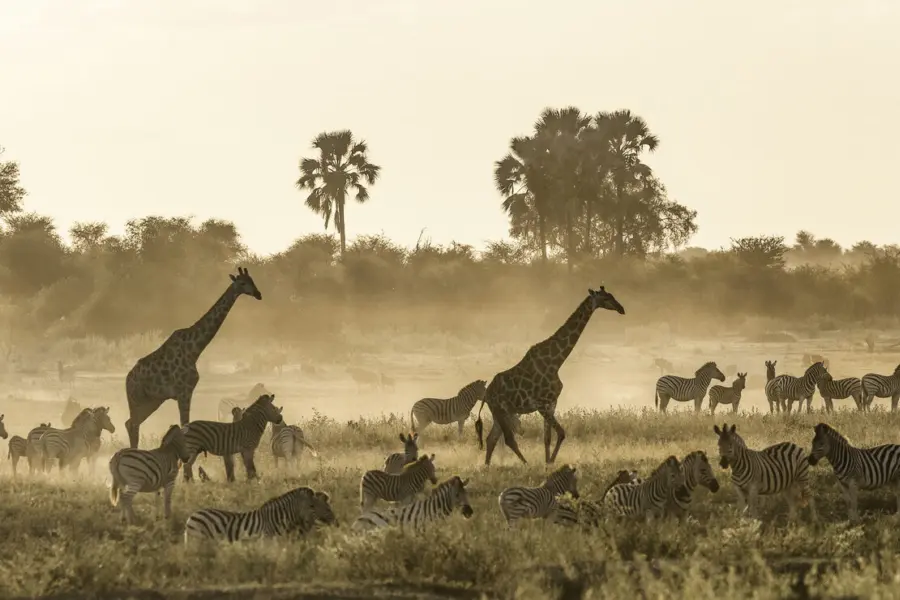
Situated in the heart of the largest sand plain on Earth, the Okavango Delta is one of Africa’s most astonishing and complex environments, home to a vast variety of wildlife. Unique as one of the world’s few inland deltas, its calm waters and lush native forests provide a safe haven for countless birds and other wildlife. The Okavango Delta offers a range of activities for visitors, including safaris, birdwatching and fishing. You can experience this magical world of islands and waterways from land, from the water or from the air.
Highlights include the elusive sitatunga antelopes that have found refuge in this unspoilt wetland ecosystem, whilst birds such as the African fish eagle, the furred fish owl and many others put on a spectacular display.
Botswana
Despite recent and surprisingly rapid modernisation, Botswana's cities offer few tourist attractions. However, this is more than made up for in the surrounding desert areas of outstanding, natural beauty. The main attraction is undoubtedly the vast red expanse of the Kalahari Desert and its remarkably beautiful Okavango Delta, the largest inland delta in the world that provides a haven for an abundance of African wildlife. Other highlights include the impressive Makgadikgadi salt pans with massive zebra migrations during the flood season; the Savuti plains where large packs of lions live; and the Tsodilo Hills, where 4,500 petroglyphs form an extraordinary story of human habitation over many millennia.
Victoria Falls (Zimbabwe)
One of the biggest attractions in Africa and one of the most spectacular waterfalls in the world are the Victoria Falls on Zambezi River. The Victoria Falls is the only waterfall with a length of almost a kilometre and a height of about 100 metres. The waterfall lies as a piece of natural border between Zambia and Zimbabwe and is called Mosi oa tunya, the smoke that thunders. From here, the adventurous among you can also conquer the Zambezi in a splashing white water rafting excursion with water rapids like "the devils washing machine". There is also the opportunity to take a chilling plunge down a bungee jump from the bridge at the falls. But a "Flight of the Angels" by helicopter, ultralight or small plane will also be a lasting memory. This sightseeing flight is called The flight of the Angels because, according to the discoverer of the falls, Dr Livingstone, even angels flew around here to witness this beautiful natural phenomenon.
Zimbabwe
Zimbabwe is a country in Africa and borders Zambia, Mozambique, South Africa and Botswana. Its area is 390,580 square kilometres, making it 9.4 times the size of the Netherlands. The country is known for its pristine nature and wildlife parks. The landscape is hilly and has some mountainous areas. Major attractions are therefore Lake Kariba, the Zambezi River and the Victoria Falls.
Namibia
With its well-developed infrastructure, some of the best tourist facilities in Africa and an impressive list of breathtaking natural wonders, exploring Namibia is truly a delight. Visit the capital Windhoek and the beautiful coastal town of Swakopmund to discover remnants of the country's German influence, reflected in its architecture, culture, gastronomy and annual Oktoberfest celebrations. To properly appreciate this extraordinary country, you need to get out of town in search of the remarkable natural landscapes Namibia has to offer. These include: the impressive Fish River Canyon Park; the sprawling Etosha National Park filled with local animal species, such as desert lions, desert elephants and the Hartmann's Mountain Zebra; the terrifyingly beautiful Kalahari Desert; and, of course, the Namib Desert that stretches for almost 1,000 km along the beautiful Atlantic coast. Namibia is an ideal destination for travellers seeking an unforgettable African experience in uniquely beautiful unspoilt wilderness.
Sossusvlei
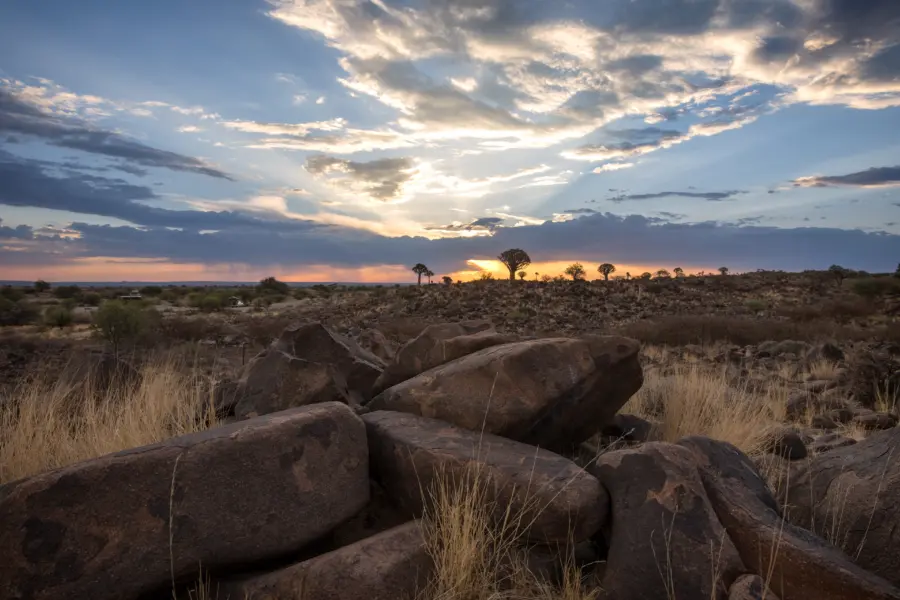
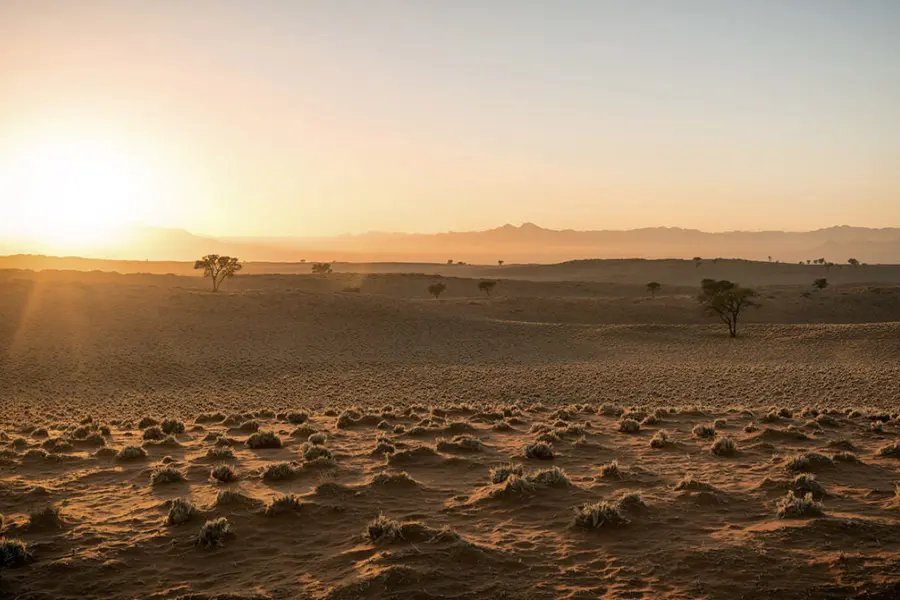
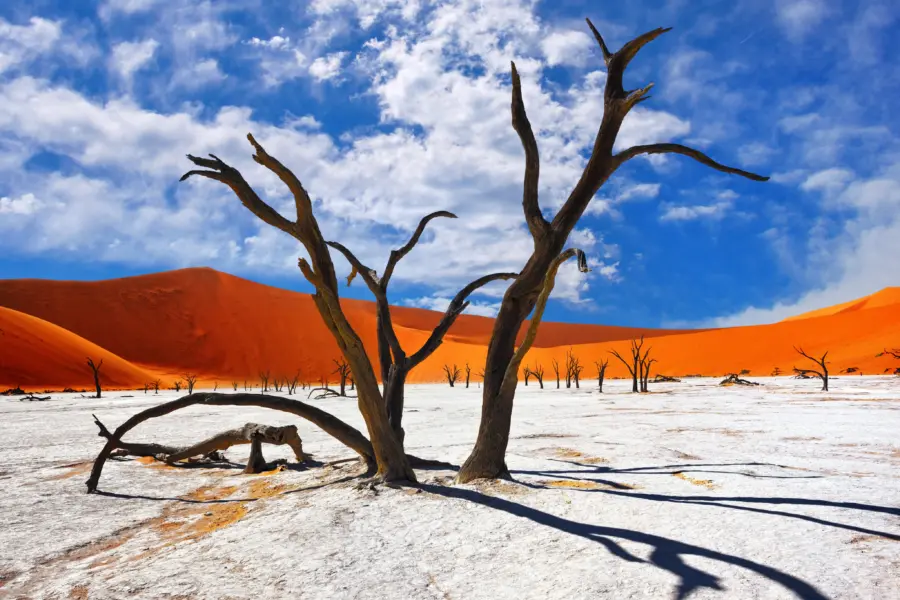
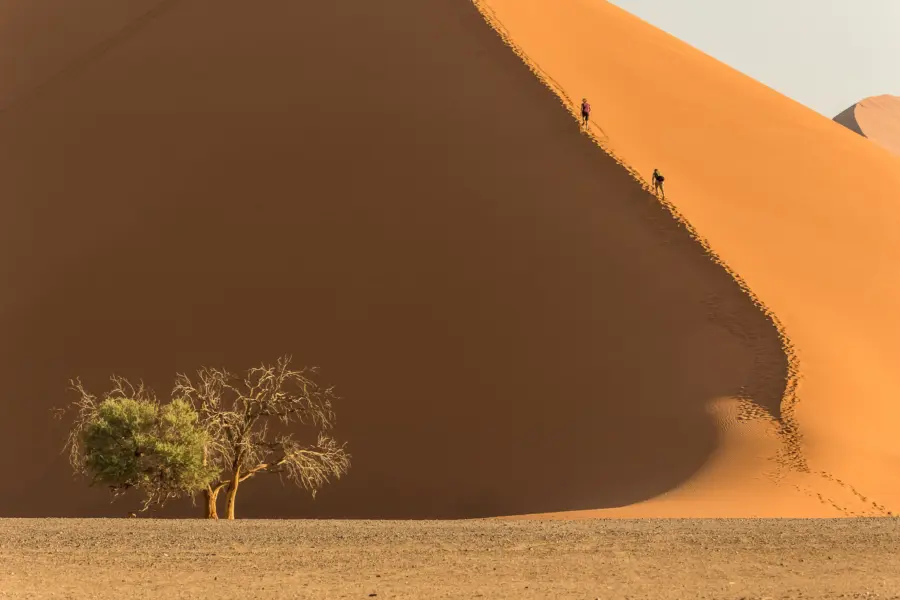
Sossusvlei is where you’ll find the iconic red sand dunes of the Namib Desert. The clear blue skies contrast with the gigantic red sand dunes, making this one of Africa’s natural wonders and a perfect spot for photographers.
As well as the attractions near Sossusvlei such as Dune 45, Hiddenvlei, Big Daddy and Deadvlei, other sights in the area include the Sesriem Canyon and the Namib-Naukluft National Park.
Swakopmund
Swakopmund is a small town on the Atlantic coast and has a distinctly German character. Even today, German is still widely spoken there, and you can order Kaffee mit Kuchen in a genuine Konditorei.
There’s plenty to do in and around Swakopmund. An hour’s drive to the north takes you to Cape Cross, home to a sea lion colony numbering many thousands of animals. The noise is deafening and the smell isn’t always pleasant, but the sight of these thousands of animals is certainly worth it. You can also visit the beach; horse riding, skydiving and even a hot-air balloon ride are among the options.
It’s definitely worth exploring the marine life on a catamaran, where dolphins swim alongside the boat, pelicans dive into the sea in search of fish, and sea lions come to take a look from Cape Cross.
Maun
Maun is the starting point for most expeditions in the Okavango Delta and, as a result, has developed into a bustling metropolis regarded as the tourist capital of Botswana.
Since Maun was founded in 1915 as the tribal capital of the Batawana people, it has had a reputation as a ‘Wild West’-style town. However, this changed with the growth of the tourism industry and the completion of a tarmac road to Nata in the early 1990s. Maun has developed rapidly and lost much of its old-town character. It is now home to around 30,000 people.
The name Maun is derived from the San word ‘maung’, which means ‘the place of short reeds’.
Zambezi Region
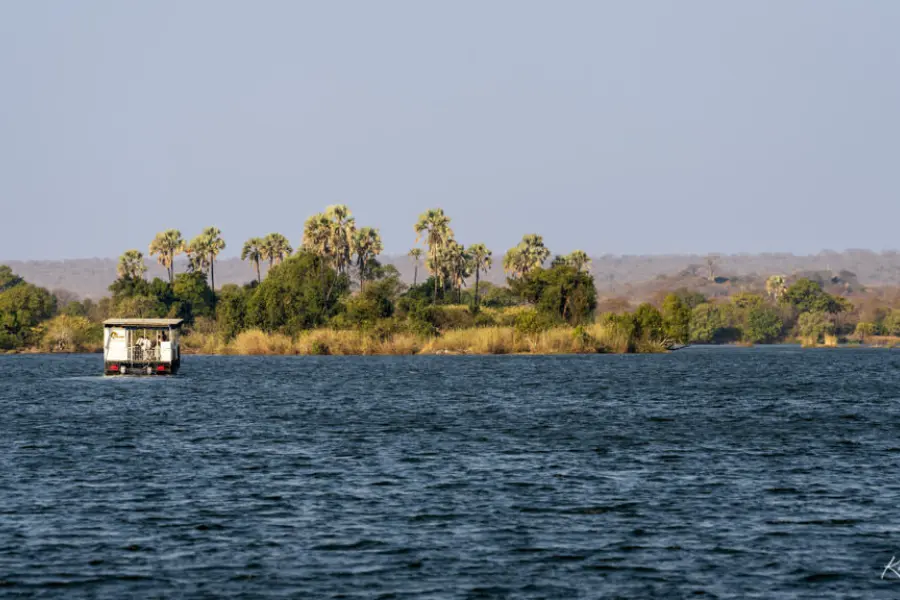
The Zambezi Region (formerly the Caprivi Strip) is the only place on earth where four countries border. The region lies at the centre of one of Africa's largest and most famous game viewing areas. The abundance of water supplied by the Zambezi, Okavango, Kwando and Chobe Rivers creates a wide variety of wildlife and bird species. There are four Namibian reserves and no fences so animals can move freely between the countries.
Bwabwata National Park
Bwabwata National Park encompasses the West Caprivi Triangle around Kongola, the Mahango Game Reserve, Popa Falls and the Buffalo core area. The park covers 6,100 square kilometres and is intended to rehabilitate wildlife populations that have been decimated by poachers. Consequently, there are many rangers in the park and monitoring is extensive. This, in turn, provides employment for the local Caprivian people. It is thanks to places such as Bwabwata that there has been a steady increase in the number of Namibian wildlife, including a number of rare species. The best time to visit the park is in October, when the animals gather around the remaining waterholes along the Kwando River.
Rundu
Bordering Angola and on the banks of the Okavango River, in northern Namibia, is the city of Rundu. The city serves as the capital of the eastern Kavango region and is known for its local woodcarving market and the many logging huts on the side of the road. The town is a great stopover to refuel for when you are on your way to Katima Mulilo, as well as an excellent base to explore the beautiful surrounding areas. Nearby, you can enjoy Popa Falls and the Mahangu Game Reserve. Other popular activities include; safaris, bird watching and kayaking along the spectacular Kavango River.
Okavango Panhandle
The Panhandle is a stretch of the Okavango River and the main water source of the Okavango Delta. The Panhandle follows a more or less straight course for about 70 kilometres before it enters the wetlands. It is a deep channel that offers excellent opportunities for tiger and bream fishing, while the surrounding forests and shallow waters of the river are teeming with a large number of birds. Several villages are scattered along the Panhandle, and about 40 kilometres west lie the Tsodilo Hills, with their abundance of tribal cave paintings, some dating back 20, 000 years. There are also a number of renowned river camps that offer tourist accommodation.
Damaraland
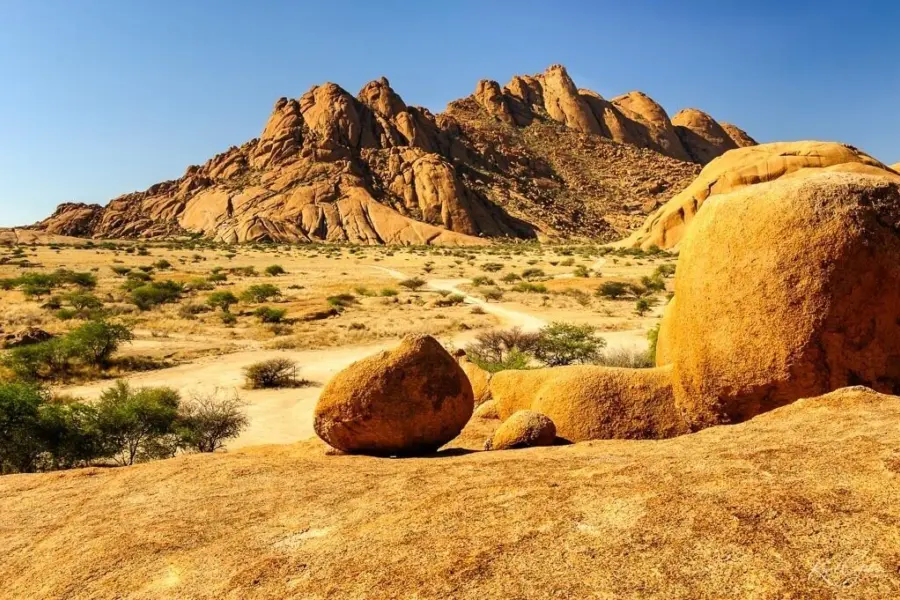
Enjoy the stunning landscapes of Damaraland Enormous, untamed and rugged, Damaraland is an exceptionally scenic landscape of open plains and spectacular rock formations. The main attractions are Spitzkoppe, the Brandberg, Twyfelfontein, Vingerklip and the Petrified Forest. In addition, this gigantic area is home to desert elephants, among others, which have fully adapted to the living conditions of this rugged landscape.
Central Namibia
The central Namibian highlands are much cooler and less extreme than the arid lowlands that make up the majority of the country. This is an ideally suited area for cattle breeding, and more recently large and small game breeding.
Kavango
This region of Namibia takes its name from the Okavango River on which Rundu's main town is built. Unlike much of the country, the Kavango region receives sufficient rainfall for cultivation.
Northern Namibia
Northern Namibia stretches from the remote Kunene River in the west of the country to the densely populated region of Ovamboland in the north-east. Central Ovamboland forms part of Namibia’s vast Kalahari system and is home to one of Africa’s largest wildlife parks, Etosha National Park. The park offers phenomenal opportunities for wildlife viewing, and travellers can look forward to visiting the spectacular Etosha Pan.
Damaraland lies in the north-west, featuring some of the most impressive rock art adorning this rugged landscape. Further east, the Caprivi stretches for over 450 kilometres and is Namibia’s most tropical region. It serves as a corridor for African elephants migrating to Angola. Northern Namibia is a remote wilderness with incredible landscapes and magnificent wildlife, making it more than worth visiting.
Namib
The Namib Desert, or simply the Namib, is considered to be the oldest desert in the world. This sandy desert, approximately 200 kilometres wide, stretches from north to south along Namibia’s Atlantic coast for a distance of around 2,000 kilometres, from Angola in the north to the Orange River in the south. However, when people refer to the Namib, they usually mean the sea of sand that stretches between Lüderitz and Swakopmund. This sea of sand was inscribed on the UNESCO World Heritage List in 2013.
The Namib Desert forms part of the Namib-Naukluft National Park, which is Africa’s largest wildlife reserve. In the centre of the desert lies Sossusvlei, a picturesque valley where water occasionally collects. Together with the neighbouring Dodevlei, Sossusvlei is one of the country’s major tourist attractions.
Twyfelfontein
Twyfelfontein is the name of a spring and the valley in which it lies, in the mountains of Damaraland in Namibia. When white farmers settled in the region in 1947, the spring proved less reliable than expected. It sometimes provides water and sometimes does not. Time and again, people wondered whether there would be water or not. That is why the spring was given the name Twyfelfontein.
The valley owes its international fame to the countless rock paintings and engravings found on the rocks. The drawings were created by the San people and are in some cases thousands of years old. There are at least 2,500 inscriptions and several thousand drawings on the rock faces, dating from 300 BC to the 19th century. Most of the engravings depict animals such as gemsboks, lions, elephants and goats. Some show tracks and geometric figures, which are thought to indicate watering holes.
Mahango Game Reserve
Bordering Botswana, the small Mahango Game Park offers a convenient stopover between Rundu and Katima Mulilo. It forms part of the stunning Bwabwata National Park. The park’s landscape is characterised by forests and the vast floodplains of the Okavango River basin. It is home to 99 species, including large numbers of elephants, lions, leopards and a variety of antelopes. This park is an excellent destination for keen birdwatchers, with over 400 species, and also offers the perfect spot for visitors to catch a glimpse of crocodiles and hippos in the Kavango River.
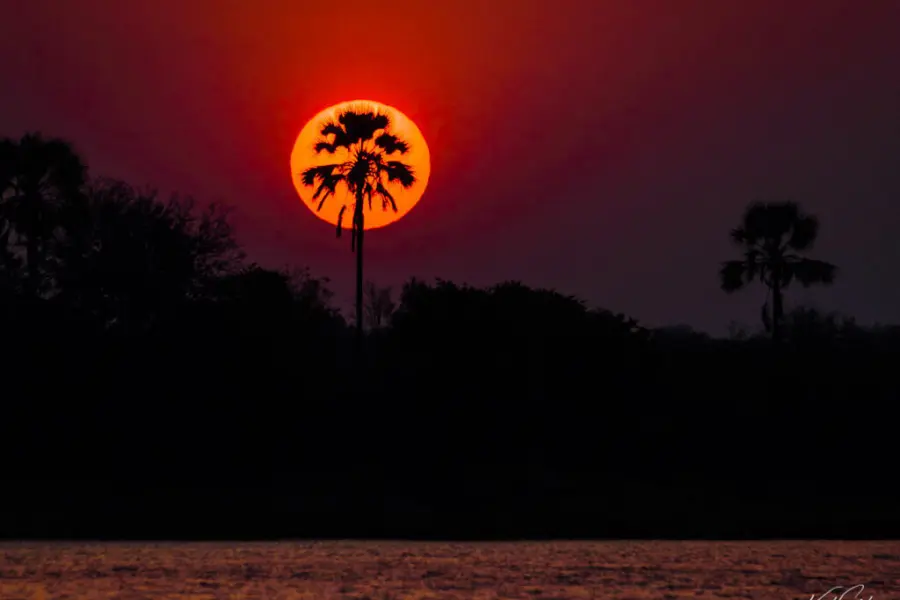
Other popular activities include night game drives, wildlife safaris and admiring the African sunset over the floodplains.
Etosha East
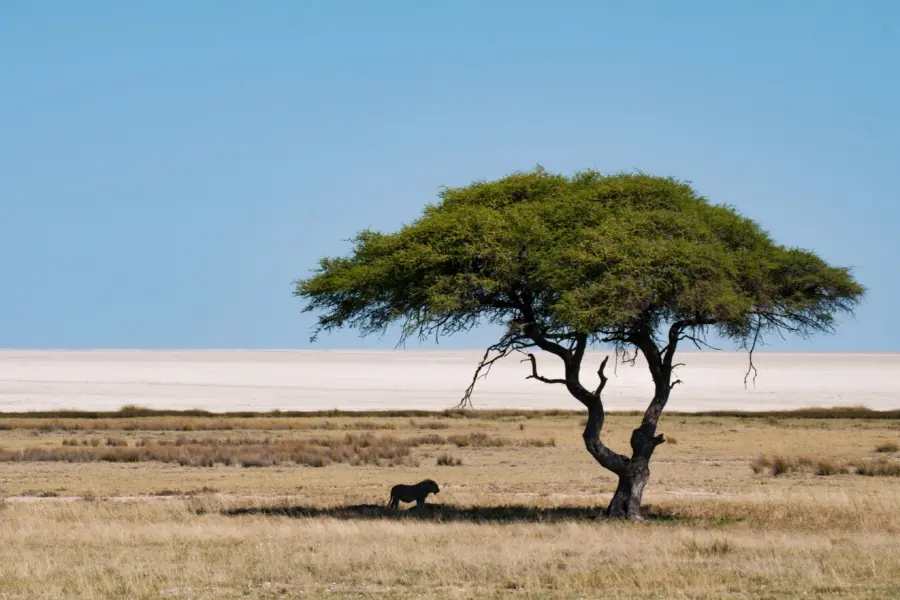
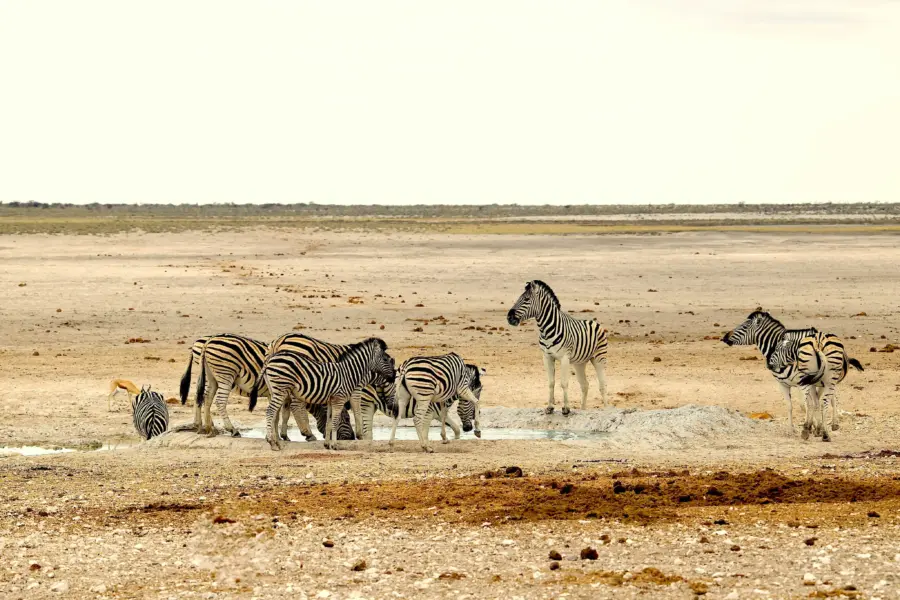
In the vast, arid expanse of northern Namibia lies one of Southern Africa’s most beloved game reserves. Etosha National Park offers an excellent opportunity to spot wildlife in one of Africa’s most accessible locations. Zebras and springboks are scattered across the endless horizon, whilst the numerous waterholes attract the endangered black rhinoceros, lions, elephants and large numbers of antelopes.
Etosha, meaning ‘place of dry water’, encompasses a vast plain (or pan) of approximately 5,000 km². The ‘Pan’ forms a vast, parched, silvery-white backdrop of shimmering mirages in an area of semi-arid savannah grassland. The pan itself only holds water after very heavy rainfall – sometimes for just a few days a year – but this is enough to stimulate the growth of blue-green algae, which in turn attract thousands of flamingos.
Etosha West
Etosha West, located in the western part of Etosha National Park, is a new addition to this world-renowned nature reserve. Visitors to Etosha West can look forward to exploring the beautiful Namibian landscape to the north, which is characterised by lush undulating terrain and reddish-brown soil, providing a stark contrast to the white, dusty clay soil on the vast plains of Etosha East. The area has numerous waterholes that attract elephants, rhinos, leopards, lions and several species of animals. Don't miss this chance to catch a glimpse of the rare Hartmann's Mountain Zebra and black-faced impala.
Etosha South
Located just south of the Etosha National Park border, Etosha South forms the southern region of this wild paradise. Ongava Private Game Reserve shares the southern border with Etosha National Park and offers a range of luxury lodges overlooking picturesque landscapes dotted with abundant flora and fauna. The national park can be accessed via the southern entrance at Andersson's Gate. Visitors can catch a glimpse of a variety of wildlife including: lion, giraffe, elephant, white and black rhino. Popular activities include game drives, tracking rhinos on foot, guided nature walks or watching the sunset over this beautiful landscape.
Okavango River
The Okavango River is one of the grandest rivers in southern Africa. The river starts in Angola and runs south-east to Nambia and forms parts of the Angola/Namibia border. You can visit the beautiful waterfalls Popa Falls, a popular attraction. You will find these just before the river enters Botswana. The area around the river is known for wild vegetation, spectacular scenery and lots of wildlife. The river offers 150 different species of fish and is surrounded by 400 different birds. This makes the river a well-known fishing destination and popular for bird watching. There are plenty of activities to do on and around the river. For instance, you can take a boat cruise, visit the many surrounding reserves or visit the town of Rudu which is an important town in the Kavango Region.
Greater Windhoek
Windhoek, Namibia's capital, is surrounded by beautiful mountains, fertile farmlands, lodges and luxury guest farms. The landscape of the Greater Windhoek area surrounding this bustling city is characterised by vast valleys, thick bush, rocky hills and a golden savannah. Visitors can enjoy the many birds, and view large amounts of other wildlife to the north.Also be sure to visit the more arid eastern part with its olive and potato plantations; explore the rolling hills of the Khomas Hochland Mountains in the west of Greater Windhoek and enjoy the epic views along a number of scenic passes leading to the high plateau, including Bosua Pass, Gamsberg Pass and Spreetshoogte Pass.
Etosha Heights Private Reserve
Set just outside the south-western border of Etosha National Park, Etosha Heights Private Reserve offers enthralling landscapes, a huge variety of flora and fauna, and a wide range of thrilling activities. Vast savannah, rivers, forests, Mopani woodland, salt pans and dolomite hills spread themselves over the 60,000-hectare area. Numerous safaris and game drives offer the chance to see kudu, lion and the elusive mountain zebra (in the hills) and sable, black-faced impala, giraffe, aardvark, elephant and many more (around the waterholes). Visitors can also take night drives and bush picnics. A double-storey photography hide allows close-up encounters with an incredible diversity of gorgeous birdlife and animal life. Fantastic luxury facilities are provided by the accommodation options.
Divundu
The small village of Divundu is located about 200 kilometres east of Rundu on the south-eastern banks of the great Okavango River. Divundu is known for its prime location from which to explore the river, game parks and national reserves of the area. Take boat or heifer safaris to fish or visit the Mahango Game Park, filled with herds of elephants, as well as hippos, buffaloes, giraffes, antelopes and many other animals. The spectacular Popa Falls are a must-see. They are basically a series of cascades tumbling through the split rocks. Divundu is an idyllic base for exploring Botswana and the Okavango Delta.
Khomas Hochland
Khomas Hochland, also known as the Khomas Region, is a high, hilly plateau in Namibia with the country's capital, Windhoek, at its heart. Characterised by vast grasslands and watched over by the table-topped Khomas Mountain (the fourth highest in Namibia), the area provides the perfect place for hiking, wildlife spotting, and photography. The night skies are especially clear here. Oryx and mountain zebra, as well as numerous other small animal species, can be spotted, along with a variety of indigenous plant species. There are also numerous fascinating rock formations to see. The Khomas Hochland Conservancy is decorated by numerous hiking trails which wind through rocky crags, deep gorges, and across beautiful green plains. There are several routes on offer, catering to different levels of stamina, including some multi-day trips.
Caprivi West
Surrounded by Botswana, Angola and Namibia. Caprivi West forms part of the Caprivi strip that protrudes from the northeastern corner of Namibia. Acquired by the then German South West Africa in 1890, to provide access to the Zambezi River, Caprivi has been used as a point of politico-strategic military importance throughout history. Alongside a rich historical significance, Caprivi offers both a wealth of natural resources and serves as a haven for an abundance of wildlife, including the critically endangered African wild dog. The stips' vast and flourishing natural landscapes make it a popular corridor for African elephant moving from Botswana and Namibia into Angola, Zambia and Zimbabwe. In contrast, its lush, swampy terrains make it the only place in Namibia where one can spot the majestic Nile crocodile and the mighty hippo. Caprivi is a paradise for adventure seekers and nature lovers with free-roaming wildlife and postcard-perfect areas. Activities including game drives, walking safaris, canoeing and fishing on its serene waterways are plentiful. Birdwatchers will be overjoyed as they keep an eye out for the 400 bird species that soar above.
Namibia and Botswana trip | Self-drive Namibia and Botswana
We offer the described trip from €11,595 per person.
The tour price is an indication and is subject to availability and travel dates, amongst other factors.
Included
• International flight Johannesburg – Windhoek in Economy Class (including 20kg hold luggage)
• Shared charter flights in Botswana (including 15kg hold luggage and 5kg hand luggage in soft travel bags)
• Accommodation in high-quality and distinctive lodges, tented camps and hotels
• All meals, as specified in the ‘itinerary’
• Toyota Fortuner 4x4 automatic hire car or equivalent, including an additional driver, insurance, taxes and excess waiver
• All necessary transfers as mentioned
• All excursions, as mentioned in the ‘itinerary’
• Meet & Greet on arrival
• Detailed day-by-day itinerary, including local tips and route descriptions
• National Geographic or similar travel guide
• Booking fees (worth €50)
Positive impact of your trip:
• Contribution of €100 per person towards a positive impact via the Avila Foundation
• Mokoro trip through the Okavango Delta
Not included
• Intercontinental flights to and from South Africa and Zimbabwe
• Visa fees for Zimbabwe
• Room category upgrade
• Travel and/or cancellation insurance
• Visa fees
• One-way car hire surcharge (approx. €650 in total, to be paid locally)
• Local car hire costs, such as administration fees and fuel
• National park entrance fees, where applicable
• Meals and excursions not specified
• Contribution to the contingency fund (€2.50 per booking)
• SGR contribution (€5 per person)
• Any tips