
 en


- Signature
- 15-day trip
- From €29,995 p.p.

South Africa trip | Exclusive safari trip South Africa
South Africa is one of the best destinations in the world for a highly versatile, luxury trip. Of course, when you visit South Africa, a visit to the metropolis of Cape Town should not be missed. You will stay at the luxurious Belmond Mount Nelson, which offers an oasis in the city. During this trip, you will visit very exclusive places, including Grootbos Nature Reserve where you will learn about the flora and fauna of the coast. Your stay in the Cape ends in Franschhoek where you will enjoy culinary delights at the best wineries and restaurants, before flying north where you will spend several days in Sabi Sand Private Game Reserve, which borders the world-famous Kruger National Park. Here you have a considerable chance of seeing many felines, such as lions and leopards, during game drives, a special experience! But the most exclusive stay at Tswalu Kalahari definitely promises to be one of the absolute highlights of the trip. You will experience insane safaris there, but the conservation work done there is also special. And with your stay, you will automatically contribute to the protection of the Kalahari. Enjoy excellent dining, discover breathtaking South African nature and experience amazing wildlife moments; you will lack nothing during this special South African tour!
Travel programme
Travel overview
- Day 1 Flight to South Africa
- Day 2 Explore Cape Town and the surrounding area
- Day 3 Helicopter flight to the Cape of Good Hope
- Days 4–6 Explore the Fynbos in Grootbos Nature Reserve
- Day 7 – 8 Sample the finest wines in the Cape Winelands
- Days 9–11 On safari in the Sabi Sand Private Game Reserve
- Days 12–14 Safari highlights in Tswalu Kalahari
- Day 15 Departure from South Africa
Air travel to South Africa
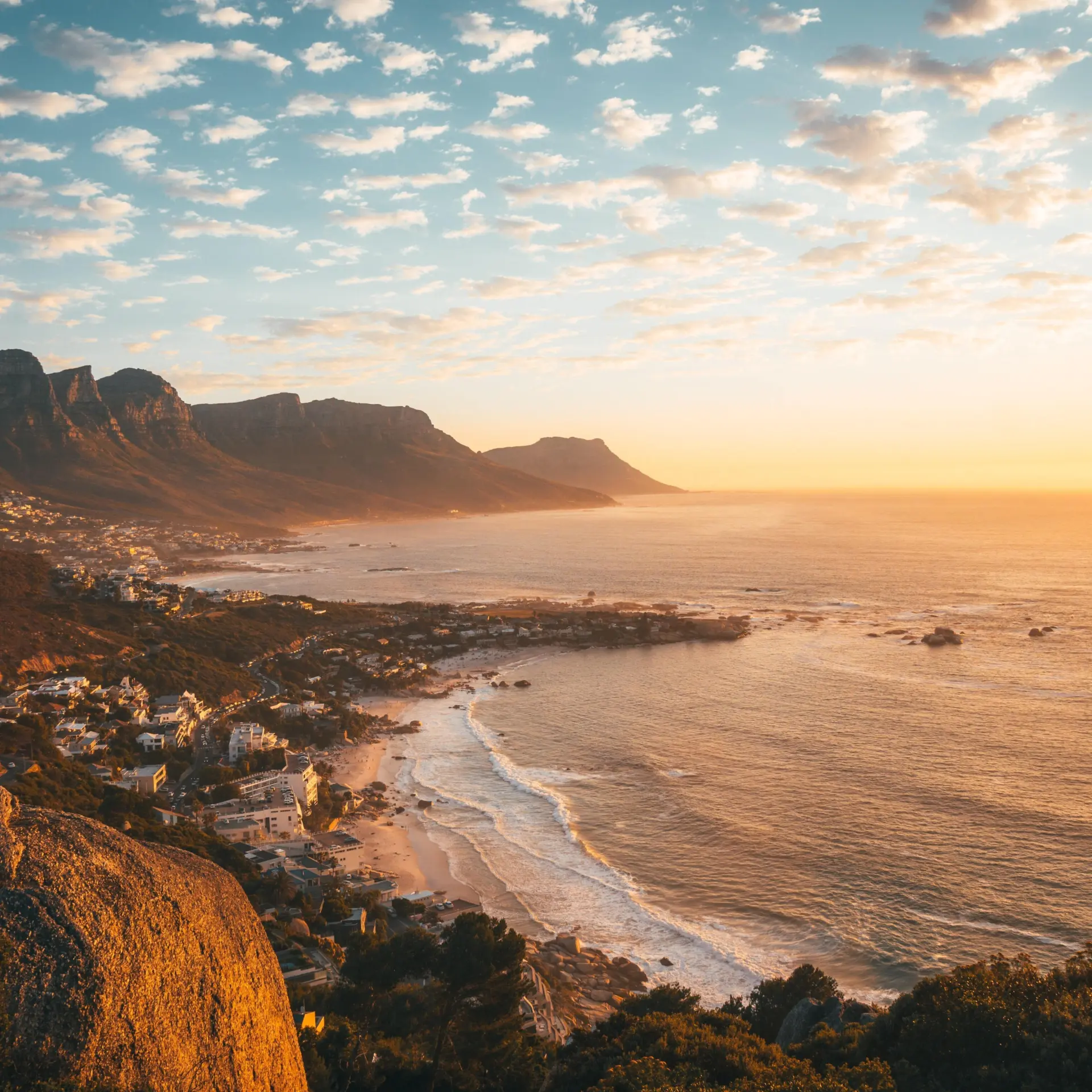
You will travel to South Africa on an intercontinental flight! Welcome to The Mother City, bustling Cape Town! On arrival, you will be welcomed by our local representative. A transfer will take you to your accommodation where you will unwind after the long flight.
Included:
• Meet & Greet on arrival
• Private transfer to your accommodation
• Overnight stay including breakfast
Exclusive:
• Intercontinental flight to Cape Town
Discover Cape Town and surrounding areas
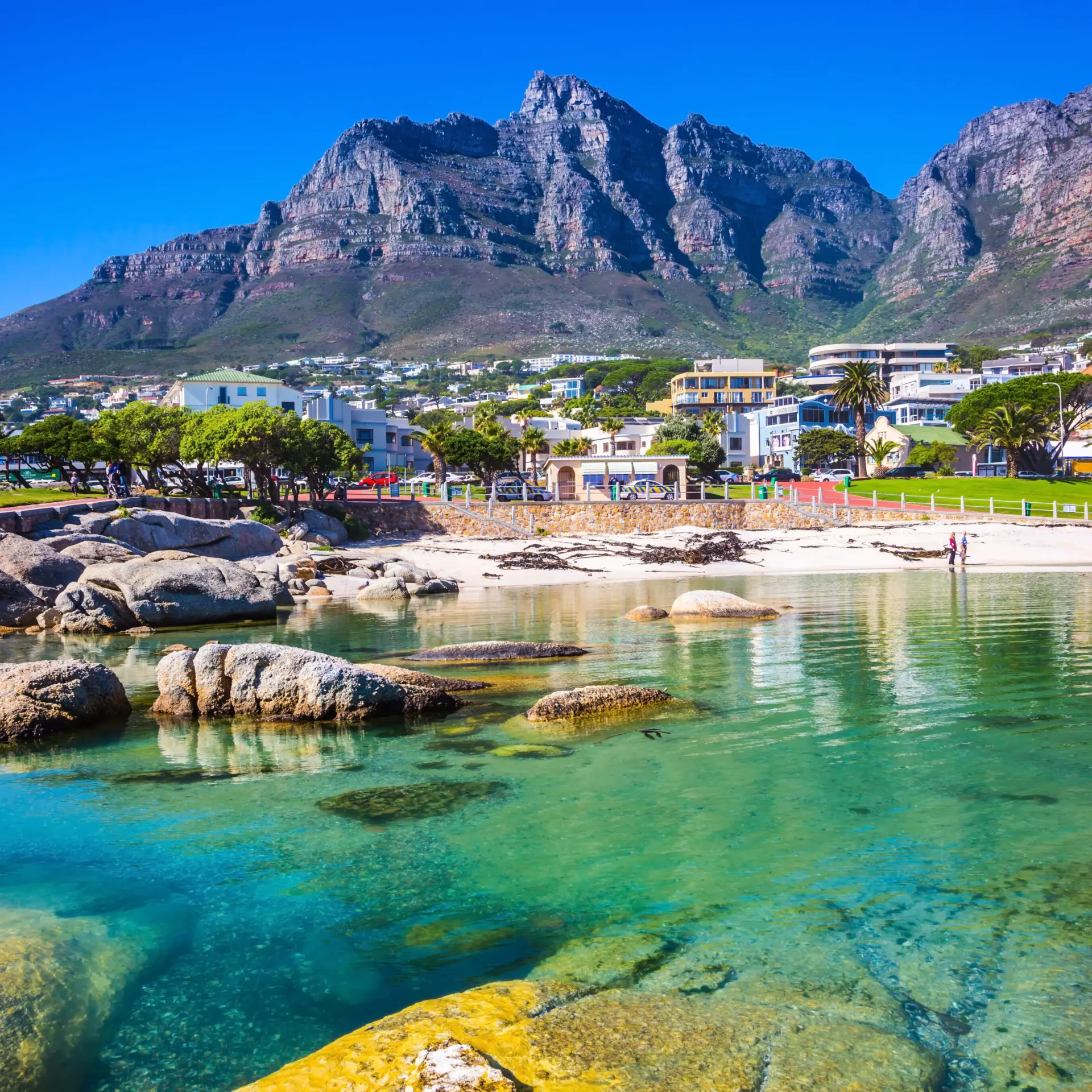
Today you’ll get to know Cape Town in a personalised way: accompanied by a local private guide. Of course, you’ll be visiting the iconic Table Mountain today. Once at the top, you’ll be rewarded with a breathtaking view of the city, the coastline and the Cape Peninsula. As you walk above the clouds, your guide will tell you about the unique nature, geology and history of this world-famous place.
Your guide will also introduce you to the many faces of Cape Town, from colourful neighbourhoods such as Bo-Kaap, with its fragrant herbs and cheerful facades, to hidden gems where you can experience authentic city life. This personalised tour will help you forge a deeper connection with the city. Perfect for your first day here.
The afternoon is free to spend as you wish. You can choose to continue exploring on your own. Visit the impressive Robben Island, the former prison where Nelson Mandela was held captive for many years. Or immerse yourself in the city’s rich culinary traditions on a Cape Malay Food Safari, where you’ll not only sample authentic dishes but also learn how they’re lovingly prepared.
Includes:
• Private tour of Cape Town (including cable car tickets)
• Overnight stay including breakfast
Helicopter flight to the Cape of Good Hope
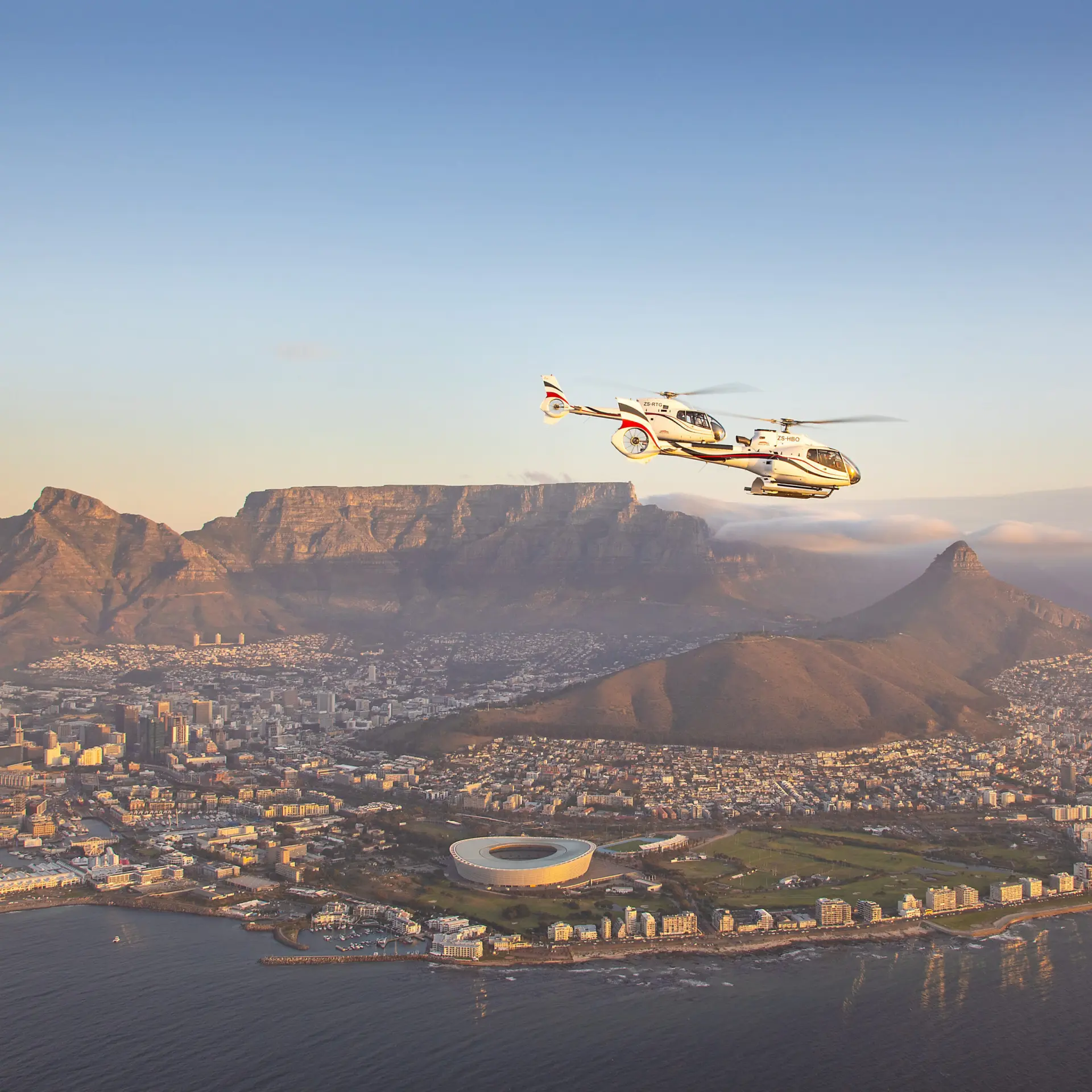
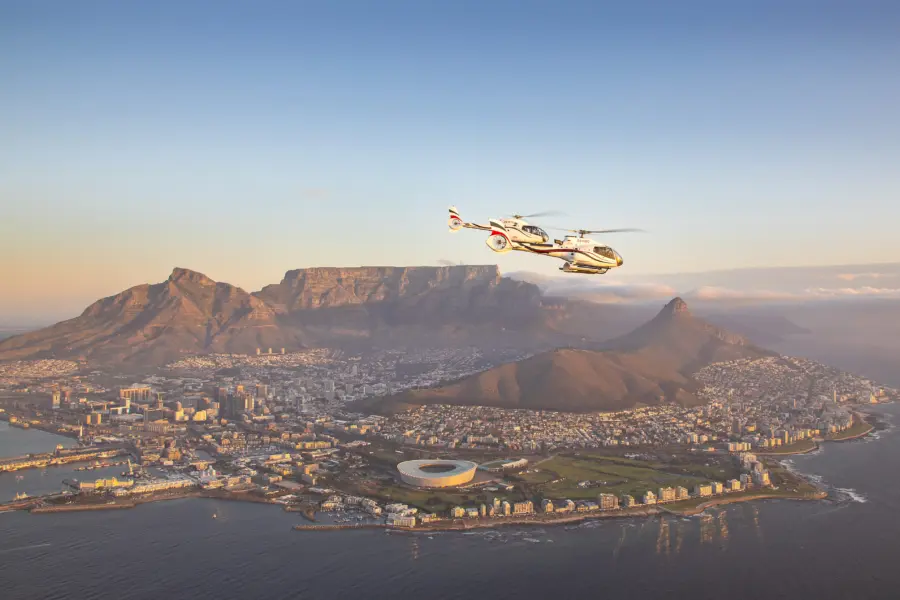
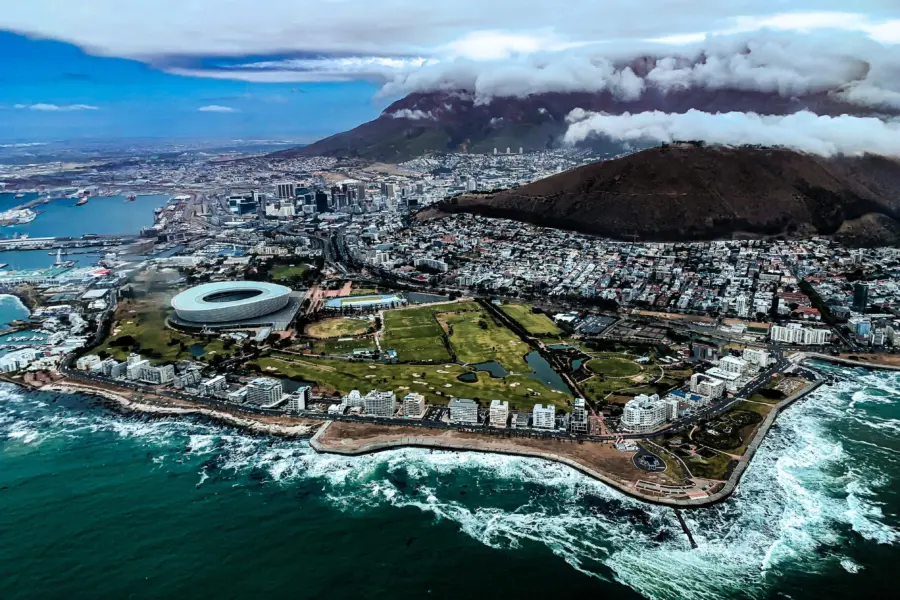
An unforgettable experience awaits! You’ll board a helicopter for a breathtaking flight over Cape Town and the Cape Peninsula. Cape Town is one of the most beautiful cities in the world to view from a helicopter. From the air, you’ll see how the city stretches along the coast, with the majestic Table Mountain, the white sandy beaches and the lively city harbours in the background. The flight takes you further south, over the imposing cliffs of Chapman’s Peak and along the rugged coastline of the peninsula, towards the legendary Cape of Good Hope, the south-westernmost tip of Africa. From the air, the contrast between the blue ocean waters, the unspoilt nature and the rugged landscape is spectacular.
After this panoramic experience, you’ll return to the V&A Waterfront, where you’ll land and can reflect on this unique experience.
The rest of the day is yours to spend as you wish. In the evening, you can treat yourself to a culinary delight at one of the city’s top restaurants. We’d be happy to recommend a table at, for example, Fyn, where Japanese and African flavours come together, or at the renowned The Test Kitchen, which is consistently ranked among the best on the continent and among the world’s finest. We’d, of course, be happy to help you make the reservations.
Includes:
• Helicopter flight over Cape Town and the Cape of Good Hope
• Overnight stay including breakfast
Explore the Fynbos in Grootbos Nature Reserve
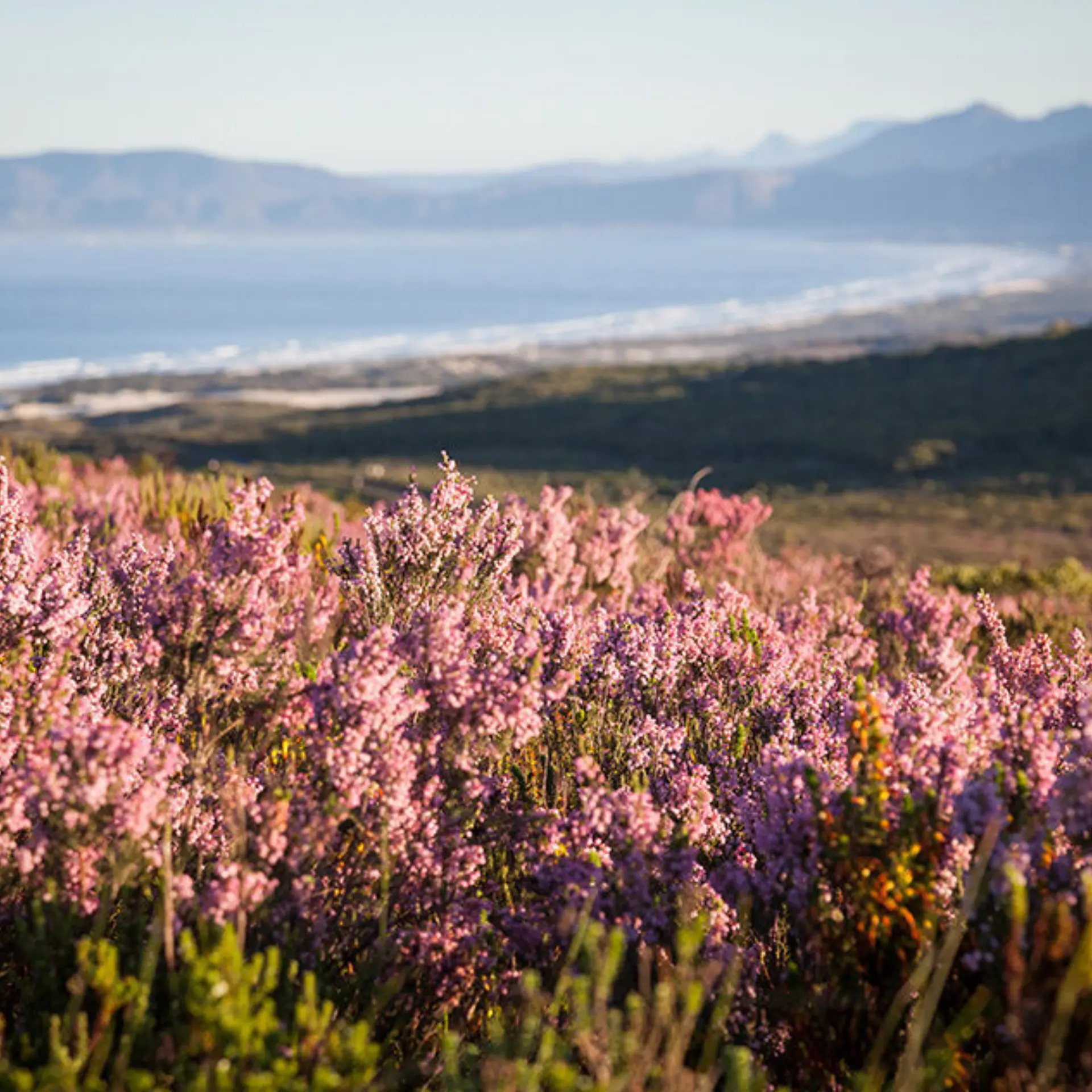
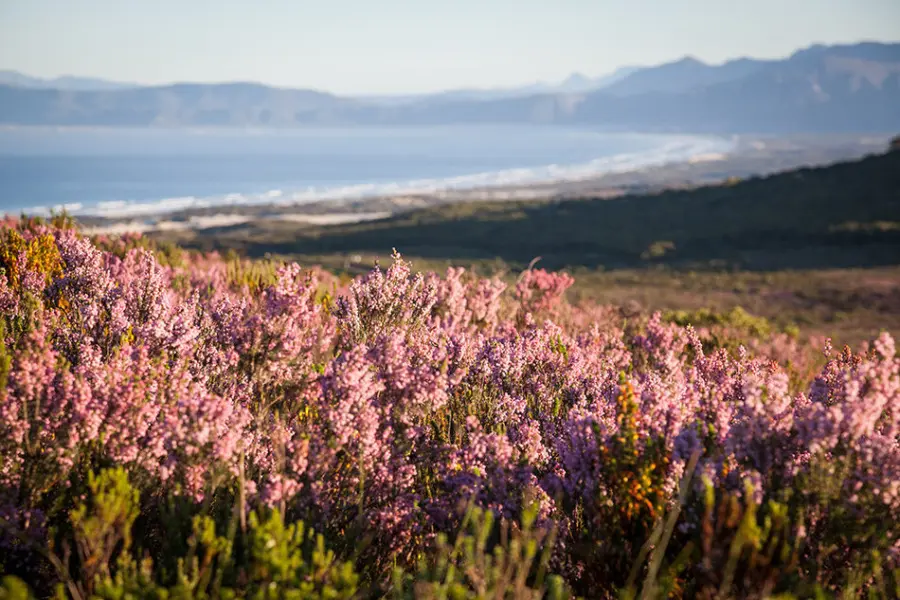
You’ll leave bustling Cape Town behind and be taken to your next destination. For the next three nights, you’ll be staying at one of South Africa’s most beautiful accommodations, Grootbos Private Nature Reserve. This nature reserve offers the perfect combination of Fynbos flora and fauna and rugged coastline – a truly unique nature experience! You’ll be staying within the reserve and can take part in one of the many activities on offer directly from your accommodation, such as various walks and nature drives with excellent guides, either within the reserve or along the coast. This is also a great way to learn more about the remarkable Fynbos. Here, the Fynbos scrubland is found alongside grassy plains and wooded ravines, as well as beautiful white beaches with rocky shores and blue waters. Grootbos’s varied landscape is a wonderful place to spot impressive birds and unique animals, including the rare Bontebok and Cape Mountain Zebra.
Your stay here is fully catered, and you can spend your days exploring the surrounding area. The lodge offers a range of activities, which you can undertake individually or as part of the two guided activities per day, which are included and shared with other guests. Most activities are weather- and tide-dependent, and you’ll discuss the options with the guide on site. For example, you can go on marine walks (1–3 hours), discovering the amazing marine life in the ‘rock pools’ in the immediate vicinity of the lodge. Or explore the fynbos on a walk through the incredible diversity and beauty of the reserve. It is also possible to explore areas of the reserve that are a little further afield via a 4x4 nature drive. This excursion also offers a great opportunity to spot local wildlife!
Included:
• Private transfer to Grootbos Nature Reserve
• Accommodation on a full-board basis, including shared activities
Taste the finest wines in the Cape wine region
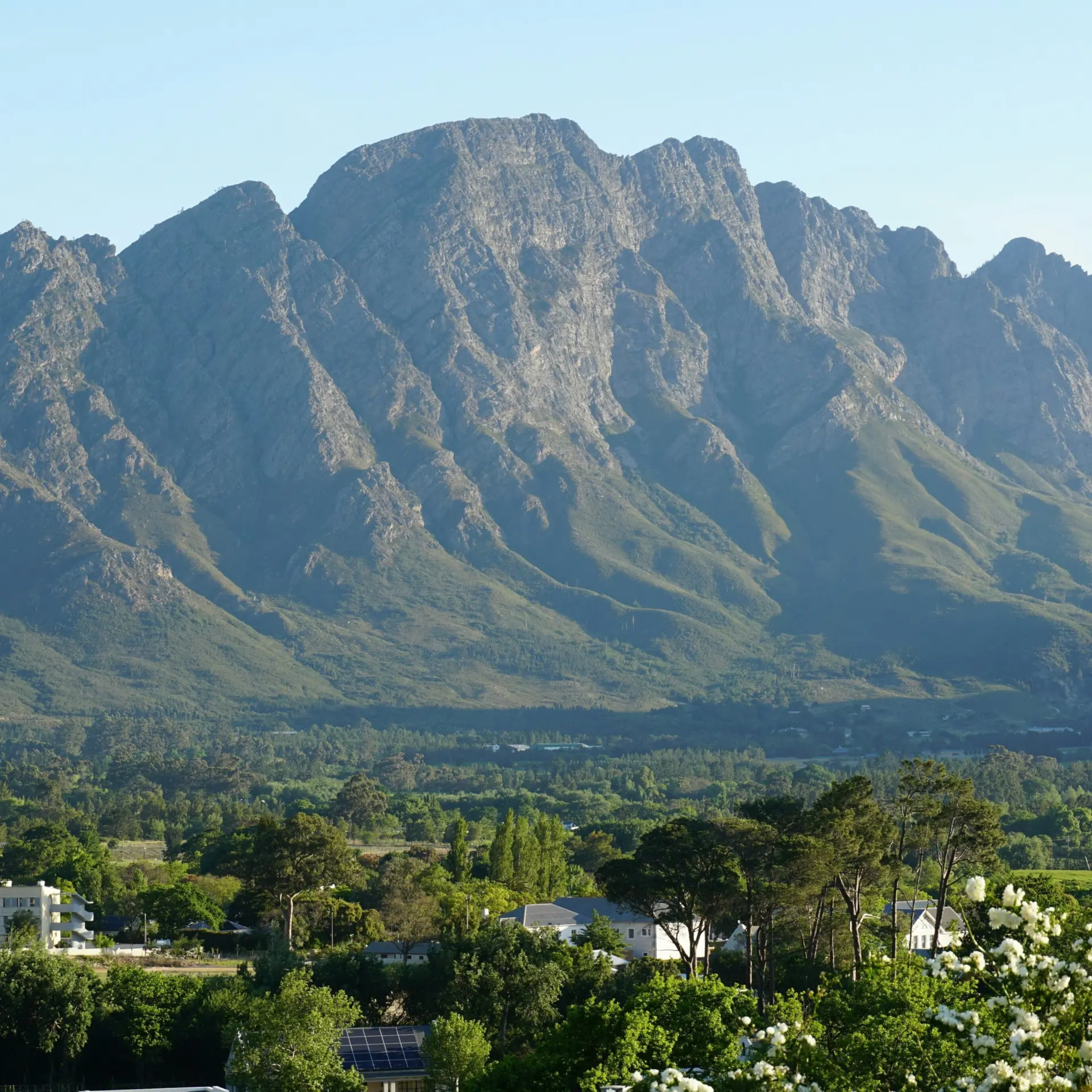
Today you’ll travel through a region known as the world’s longest continuous vineyard, heading towards charming Franschhoek, an idyllic town often referred to as the culinary capital of South Africa.
Nestled in a fertile valley, surrounded by imposing mountains and endless vineyards, Franschhoek exudes an atmosphere of sophistication and history. The town was founded in 1688 by French Huguenots, and the influence of these settlers is still clearly evident in the French architecture, charming boutiques, and, of course, the outstanding gastronomy and wine culture. Originally, the area was known as Olifantshoek, named after the large herds of elephants that once roamed here, a reminder of this valley’s rich natural heritage.
Franschhoek is home to numerous award-winning wineries, where you can take part in exclusive wine tastings and cellar tours. Savour the elegance of perfectly matured wines, often paired with complementary gourmet dishes, right in the heart of the vineyards. From small family-run businesses to world-famous estates, here it’s all about indulging all the senses. A visit to Franschhoek is a treat for the connoisseur, the wine lover and those seeking tranquillity.
During your stay, a wonderful tour has been arranged, during which you’ll visit several wineries accompanied by a local guide. Naturally, there’ll also be an opportunity to sample a selection of wines. In addition to this wonderful tour, we can also make optional bookings for you at one or more restaurants in the wine region. We highly recommend the recently opened Hoseki restaurant at Delaire Graff. Other top picks include Babylonstoren and La Petite Colombe.
Included:
• Private transfer to Franschhoek
• Private tour of the Cape Winelands
• Accommodation including breakfast
On safari in Sabi Sand Private Game Reserve
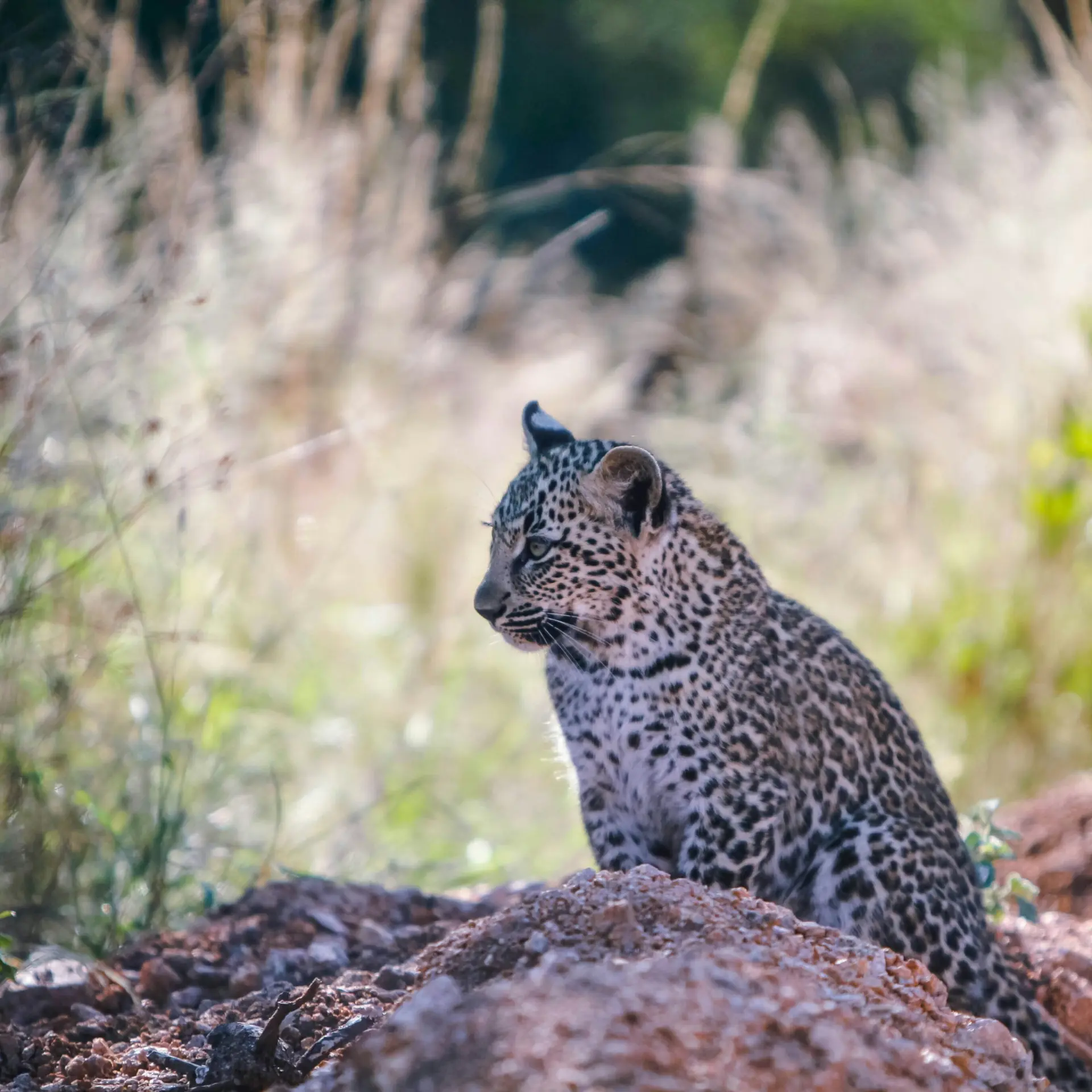
After an unforgettable stay in the picturesque Cape Winelands, you will be collected from your accommodation early in the morning and taken to Cape Town Airport by private transfer. You will fly in comfort to Kruger National Park, where your safari adventure will begin. On arrival at the local Skukuza airstrip, you’ll be welcomed by an experienced guide from your lodge. You may even spot your first wildlife during the drive to the lodge.
You’ll be staying in the prestigious Sabi Sand Nature Reserve, bordering Kruger National Park, at the exceptional andBeyond Tengile River Lodge, an architectural gem on the banks of the Sand River. The lodge offers unrivalled luxury, serene views of the surrounding bush and a sense of privacy and exclusivity. Enjoy the excellent cuisine, extensive wine selection, refined suites and top-class personalised service. But of course, your stay is all about the safari in one of South Africa’s most beautiful safari destinations!
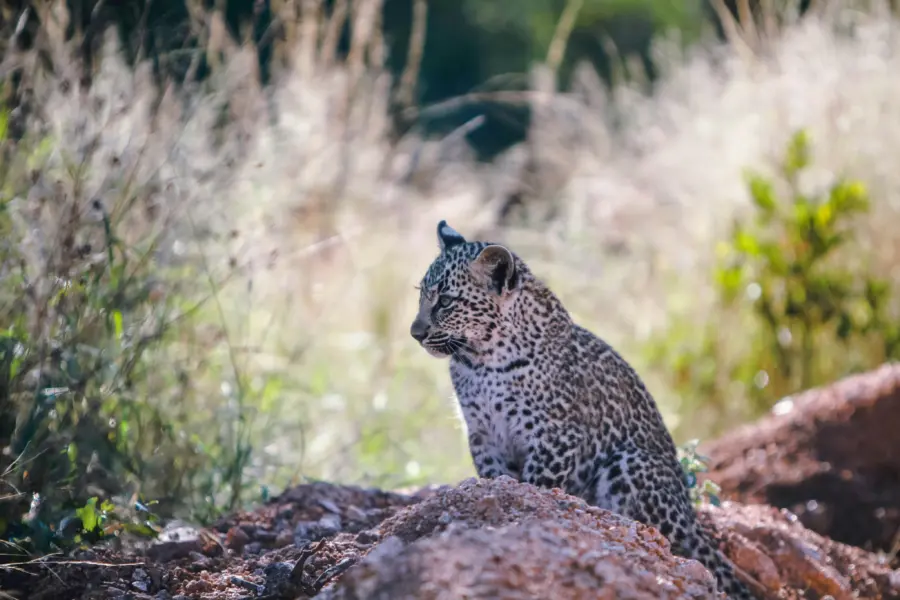
During your stay, morning and afternoon safaris are scheduled every day, led by an expert private guide and tracker. The Sabi Sands is renowned worldwide as one of the best places to observe leopards at close quarters, and also offers fantastic opportunities to see the rest of the Big Five in their natural habitat.
Between safaris, you can relax in your spacious suite with a private deck, enjoy the tranquillity by the pool or be pampered in the lodge’s spa.
Your stay at Tengile River Lodge promises an intimate and unforgettable safari experience, where nature, luxury and adventure are in perfect harmony.
Included:
• Private transfer to the airport
• Domestic flight Cape Town – Skukuza (Economy Class – incl. 20kg checked baggage)
• Transfer to your accommodation
• Accommodation on a full-board basis, including safari activities with a private guide and vehicle
Safari highlights in Tswalu Kalahari
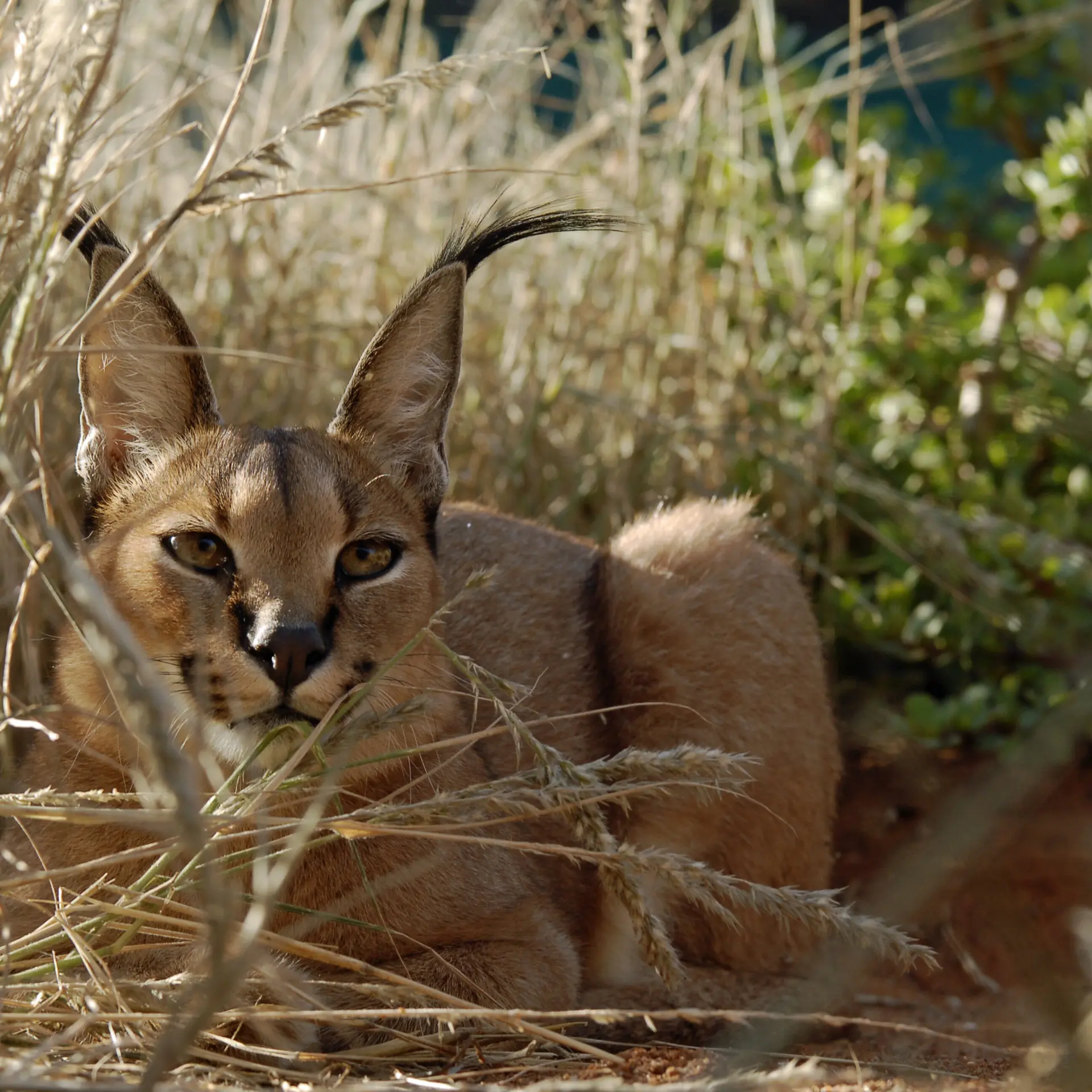
After a fantastic safari in the Sabi Sands, it’s time to continue your journey. You’ll board your charter flight to begin your journey to the Tswalu Kalahari Private Game Reserve. You’ll fly via Johannesburg to this exceptional reserve, situated in the north of South Africa, far off the beaten track!
From the moment you arrive at the Tswalu airstrip, you’ll realise that you’re truly in the presence of something very special. You’ll stay in one of the nine luxury cottages in the ‘village’, where you’ll enjoy complete privacy and exclusivity. By staying in Tswalu, you’ll be making a direct contribution to the special projects focused on both nature conservation and social development. You’ll have the chance to take part in special wildlife projects currently underway, but you can also, for example, meet the local people.
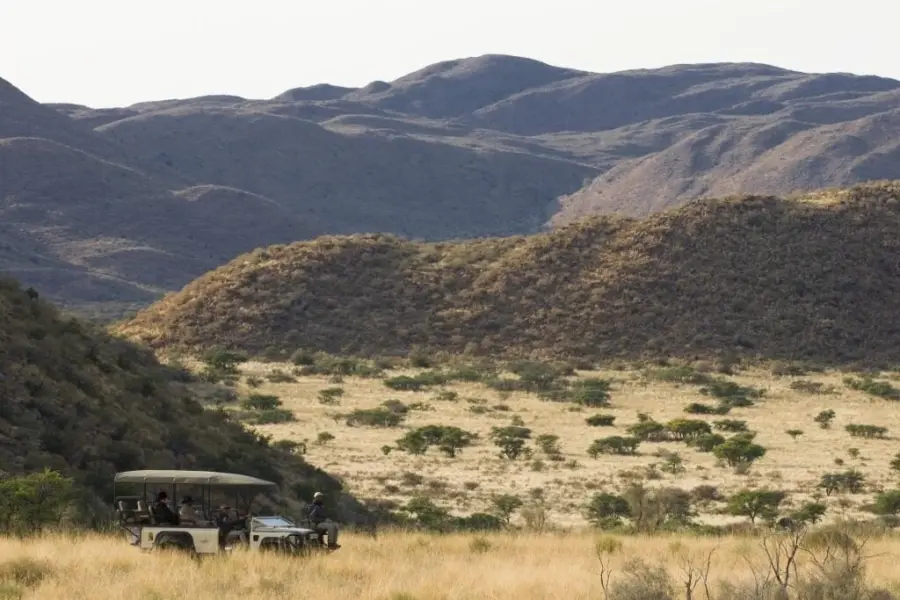
Of course, it’s also all about those truly special wildlife moments. You’ll have your own private guide at your disposal for the game drives. You’ll also have the chance to explore the mighty Kalahari on foot – a truly special experience and one we highly recommend! In Tswalu, you’ll have the chance to see well-known animals such as lions and cheetahs, but also animals you’re less likely to encounter on a safari, such as meerkats and, with a bit of luck, perhaps even the pangolin and aardwolf, which are rigorously protected here!
Included:
• Transfer to the airstrip
• Scheduled charter flight Sabi Sands – Johannesburg – Tswalu Kalahari (including 20kg of hold luggage in soft-sided travel bags without wheels and 5kg of hand luggage)
• Transfer to your accommodation
• Accommodation on a full-board basis, including safari activities with a private guide and vehicle
Departure from South Africa
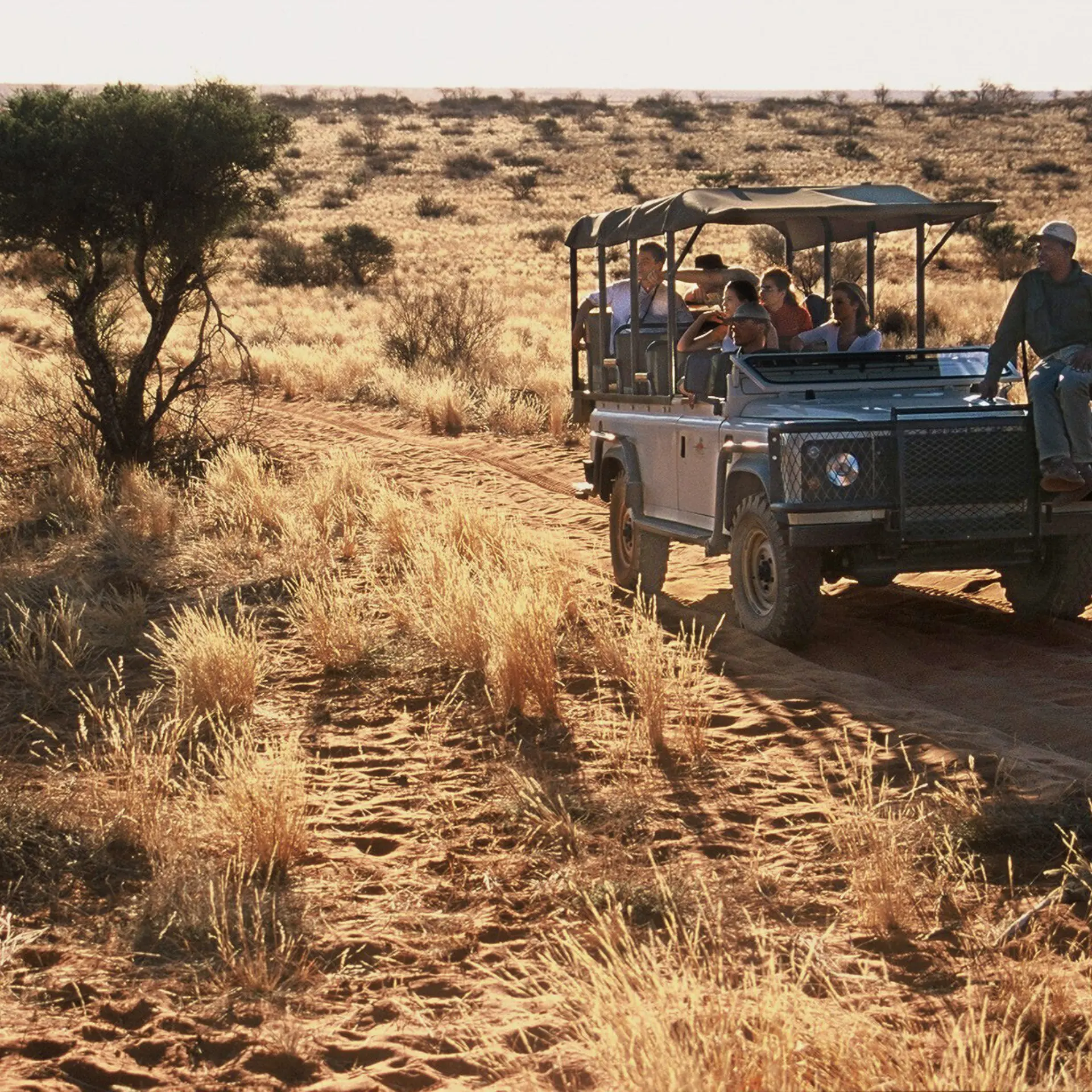
Your amazing journey through South Africa is drawing to a close. After the final unforgettable morning safari, it really is time to say goodbye to your guide.
You will be taken to the local airstrip, where you will board the charter flight back to Johannesburg shortly afterwards. Upon arrival at the terminal, you will be taken to the international terminal. As your flight does not depart until later in the evening, a day room has been reserved for you at the Intercontinental OR Tambo Hotel, which is situated opposite the arrivals hall. You can also enjoy a delicious dinner here. Later in the evening, you will check in your luggage for the intercontinental flight home.
Included:
• Transfer to the airstrip
• Scheduled charter flight from Tswalu Kalahari to Johannesburg (including 20kg of hold luggage in soft-sided travel bags without wheels and 5kg of hand luggage)
• Transfer to the international terminal
• Day room at the Intercontinental OR Tambo Hotel
Exclusief:
- Intercontinental flight home
Accommodations
Mount Nelson, A Belmond Hotel, Cape Town
The Belomd Mount Nelson Hotel welcomes visitors sins 1899. Cape Town's iconic resort hotel is a tranquil spot just steps from the bustling heart of the city. The hotel offers 198 individually decorated rooms and suites and a range of fantastic facilities. Stroll through the sprawling gardens or...
The renowned Mount Nelson Hotel has been welcoming visitors since 1899. This iconic Cape Town resort hotel is a peaceful retreat just a stone’s throw from the city’s bustling centre. The hotel offers 198 individually decorated rooms and suites, along with a range of fantastic facilities. Stroll through the extensive gardens or visit the outdoor sculpture exhibition. Discover the hotel’s history, art and culture on guided tours. Enjoy the imaginative cuisine in the restaurants and the hotel’s spa. The bustling city, with its beautiful beaches and historic landmarks, is just a stone’s throw away. The hotel offers stunning views of Table Mountain, another of Cape Town’s marvellous highlights.
Your stay: 3 nights

Grootbos Private Nature Reserve Forest Lodge
Between the mountains and the sea, on the Whale Coast you will find Grootbos Private Nature Reserve, a five-star ecological paradise with unique flora and marine life.
The Garden Lodge in the Nature Reserve has 11 detached suites, all of which are stylishly furnished with luxurious beds, spacious bathrooms, separate...
Between the mountains and the sea, on the Whale Coast you will find Grootbos Private Nature Reserve, a five-star ecological paradise with unique flora and marine life.
The Garden Lodge in the Nature Reserve has 11 detached suites, all of which are stylishly furnished with luxurious beds, spacious bathrooms, separate lounge and cosy fireplace. There are spectacular views from your deck.
The Lodge exudes typical African warmth, rounded lines, high ceilings and as many windows as possible to let in as much light as possible. There is a restaurant, lounge, beauty salon, library and a children's entertainment room. The wooden deck, terrace and swimming pool allow you to enjoy the African sun as much as possible.
Your stay: 3 nights

Leeu Estates
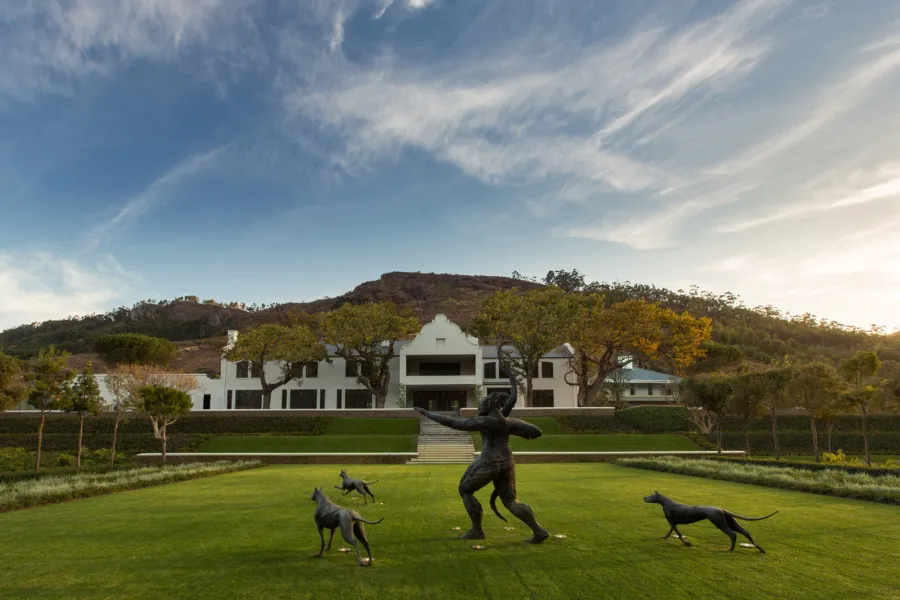
Leeu Estates, an exclusive five-star boutique hotel with 17 luxuriously appointed rooms and suites, occupies a central position on 68 hectares of vineyards, landscaped gardens and fynbos (native vegetation) in the Franschhoek Valley. Situated between the mountainside and the river, just minutes from the village,...
Leeu Estates, an exclusive five-star boutique hotel with 17 luxuriously appointed rooms and suites, occupies a central position on 68 hectares of vineyards, landscaped gardens and fynbos (native vegetation) in the Franschhoek Valley. Situated between the mountainside and the river, just minutes from the village of Franschhoek, it is the ideal setting for an elegant and refined private stay, with excellent comfort, fine dining and platinum service. At the centre of this working winery stands the meticulously renovated 19th-century manor house with its six rooms and suites. There are two rooms adjacent to The Manor House, and the remaining rooms and suites are in spacious cottages among the gardens, oaks and vines.
An expression of love, the Bokkie garden is very close to the heart of owner Analjit Singh. The African word bokkie means small money, but is also a loving term used by South Africans, similar to 'beloved' or 'sweetheart'. Important to the Franchesca Watson-designed garden with its small herd is 'Reflective Resonance' by acclaimed sculptor Angus Taylor. It is a powerful piece in bronze and Belfast granite that is about to become Franschhoek.
Your stay: 2 nights
andBeyond Tengile River Lodge
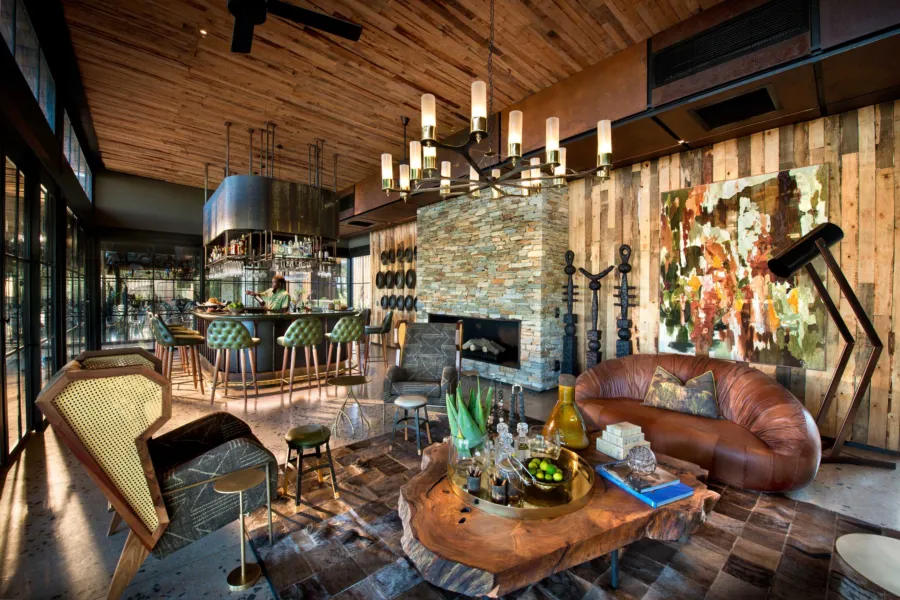
With a name that means tranquillity, andBeyond Tengile River Lodge has nine sophisticated floating suites that overlook the river from the shade of a cool forest. Each room in the lodge follows the curve of the riverbank and offers stunning views of the river. The spacious suites are above ground and offer...
With a name that means tranquillity, andBeyond Tengile River Lodge has nine sophisticated floating suites that overlook the river from the shade of a cool forest. Each room in the lodge follows the curve of the riverbank and offers stunning views of the river. The spacious suites are above ground and offer sunken lounges, elegant bedrooms and bathrooms that overlook the forest, creating private outdoor spaces. Cleverly designed living areas can be converted for children to sleep at night. A beautiful spa and gym offer an oasis of calm where guests can relax all day between game drives.
Your stay: 3 nights
TSWALU The Motse
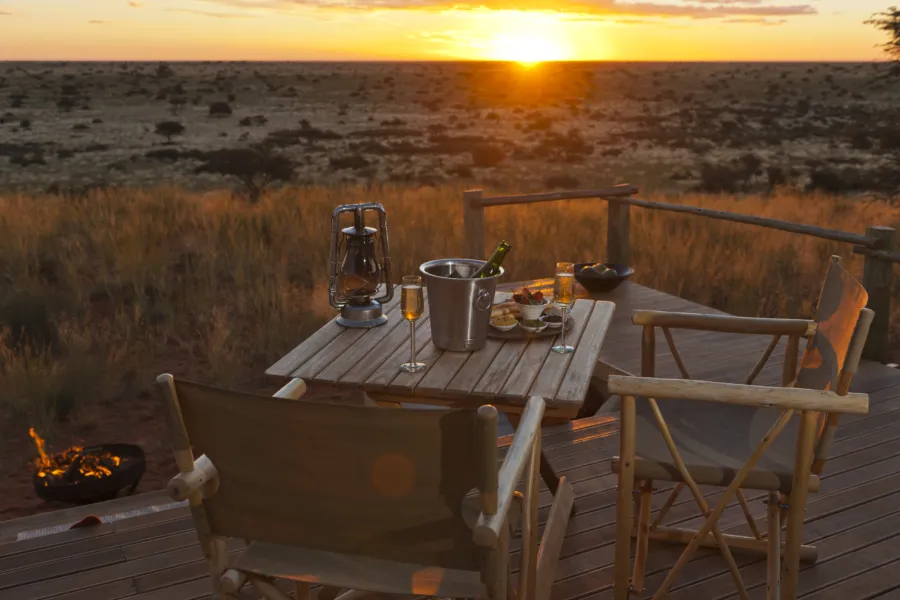
Tswalu's main estate, the Motse, lies at the foot of the Korannaberg Mountains and looks west across the grasslands of the Kalahari. Motse means "village" in Tswana and our village consists of just nine spacious and secluded "legae" (another Tswana word for "cottage") or suites. These legaes are...
Tswalu's main estate, the Motse, lies at the foot of the Korannaberg Mountains and looks west across the grasslands of the Kalahari. Motse means "village" in Tswana and our village consists of just nine spacious and secluded "legae" (another Tswana word for "cottage") or suites. These legaes are built of local stone, rich red clay and traditional Kalahari straw. Recently redesigned by world-renowned Boyd Ferguson, our suites define elegant, barefoot luxury. Justin Cartwright describes their charm; each suite comprises a spacious bedroom with a fireplace, a sumptuous en-suite bathroom with both indoor and outdoor shower and a large dressing and study area.
Your private sun terrace overlooks a well and the changing Kalahari wildlife it attracts. Two legae are specially designed for families. Each offers two separate bedroom suites with en-suite bathrooms, separated by a large living room that in turn leads to a shaded private terrace. Each of these legae is more than 170 square metres in size and is the perfect setting for any family group.
The Motse can accommodate no more than 20 guests at any one time to create a truly intimate Kalahari safari experience. The main building is a spectacular space to behold, with its raised roof and elegant lounges. An infinity pool offers endless views over the savannahs and a secluded spa is designed to complete your total relaxation. The mezzanine library is equipped with satellite TV (the Motse also has broadband internet throughout) and museum cases feature rare items from the area.
Positive impact
Tswalu Kalahari, South Africa's largest private protected nature reserve, is located in the Northern Cape at the transition from the Kalahari Desert to dry savannah. The name 'Tswalu' means 'new beginning' in Setswana and reflects the vision to restore biodiversity and regenerate overgrazed land. Since 1999, the Oppenheimer family has worked to reintroduce native species and sustainably manage this unique ecosystem. Tswalu is affiliated with The Long Run, which promotes sustainable tourism through the 4Cs: Conservation, Community, Culture and Commerce. By staying here, you are contributing to this mission to preserve the Kalahari for future generations.
Your stay: 3 nights
Experiences
Cape Town Helicopters
Experience the wonders of Cape Town like never before with Cape Town Helicopters. With Bose noise-cancelling headsets, air-conditioned cabins and 16sqm glass cabins, we ensure maximum viewing pleasure. From our hangar at the V&A Waterfront, embark on an unforgettable adventure with our range of scenic flights. Choose from a…
Experience the wonders of Cape Town like never before with Cape Town Helicopters. With Bose noise-cancelling headsets, air-conditioned cabins and 16-square-metre glass cabins, we ensure maximum viewing pleasure. From our hangar at the V&A Waterfront, embark on an unforgettable adventure with our range of scenic flights. Choose from a 12-minute ‘Hopper’ tour, the extensive 50-minute ‘Full Peninsula’ tour or a variety of durations in between. Take in the city’s most breathtaking sights, including iconic landmarks such as Table Mountain. For those seeking something a little more exclusive and off the beaten track, we recommend one of our enticing “Experiences”. Treat yourself to a Fynbos Mountain Picnic overlooking the coast, or opt for the mountain ranges of the Jonkershoek Valley, or head up the West Coast to enjoy mussels and oysters – the possibilities are endless, and with our private charters, you have the freedom to tailor your adventure exactly as you wish. The sky really is the limit. Our catamarans are waiting for you in the marina at the V&A Waterfront – whether you choose a scheduled trip or opt for a private charter, they are ready to provide a remarkable experience.
Destinations
Grootbos Private Nature Reserve
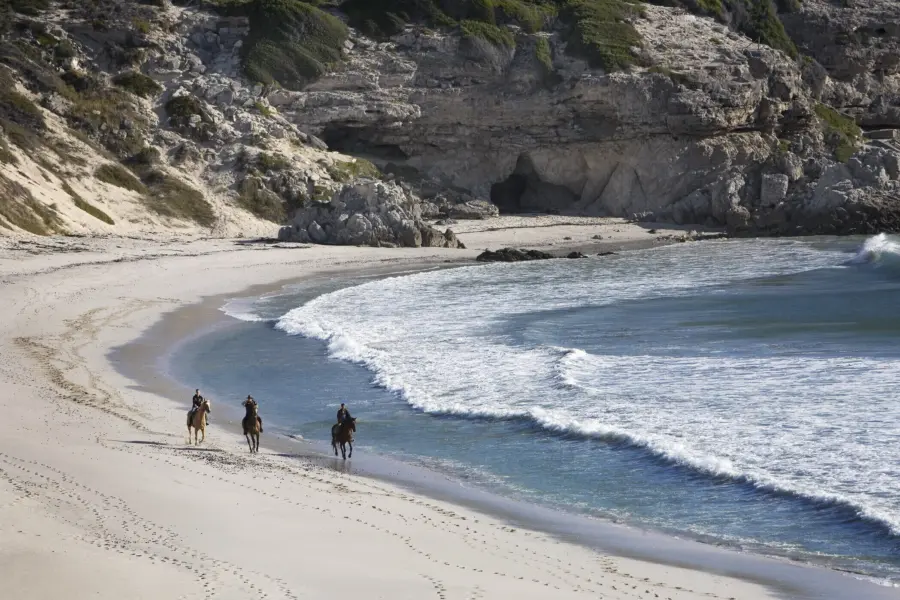
Set against a majestic backdrop of mountains and the clear blue sea, Grootbos Private Nature Reserve is a five-star ecoparadise showcasing the incredible flora and marine life of Africa's southernmost tip. Home to the "Marine Big Five" - whales, sharks, dolphins, seals and penguins - Grootbos offers an unparalleled diversity of flora. Grootbos offers a luxurious African experience. With more than 750 plant species, including rare fynbos and the world's largest milk forest, it offers a lush environment where families can explore caves, ride horses, hike scenic trails, dive with sharks and spot whales. Expert guides accompany flower safaris, forest walks, 4x4 tours, bird watching and more.
Cape Peninsula
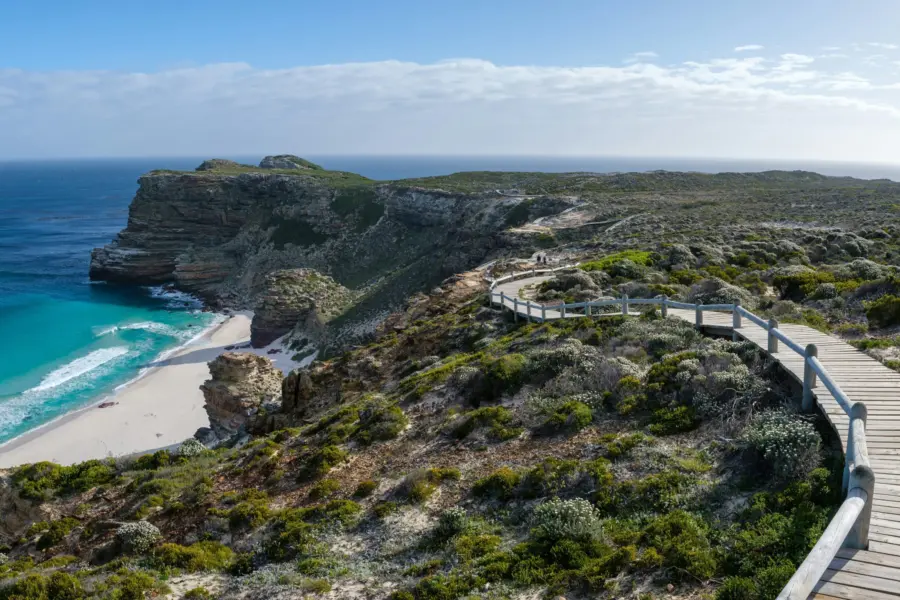
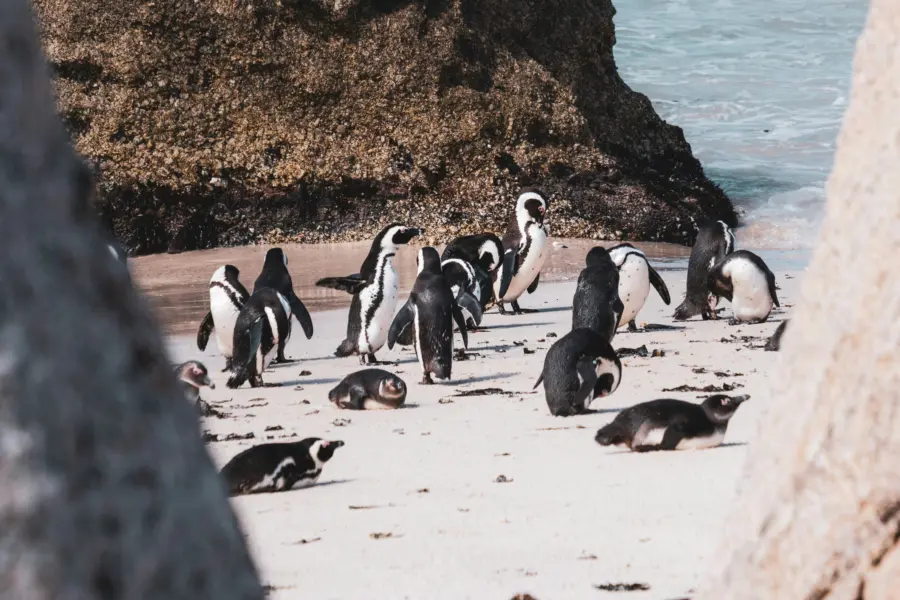
The rugged Cape Peninsula stretches into the Atlantic Ocean and is the southwesternmost point of the African continent. It boasts pristine white sand beaches with steep mountains interspersed with quaint small coastal towns. Cape Point and the Cape of Good Hope can be found on the southern side of this spectacularly beautiful peninsula, while the northern tip is crowned by the world-famous Table Mountain that towers over the city of Cape Town. Visitors can look forward to a wide selection of activities, including: hopping on a boat trip to Seal Island from Hout Bay, exploring the beautiful Cape of Good Hope Nature Reserve and watching the colony of African penguins on Boulders Beach in Simon's Town. Don't miss the chance to take in the breathtaking views from the top of Table Mountain.
Tswalu
Tswalu Kalahari is South Africa's largest private game reserve and now protects more than 110,000 hectares of spectacular grasslands and mountains. The reserve's vision is to "let the Kalahari restore itself." No more than 30 guests at a time can explore the beauty of this savannah, the diverse wildlife and tranquillity of, what may be South Africa's last great wilderness. At Tswalu there is a wide variety of activities, besides the regular game drives in a 4x4 vehicle, they also offer other options - from guided forest walks, quiet horseback safaris to visiting a meerkat family. Each booking gets a private vehicle, guide and tracker. This ensures complete flexibility and a personalised safari offer.
Cape Town
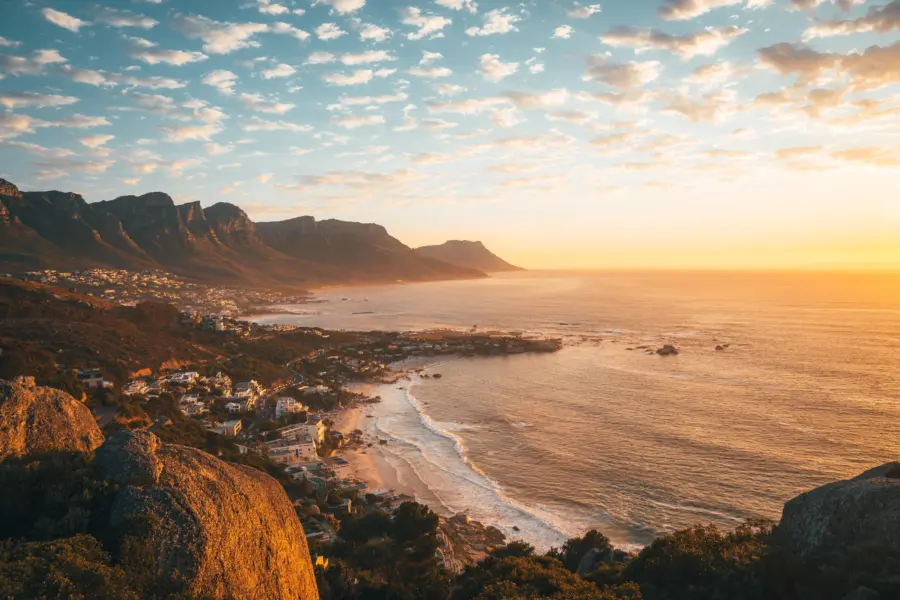
With the majestic Table Mountain as a backdrop, Cape Town is one of the most beautiful cities in the world. Lively yet relaxed, the city is like no other. It is often compared to Rio de Janeiro, Sydney and San Francisco. But many travellers agree: Cape Town is the most beautiful city in the world. The location is fabulous, set amidst national parks of exceptional natural beauty. And the city is surrounded by two oceans, with beautiful, expansive beaches. It inspires countless visitors year after year. Cape Town’s fascinating 350-year history, its variety of historic and modern buildings, its multicultural flair, the city’s maritime character, the laid-back lifestyle of its residents and the bustling Victoria & Alfred Waterfront all contribute to the city’s unique appeal.
Be sure to admire the mix of different architectural styles too. Nestled amongst the tall skyscrapers in the city centre are the old Victorian houses, most of which have been restored and are being preserved. Don’t forget to take in the beautiful examples of Cape Dutch architecture. Narrow streets and the large Muslim community in the Bo-Kaap enhance the city’s cosmopolitan atmosphere.
Enjoy the sun on Camps Bay beach, or relax in one of the many cafés along the promenade – the perfect spot for people-watching amongst the city’s flamboyant residents.
A short distance from the city, you’ll find the colourful Kirstenbosch Gardens, repeatedly named one of the most beautiful botanical gardens in the world. A visit to Cape Point and the penguins at Boulders Beach is also highly recommended.
Whether you’re interested in history, culture, outdoor activities, the local cuisine or simply a great place to shop, this beautiful city has it all!
Western Cape
The Western Cape, perhaps the most scenic and diverse of South Africa's nine provinces, serves as a key spot for visitors to South Africa. Located in the south-western corner of the country, the province is blessed with beautiful coastlines, breathtaking mountains, indigenous forests, historic wine estates and scorched stretches of a strikingly beautiful semi-desert. Visitors can enjoy everything from the beautiful city of Cape Town with its iconic Table Mountain and the stunning surrounding Winelands, to the exciting outdoor activities and spectacular natural scenery of the Garden Route. Also be sure to visit the fynbos-covered sand dunes, white beaches and remote fishing villages on the less-discovered West Coast. The Western Cape is an absolute must when visiting South Africa!
South Africa
The Cellars
The Cellars is a small town in Walker Bay, about two hours' drive from Cape Town. Protected bays and inlets provide ideal conditions for Southern Right Whales to mate and give birth, and every year between July and November these giant creatures can be spotted in the waters. Klipgat is home to some of the oldest human remains and stone artefacts, while Drup Cellars is a freshwater pool cave, perfect for swimming and decorated with striking stalagmites and stalactites. The tranquil cove at Standford's Bay is another perfect spot for swimming, surrounded by 150-year-old fig trees. Visitors can also go hiking, fishing, quad biking and horse riding in the area, and enjoy the stunning natural beauty of the Walker Bay Nature Reserve. Also be sure to visit one of the local restaurants, which serve delicious fresh seafood.
The Cape Whale Coast
Close to the southernmost tip of Africa, just outside Cape Town, lies the Cape Whale Coast, a place that can easily be described as ‘heaven on earth’.
This stretch of unspoilt coastline, running from the coast of Rooiels in the west to Quoin Point in the east, is flanked by stunning mountains and the Atlantic Ocean.
The main towns in this area are Kleinmond, Hermanus, Stanford and Gansbaai, but in fact the Cape Whale Coast comprises a variety of villages, farms, rivers, bays and valleys, each with its own unique character. Discover the whales, sharks, wine routes, fynbos, birds, golf courses, walking trails and adventure activities in this beautiful region, the Cape Whale Coast.
Overberg
Literally meaning 'over the mountain' in Dutch, the Overberg region stretches from the Hottentots Holland Mountains, east of Cape Town, to the start of the Garden Route near the historic city of George. It serves as the perfect base to explore the spectacularly scenic landscapes characterised by fertile farmland, a series of mountain ranges, huge plant diversity, including the unique South African fynbos and a rocky coastline that make it a haven for outdoor adventures. Visitors can enjoy a wide selection of activities, such as: 4x4 trails, kayaking, swimming, horse riding, sunset cruises, wine tasting and whale watching. Popular attractions include: Agulhas National Park at the southernmost tip of Africa; the rich birdlife in Bontebok National Park and the seaside resort of Hermanus, a mecca for whale watching.
Franschhoek
For culinary delights in the wine region, Franschhoek is ‘the place to be’. Nestled in a valley and surrounded by mountains, Franschhoek has become the culinary capital of South Africa. Eight of the restaurants on the top 100 list are located in Franschhoek. The high street of this cosy village is also lined with restaurants and outdoor terraces. Finally, the guesthouses are no exception and often serve high-quality meals. Add to that the beautiful surroundings (vineyards on the hillsides) and the lovely climate, and Franschhoek is a fantastic place to spend a few relaxing days.
The French influence is still clearly recognisable in the village. First and foremost, of course, in the name of the village itself, which derives from the phrase ‘Franse Hoek’ – the corner from which the Dutch East India Company (VOC) sent the French Huguenots to establish their farms. It is therefore no surprise that many of the villagers’ surnames are of French origin, such as Du Toit and Villiers.
In and around Franschhoek there are numerous renowned wine estates, such as Boschendal, Plaisir de Merle, L’Ormarins, Rickety Bridge, Grande Provence and Haute Cabriere. Most of these wine estates are situated along the picturesque Franschhoek Wine Route (R45), and most of them offer wine-tasting sessions.

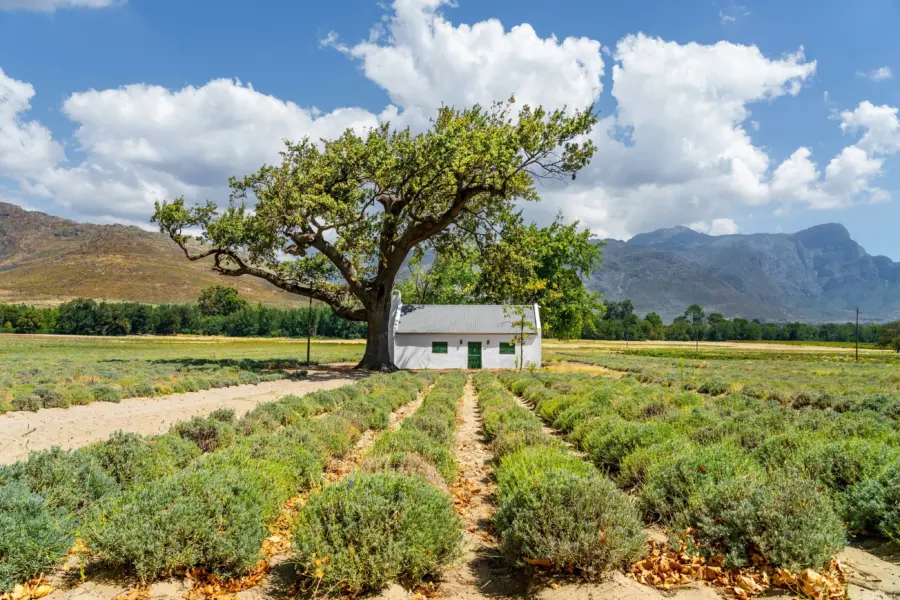
Cape Winelands
You’ll enjoy yourself to the full in the so-called ‘Cape Winelands’, which encompasses the Stellenbosch, Paarl and Franschhoek regions. This region is home to some of South Africa’s finest vineyards, whose wines have been popular beyond South Africa’s borders for many years now.
Many vineyards have wine cellars where you can learn more about wine production and sample the wines. The wine industry in South Africa has a long history, dating back to April 1652 when Jan van Riebeeck set foot ashore in Table Bay and quickly realised that good wine could be grown here, thanks to the excellent climate. No sooner said than done: the first vines from France arrived by ship as early as 1659, and the first wine was produced. In 1679, the second town in the Cape, Stellenbosch, was founded; it is now the centre of the South African wine industry.
Sabi Sand Nature Reserve
Sabi Sands Private Game Reserve is a private game reserve on the western border of Kruger National Park. The Sabi Sands Private Game Reserve is directly connected to Kruger National Park and is therefore part of the Greater Kruger National Park. You have a very good chance of spotting the Big 5 here.
The reserve is also renowned as one of the finest in the whole of South Africa. This 65,000-hectare reserve owes part of its fame to the two rivers that flow through its territory: the Sabie River on the southern side and the Sand River, which flows right across the entire area from north-east to south-west. As a result, the vegetation is abundant, attracting plenty of prey (wildebeest, impala and other antelopes) and leading to a particularly high concentration of predators (lion, cheetah, leopard).
The reserve is home to lodges, mostly family-run, each beautifully situated in prime locations and with the rights to drive throughout the entire park, meaning you won’t encounter many other safari vehicles. Many have agreements with neighbouring lodges allowing them to drive across their land as well. You can expect them to pull out all the stops here – for example, by venturing off the beaten track in search of wildlife – to give you the best safari experience ever.
Kruger National Park
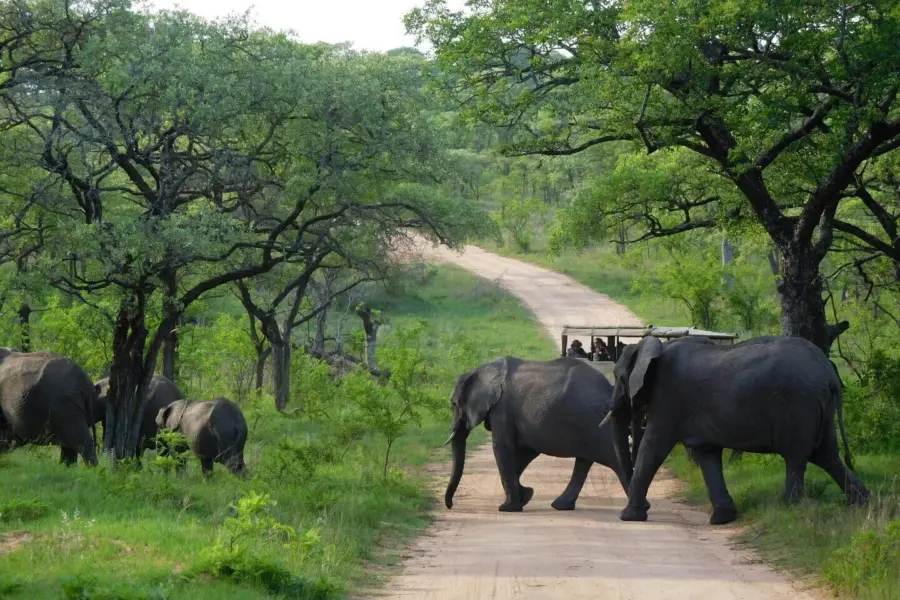
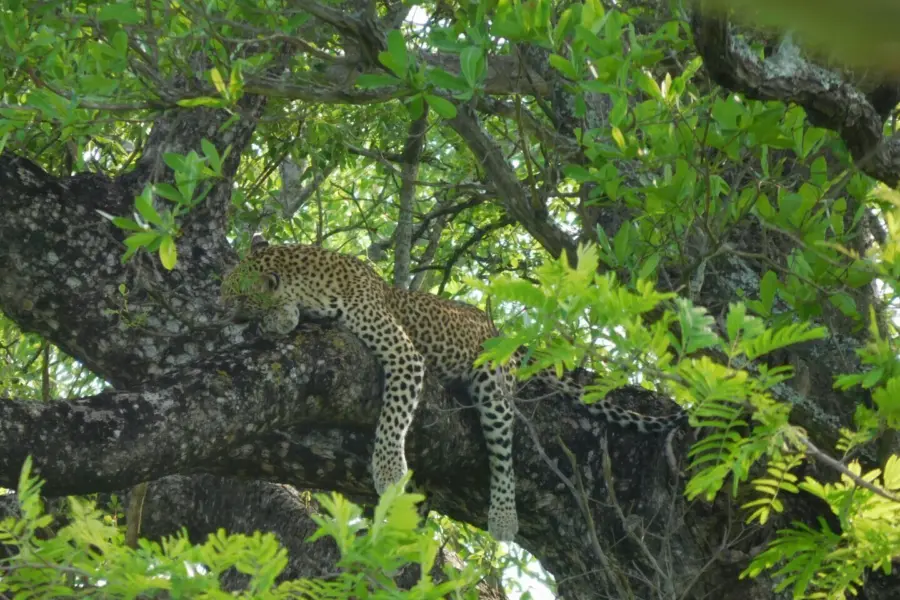
Thanks to its vast array of wildlife, vast savannahs and long history, the Kruger National Park is South Africa’s most visited attraction. And rightly so, as this wildlife park is one of the most beautiful and largest safari parks in the world. The park is no less than 352 kilometres long, an average of 60 kilometres wide and covers almost 19,000 km². The more than 1 million visitors each year come in search of the Big 5 (the lion, elephant, buffalo, rhino and leopard), hippos, antelopes, giraffes, impalas, zebras, gemsboks and much more. In total, there are more than 147 species of mammals, 507 species of birds, 120 species of reptiles, 52 species of fish and 35 species of amphibians. To see all of this, you’ll need at least two weeks.
The Kruger National Park has a long history. 25,000 years ago, the San, also known as the Bushmen, lived here. They left behind impressive rock paintings which can be viewed at Masorini and Thulamela, amongst other places. Towards the end of the 19th century, the South African government – then known as the Volksraad – recognised the need to protect nature. Under the leadership of Paul Kruger, the Volksraad banned hunting between the Sabie and Crocodile rivers in the southern part of what is now Kruger National Park.
In 1898, Kruger established the Sabie Game Reserve. In the years that followed, the park expanded and in 1927 it was opened to the public. Since then, it has been an important research centre and protected area for African wildlife. In 2002, Kruger, together with Gonarezhou National Park and Limpopo National Park in Mozambique, became part of the vast Great Limpopo Transfrontier Park.
Southern Kruger
The southern part of South Africa's most famous game reserve, the Kruger National Pak, is separated from lush farmland by the Crocodile River, a popular area for spotting crocodiles, playful hippos and thirsty animals. The wildlife viewing area is also called 'Southern Circle' and is known for its rhinos and lions. Near the Hippo Pool, visitors can view ancient San petroglyphs. The Southern Kruger offers incredible wildlife spotting opportunities and beautiful landscapes covered with African bushveld and savannah.
Augrabies Falls National Park
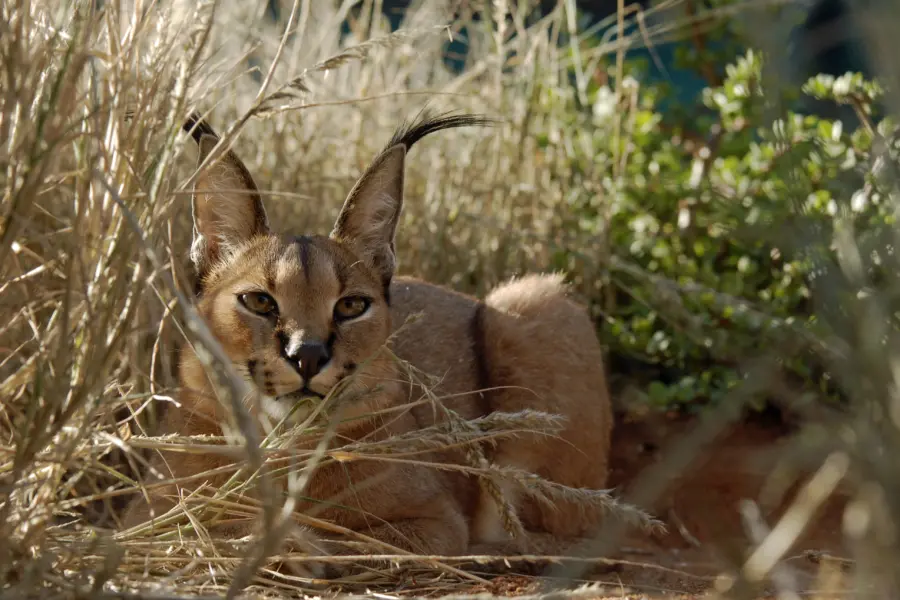
Located in South Africa's Northern Cape Province, the Augrabies Falls National Park encircles the mighty Augrabies Falls. The Orange River plunges down 60 metres in absolute splendour, through the 18-kilometre ravine of the Orange River Gorge. The landscapes are characterised by rocky outcrops, scrub-dotted plains, and clusters of 'quiver trees', also known as quiver trees. This sanctuary provides a home for an array of animals including springbok, gemsbok, klipspringer, various bird species and the endangered black rhino. Other commonly spotted species include giraffe, steenbok, kudu, eland, leopard, African wild cat, jackal, and caracal.
Northern Cape
The Northern Cape is South Africa's largest and least densely populated province, characterised by wide open spaces and mostly dry terrain, though the Orange River meandering along the northern border creates a compelling contrast to the arid desert landscape. It is home to several prominent national attractions, including the majestic Augrabies Falls, the Kalahari Gemsbok National Park and, in spring, the blooming Namaqualand wildflowers. Visitors can also look forward to exploring the red dunes of the Kgalagadi Transfrontier Park, visiting the impressive Big Hole in Kimberley, and going on adventures along the Orange River.
Kalahari South Africa
The Kalahari is an exceptionally beautiful living desert with vast sandy savannah draped over a gently rolling inland sea of sand that covers most of Botswana and large parts of Namibia and South Africa. It is also the last bastion of the San people, with the modern world having taken over all other areas they once inhabited. The endless sand dunes of the Kalahari form the largest continuous sand plain on earth. Here you can enjoy the clear night sky, the perfect place for stargazing, the many special wildlife, nature walks, horseback riding and exciting 4x4 adventures across this beautiful desert. Common wildlife includes water buffalo, the black moon Kalahari lion, antelope, ostrich, vervet monkey and numerous bird species.
South Africa trip | Exclusive safari trip South Africa
We offer the described trip from €29,995 per person.
The price is indicative and is subject to factors including availability and travel dates.
Included
• Domestic flight Cape Town – Skukuza in Economy Class (including 20kg of hold luggage)
• Scheduled charter flights to/from Tswalu Kalahari Game Reserve (including 20kg of hold luggage in soft-sided travel bags without wheels and 5kg of hand luggage)
• Accommodation in excellent and distinctive lodges, tented camps and hotels
• All meals, as specified in the ‘itinerary’
• All excursions, as listed in the ‘programme’, including a helicopter tour over Cape Town and the Cape of Good Hope
• All necessary private transfers as mentioned
• Meet & Greet on arrival
• National Geographic travel guide or similar
• Comprehensive day-by-day itinerary in Dutch, including local tips and directions
• Administration fees (€50 per booking)
Positive impact of your trip:
• A contribution of €100 per person towards positive impact via the Avila Foundation
• Staying at accommodation providers that operate responsibly through various wildlife and humanitarian projects
Not included
• Intercontinental flights to and from South Africa
• Room category upgrade
• Travel and/or cancellation insurance
• Personal expenses/tips
• National park entrance fees, where applicable
• Meals and excursions not specified
• Contribution to the emergency fund (€2.50 per booking)
• SGR contribution (€5 per person)